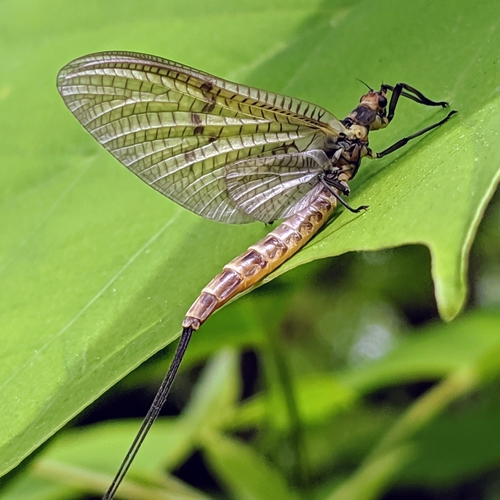
About Ephemera danica Müller, 1764
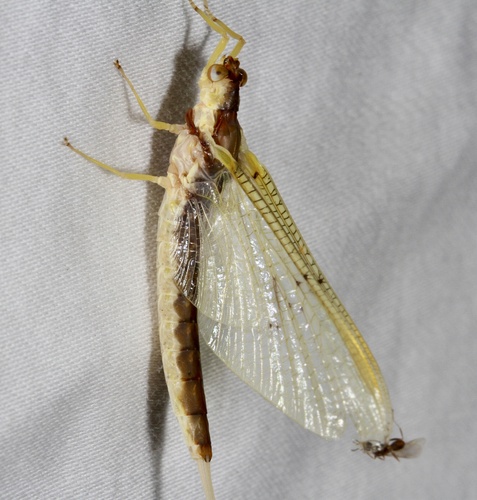
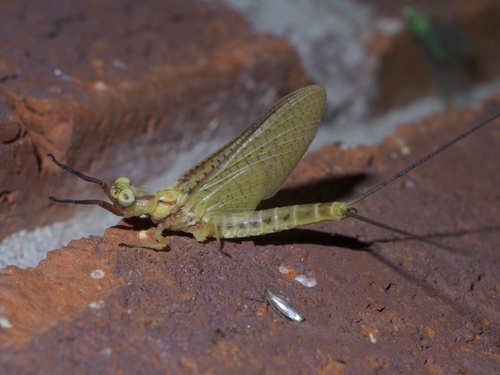
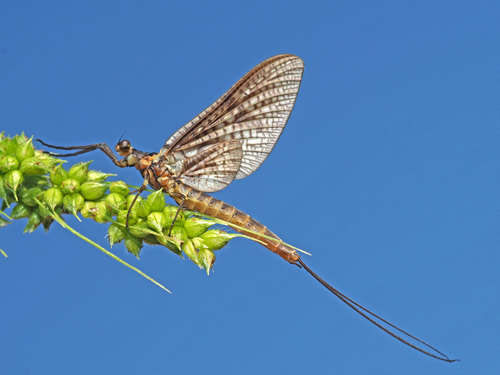
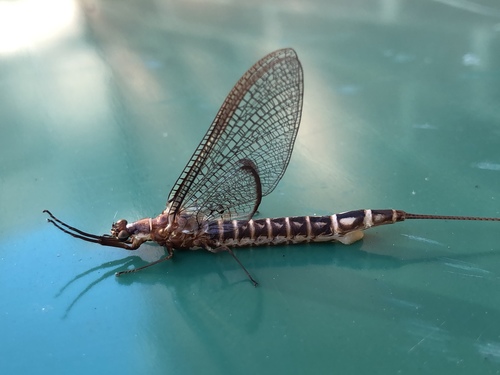
Ephemera danica Müller, 1764 is a species of mayfly. Mature adult (imago) males reach 15–20 mm (0.6–0.8 in) in body length, while females are larger at 16–25 mm (0.6–1.0 in). This mayfly, recognized by its characteristic markings and three tail cerci, is the most commonly encountered member of the Ephemeridae family in Britain. Imago wings are translucent with dark veins, while subimago wings are dull yellowish with brown veins. The forelegs and tails of spinners (mature adults) are much longer than those of duns (subadults). Adult Ephemera danica have non-functional mouthparts, as they do not feed. This species belongs to aeroplankton, and is commonly preyed on by swallows, trout, multiple amphibian species, and spiders. Ephemera danica is widespread across Europe, including the British Isles, where it inhabits clear rivers and lakes with sandy or gravel bottoms. Its full life cycle typically lasts one to two years, though developing nymphs sometimes take up to three years to mature. Nymphs grow to approximately 30 mm (1.2 in) in length. They dig tunnels into the gravel of river beds and feed by filtering organic detritus. Before reaching adulthood, nymphs emerge in spring and move toward shallow waters. Adults are most commonly seen from May to June, which is the origin of the common name 'mayfly', but they can also be found between April and November after multiple larval stages. The genus name Ephemera refers to the very short lifespan of adults, which lasts no more than around four days. Females fly over the water's surface, dipping their abdomen into the water to lay eggs, and die on the water surface once egg-laying is complete.