About Ephedra californica S.Watson
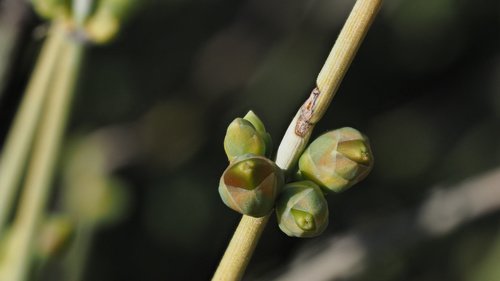
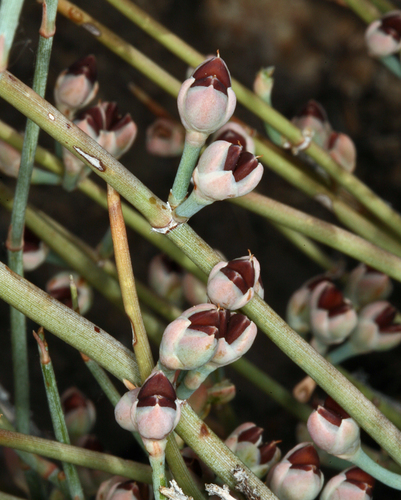
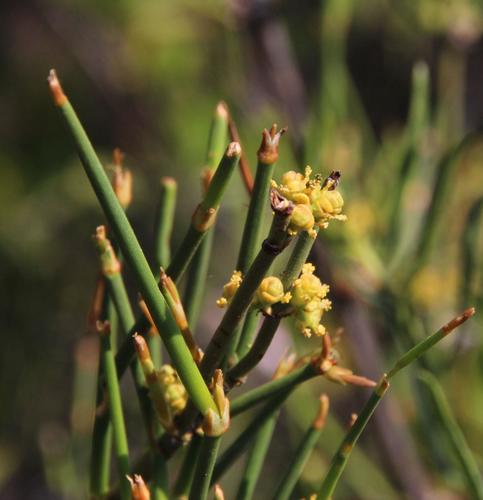
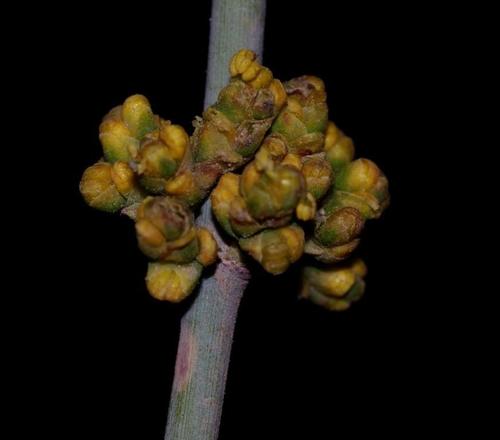
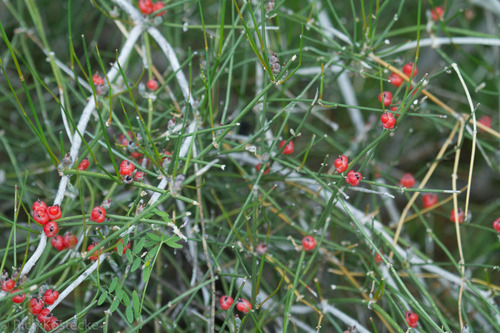
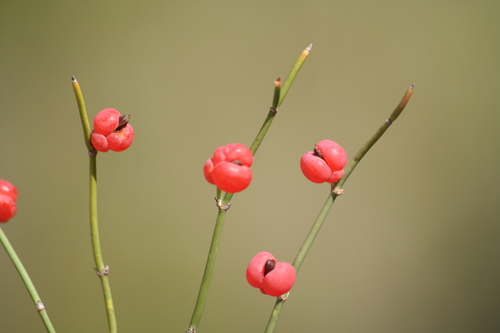
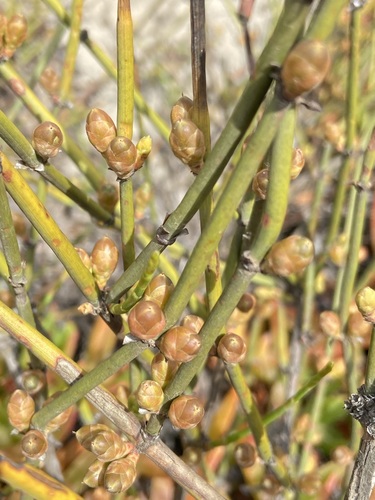
Ephedra californica S.Watson is a spindly shrub. Its new twigs are greenish, turning yellowish-gray as they age, with fine longitudinal grooves along their surfaces. The mature bark is gray-brown, irregularly fissured and cracked. This shrub reaches 0.25 to 1 metre (0.82 to 3.28 ft) in height, with a spread of a similar size. Tiny leaves grow at nodes on the twigs; they dry out during drought, crumble away, and leave behind brownish ridges at the nodes. Male plants produce clumps of pollen cones at the nodes, while female plants produce egg-shaped seed cones, each about 1 centimetre (0.39 in) long. Cones are produced from May to June.
This plant is native to a wide range of distinct areas in central and southern California, Baja California, and western Arizona. It grows in a variety of scrub and open habitats, including chaparral, arid grassland, and creosote scrub, at elevations between 46 and 1,036 metres (150 to 3,400 feet). Its specific distribution regions and landforms include the Mojave Desert, Sonoran Desert, Colorado Desert, Peninsular Ranges, Transverse Ranges, Tehachapi Mountains, Southern Sierra Nevada foothills, San Joaquin Valley, South California Coast Ranges, Channel Islands, and undeveloped habitats in Southern California coastal basins. It occurs in the California chaparral and woodlands, California coastal sage and chaparral ecoregion, California montane chaparral and woodlands ecoregion, and California interior chaparral and woodlands habitat types.
Ephedra californica was used by California's indigenous peoples as a medicinal plant, a culinary ingredient, and a material for making tools. Tribes that used the plant include the Kumeyaay (Diegueño) and Kawaiisu of what is now Southern California. Its branches were frequently brewed for medicinal purposes. The Kumeyaay used the tea made from this plant to cleanse the blood and kidneys, and as an appetite suppressant.