About Epacris pulchella Cav.
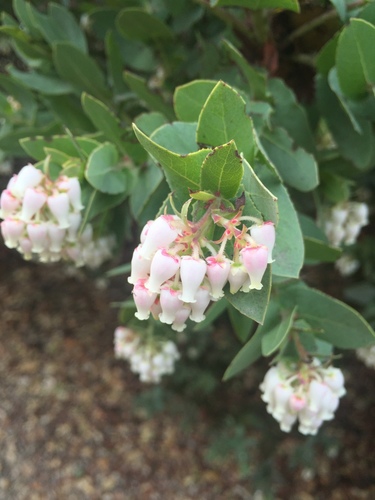
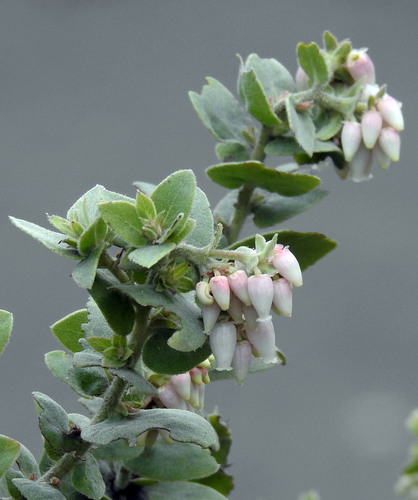
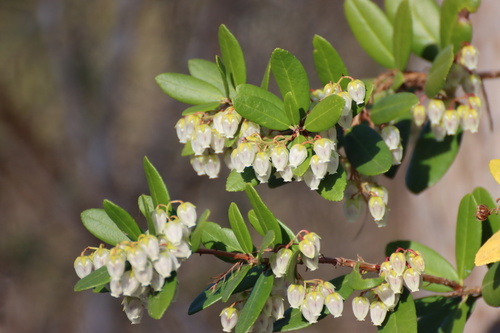
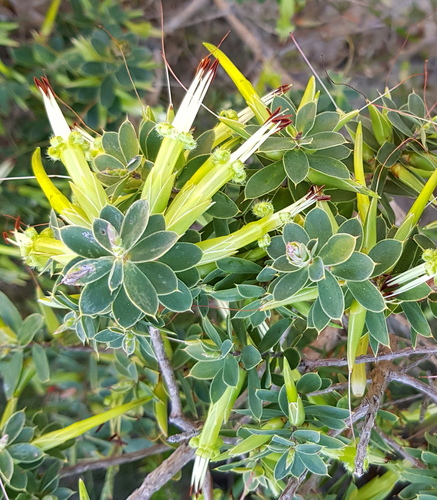
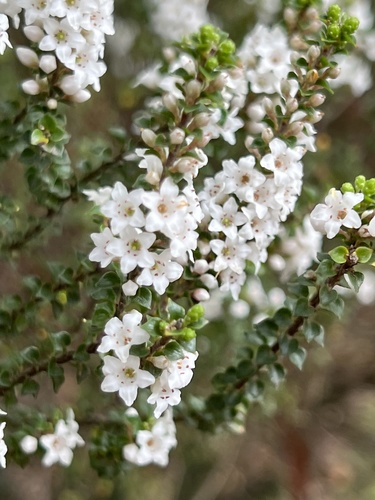
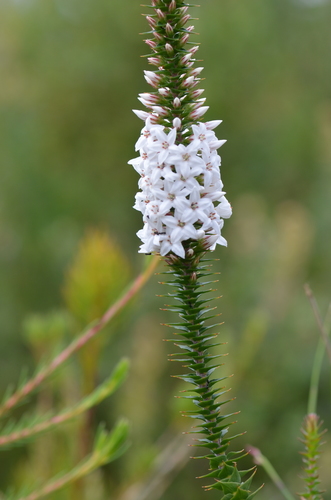
Epacris pulchella Cav. is a slender, erect shrub that typically reaches a height of 0.4 to 1.5 meters (1 foot 4 inches to 4 feet 11 inches). It produces only a few woolly-hairy branches, and its stems bear inconspicuous leaf scars. The leaves are egg-shaped with a heart-shaped base and a long tapering tip. Each leaf measures 2.1–6.5 mm (0.083–0.256 in) long and 1.4–4.0 mm (0.055–0.157 in) wide, growing from a petiole 0.5–0.8 mm (0.020–0.031 in) long. Flowers are arranged in leaf axils that extend down the branches; they are white or pinkish, 5–8 mm (0.20–0.31 in) wide, and each grows on a peduncle 1.5–2.0 mm (0.059–0.079 in) long. The sepals are 2.8–5.0 mm (0.11–0.20 in) long, and the petals are joined at the base to form a tube 3.0–5.5 mm (0.12–0.22 in) long, with lobes 2.5–3.5 mm (0.098–0.138 in) long. The anthers protrude past the end of the petal tube. Flowering takes place from January to May, with a peak in March. The fruit is a capsule 2 mm (0.079 in) long. This species is similar to Epacris microphylla, but differs by having longer leaves and longer flowers. This species (wallum heath) grows in heath, woodland, and forest on ridgetops and hillsides, found on the coast and nearby tablelands from south-east Queensland to near Conjola in south-eastern New South Wales.