About Eopsaltria australis (Shaw, 1790)
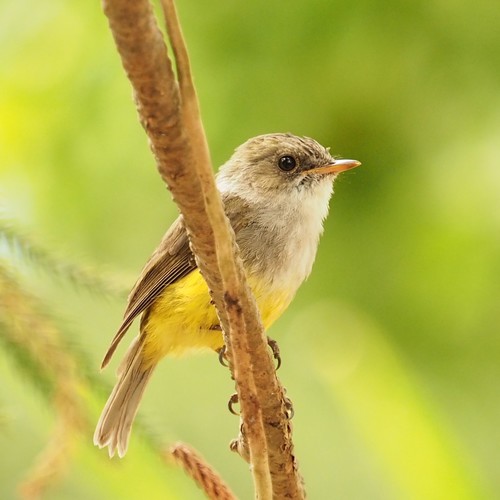
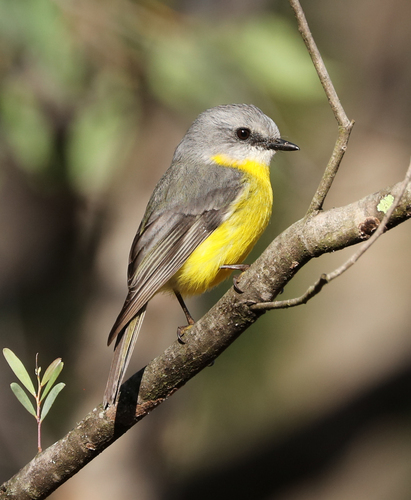
The eastern yellow robin (scientific name Eopsaltria australis (Shaw, 1790)) measures 15 to 16 cm (6 inches) in length. It is one of the larger Australasian robin species, and also one of the easiest to observe. Pairs and small family groups of this bird establish a territory, which they may hold year-round or only for a single breeding season. Eastern yellow robins are generally not disturbed by human presence. They do not migrate over long distances, but do make local seasonal movements, particularly moving between higher and lower elevation ground. This species occupies a wide variety of habitats, including heaths, mallee, acacia scrub, woodlands, and sclerophyll forests. It is most often found in damper areas or near bodies of water. Like all Australian robins, the eastern yellow robin typically lives in fairly dark, shaded locations. It hunts by perching and then pouncing on prey, usually from a position on a tree trunk, wire, or low branch. Its diet consists of a wide range of small creatures, most of which are insects. Breeding occurs in the spring. As is common for many Australian bird species, eastern yellow robin breeding is often communal. The bird builds a neat cup-shaped nest from fine plant material and spider web. The nest is usually placed in a tree fork, and is expertly disguised with lichen, moss, bark, or leaves.