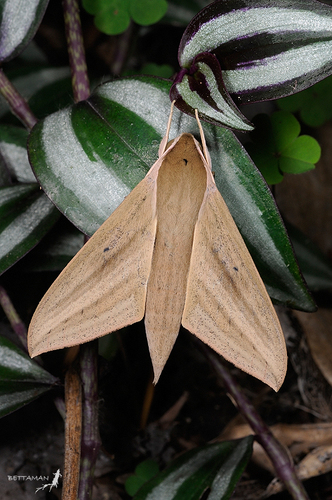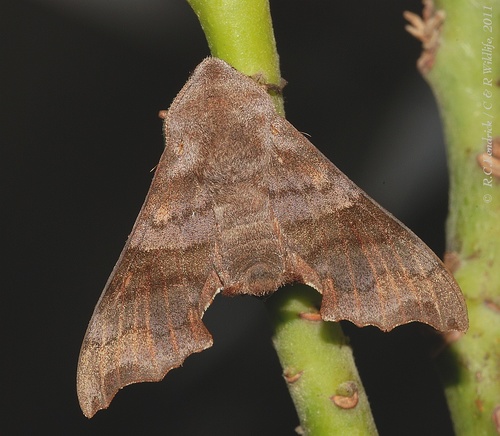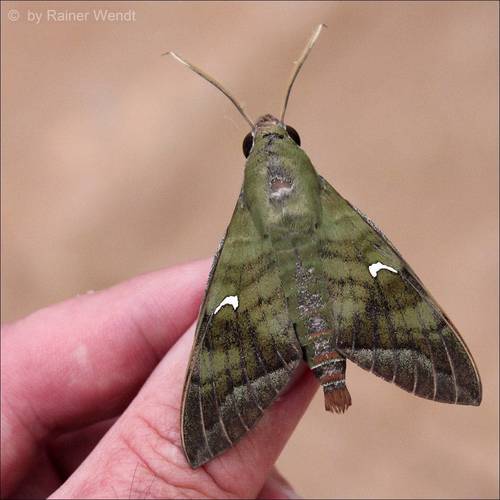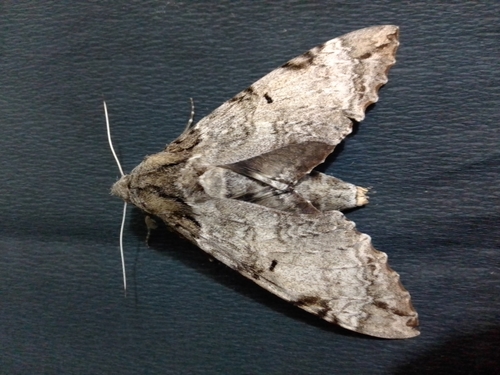
About Enyo ocypete Linnaeus, 1758
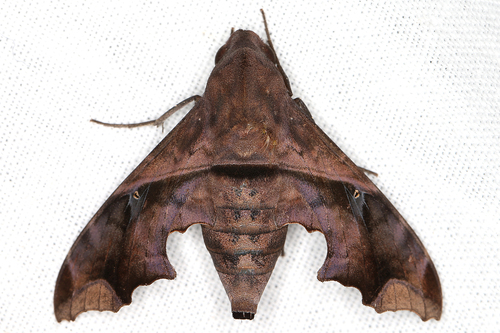
Enyo ocypete is a moth species belonging to the Sphingidae family. It was first formally described by Carl Linnaeus in the 10th edition of Systema Naturae, published in 1758. This moth ranges from the southern United States, through Central America, and extends south to Venezuela, Brazil, Peru, Bolivia, Paraguay, and northern Argentina. Its wingspan measures 60 mm. In tropical regions, as well as in southern Florida and Louisiana, adults are active year-round. In the northernmost part of this species' range, adults are active between August and November. The larvae are thought to feed primarily on Caribbean grape (Vitis tiliifolia), alongside other species in the Vitaceae and Dilleniaceae families, including Vitis, Cissus rhombifolia, Ampelopsis, Tetracera volubilis, Curatella americana, Tetracera hydrophila, and Doliocarpus multiflorus. Ludwigia from the Onagraceae family may also act as a host plant for the larvae. Male Enyo ocypete have smaller wings than females. This size difference gives reproductive and flight advantages: males can fly faster and have higher mating fitness, while slower flight in females supports host plant selection and resource gathering.