About Entylia carinata Forster
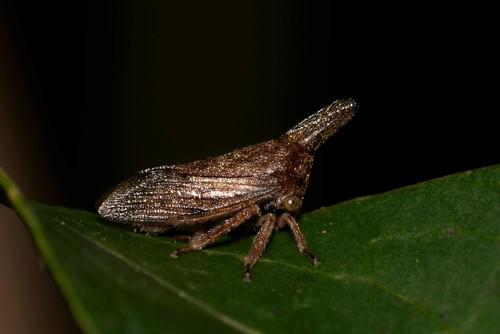
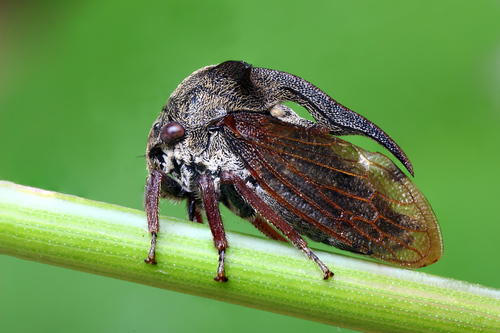
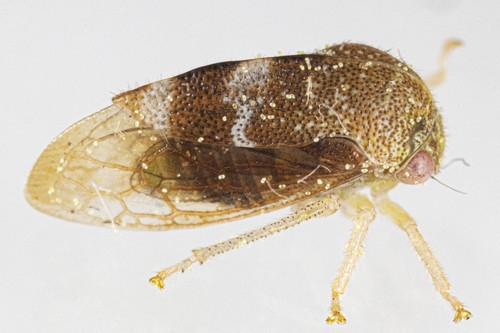
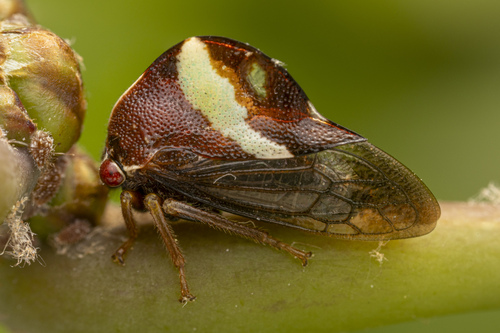
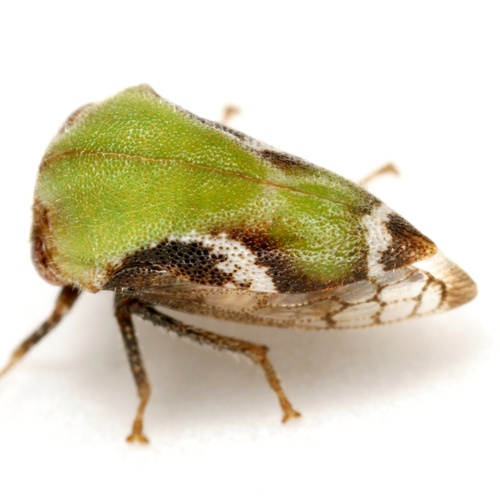
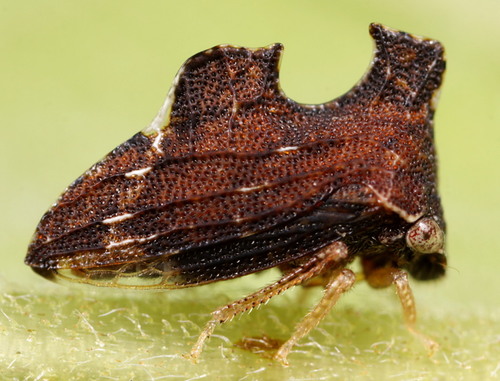
Commonly known as keeled treehoppers, Entylia carinata Forster are small, brown insects with distinctive saddle-shaped keels. This species shows clear sexual dimorphism: females are normally around 6.35 mm (1/4 of an inch) long with more prominent keels, while males are smaller with less noticeable keels. In some cases, males look so different from females that they are incorrectly identified as other species. Keeled treehoppers are distributed across Canada, the eastern United States, Mexico, Central America, and South America. Adult keeled treehoppers overwinter in leaf litter and debris, emerging in March. After emergence, they mate and lay their eggs into the leaves of aster plants. This timing lines up with the production of new, soft vulnerable plant growth that is ideal for egg-laying. Laid eggs sometimes cause the host leaf to fold over, creating a protected space where nymphs can develop after hatching.