About Entomacrodus nigricans Gill, 1859
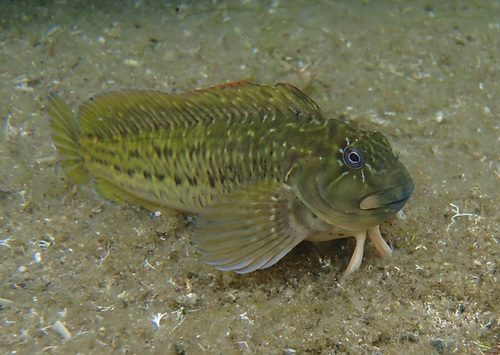
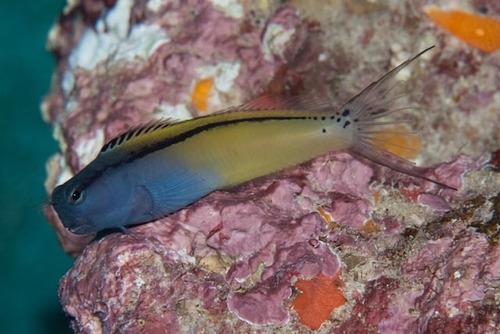
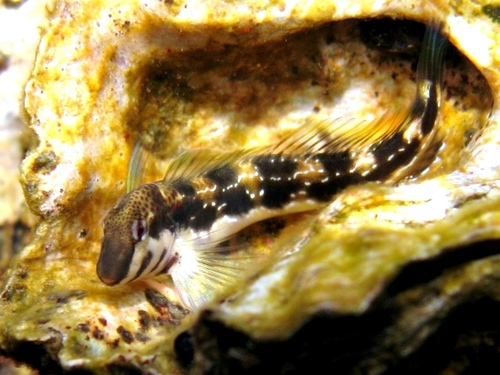
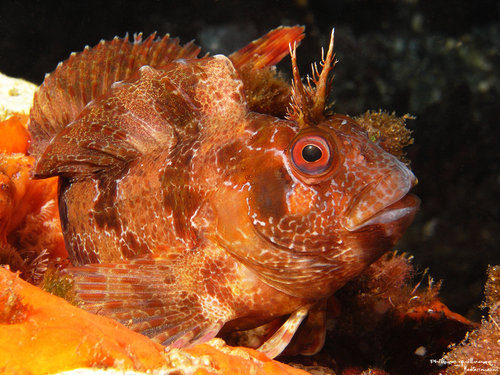
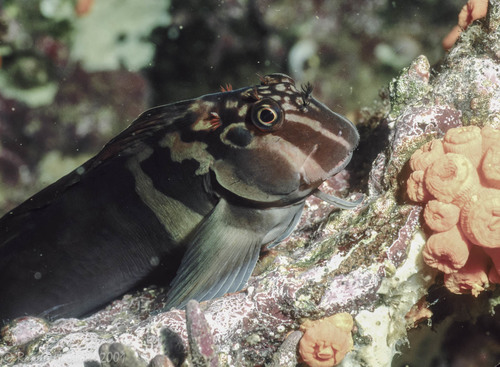
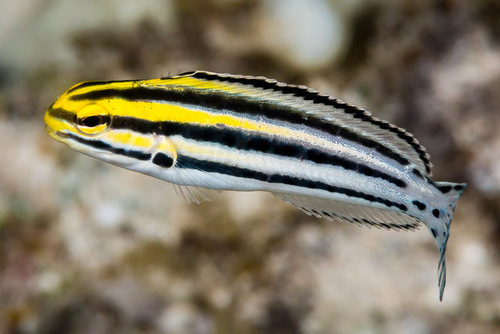
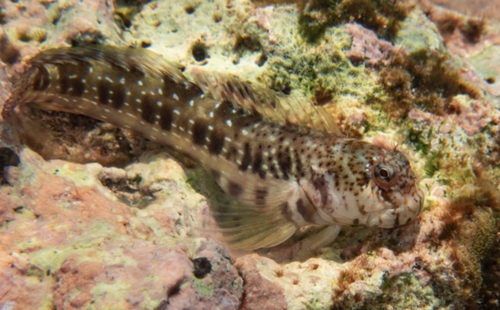
Pearl blennies (Entomacrodus nigricans) are pale-colored fish marked with dark brown bands, covered in extremely bright white spots along their entire bodies. They have a blunt head, a high forehead, two moderately-sized flattened eyes, and filaments called cirri over the eyes and on the nape. During breeding season, the cirri and dorsal fins of males become enlarged. Their jaws hold slender, sharp teeth that resemble combs. The dorsal fin has 13 spines and 14-15 soft rays, while the anal fin has 2 spines and 16 rays. This species can reach a total length of 10 centimetres (3.9 in). Their flattened eyes are thought to be an adaptation for seeing in air, and their flat eyes give them vision similar to that of a bird.
The pearl blenny is distributed in the western central Atlantic Ocean. Its range extends from Bermuda to southeastern Florida, west to the Gulf of Mexico where it occurs from the Florida Keys to Campeche, Mexico, and south through the Caribbean Sea.
This species prefers shallow waters, and is most often recorded near the surface, in tidal pools or rock pools. Smaller individuals stay lower in the water column to avoid harsh conditions. They are largely diurnal feeders that feed mainly on algae. They are capable of surviving on land, but prefer to stay in water. They can survive out of water in shade for around 2.5 hours; this survival time extends to 3.5 hours during the night, but drops to only 7 minutes in direct sunlight. Males clean and prepare nests in small crevices or empty shells, and females spawn into these prepared nests. The eggs have an adhesive pad that sticks them to the inner surface of the nest. Males guard the eggs and frequently fan them until they hatch.