About Entandrophragma caudatum (Sprague) Sprague
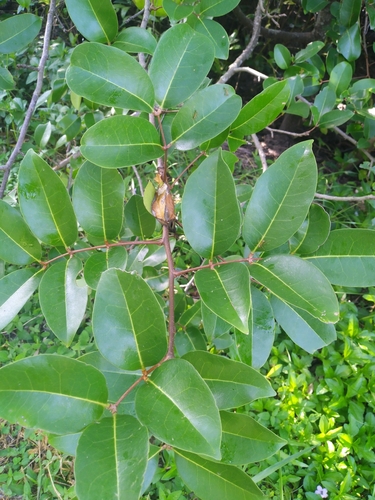
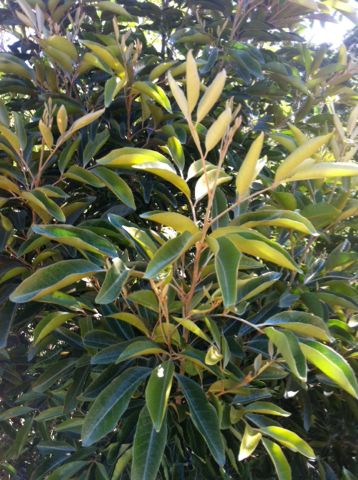
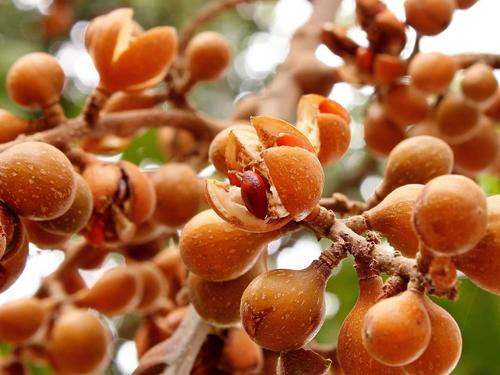
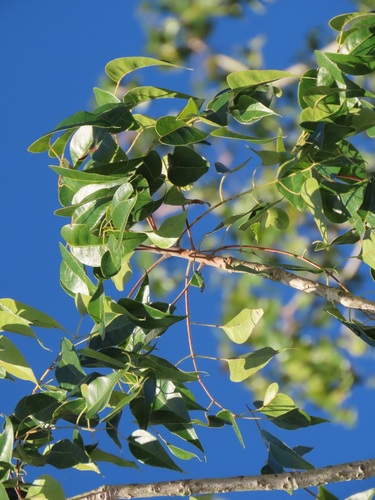
Entandrophragma caudatum, commonly known as mountain mahogany, is a large deciduous tree in the mahogany family, native to Southern Africa. Its confirmed distribution includes eastern and north eastern South Africa, Eswatini, Botswana, Angola, the Caprivi Strip region of Namibia, Zimbabwe, Zambia and Malawi. Kew currently recognizes 12 other Entandrophragma species, all native to tropical and sub-tropical Africa. This species grows to up to 20 meters tall, and occurs at low altitudes in river valleys, as well as in open woodland on rocky slopes and ridges. Its bark is grey, flaking into large, irregular scales that reveal a buff under-surface, producing a mottled appearance. Its leaves are paripinnately compound, up to 25 cm long, puberulous, and crowded near the ends of branches, with 6 or 7 pairs of leaflets. Each individual leaflet can grow up to 11 cm long and 3.5 cm wide; leaflets are hairless, have entire margins, and end in a narrowly attenuate apex or drip-tip. Slender petioles reach around 20 mm in length, causing the leaflets to droop. The tree produces green flowers arranged in branched sprays up to 20 cm long, which arise from leaf axils. Engler & Prantl preferred to place this species in the genus Wulfhorstia, as it has only 6 ovules per loculus and lacks partitions inside the staminal tube — the feature that led Anne Casimir Pyrame de Candolle to name the genus Entandrophragma in 1894. However, this character is variable across Entandrophragma species: partitions are already very short in Entandrophragma speciosa Harms, so the differences between the two genera are trivial and untenable. The fruit of this species is distinctive. When unripe, it forms a cigar- or club-shaped capsule, about 150 mm long and 40 mm in diameter at its thicker end. When mature, five woody, pale brown, densely lenticellate valves curve backward from the thickened tip, leaving an intact central column marked with seed impressions. This gives the mature fruit the overall appearance of a half-peeled banana. Its seeds are large and winged, measuring 9–10 cm by 2.5 cm. They spin as they fall, allowing wind to carry them some distance away from the parent tree. Seedlings produce large, simple, corrugated leaves with prominent veins, which look very different from the compound leaves of mature trees. Other Entandrophragma species are commercially harvested for timber, but E. caudatum occurs too sparsely to be economically viable for this use, despite its dark brown wood having an attractive grain figure. The wood of this species is moderately dense, with a weight of 700–815 kg per cubic meter. E. caudatum is often found growing in association with Baikiaea plurijuga on Kalahari Sands. Traditionally, its logs were carved into canoes for the Paramount Chief of Barotseland, while its bark was sometimes used for dyeing and tanning. Analysis has found that a mixture of limonoids is present in the species' seed, bark, and wood. Entandrophragma angolense (Welw.) is a forest tree that grows up to 50 m in height, with a straight clear bole up to 25 m long, and sometimes has prominent buttresses that extend 6-7 m up the bole.