About Enophrys bison (Girard, 1854)
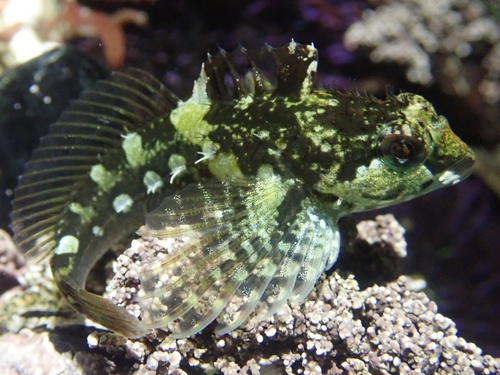
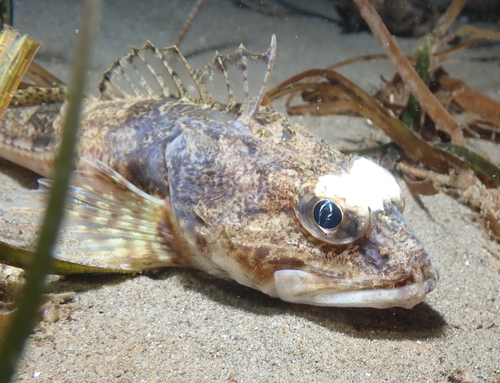
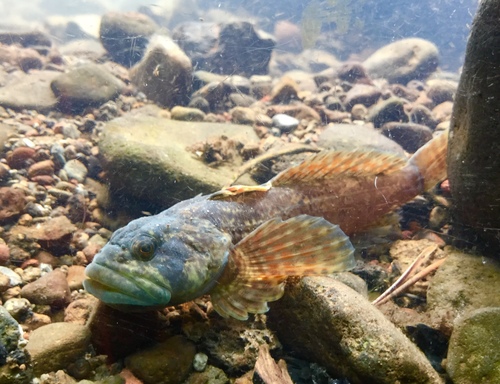
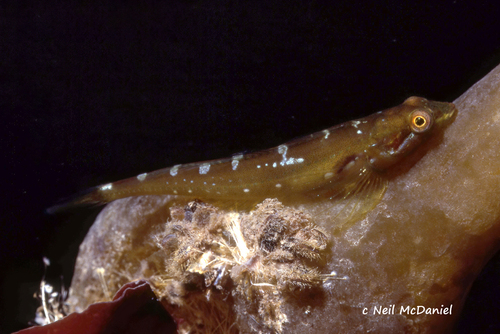
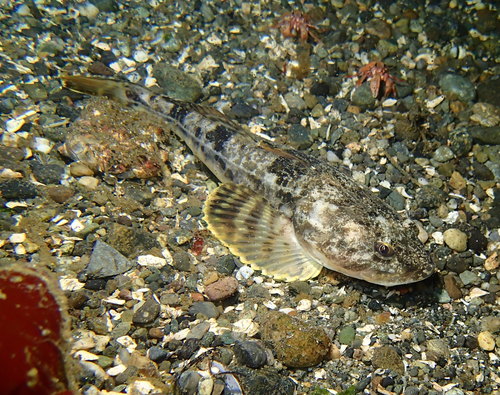
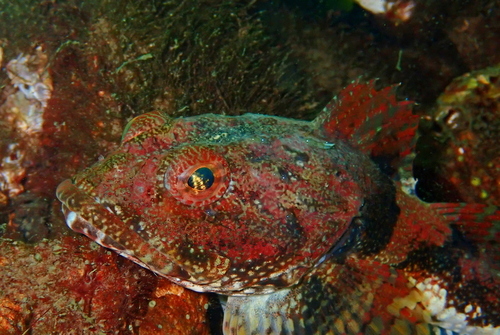
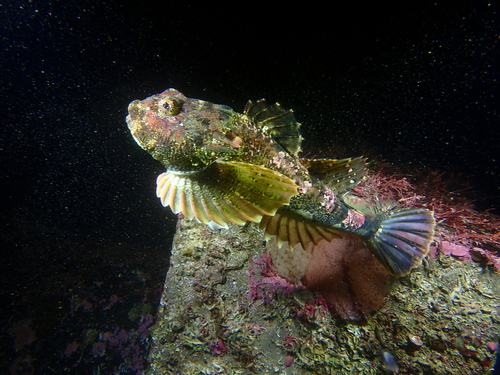
Enophrys bison, commonly known as the buffalo sculpin, has two dorsal fins supported by 7 to 9 spines and 10 to 13 soft rays, while its anal fin holds 8 or 9 soft rays. Its pelvic fins are small, and its caudal fin is rounded. This species reaches a maximum published total length of 37 cm, or 15 inches. It is well-camouflaged with a mottled color pattern that ranges from pink and green to brown, with dark saddle-shaped patches running along its back. A long, straight preopercular spine projects out from each cheek. Its lateral line is formed from prominent raised plates, and its snout is short and blunt. This fish species is found in the Eastern Pacific Ocean, ranging from Kodiak Island, Alaska, to Monterey Bay, California, USA. It typically lives in rocky or sandy reef environments, where it can camouflage among rocks and seaweed. Buffalo sculpins most commonly live at depths down to 20 m, or 66 ft, though the deepest individual ever recorded was found at 220 m, or 720 ft.