About Enneacanthus obesus (Girard, 1854)
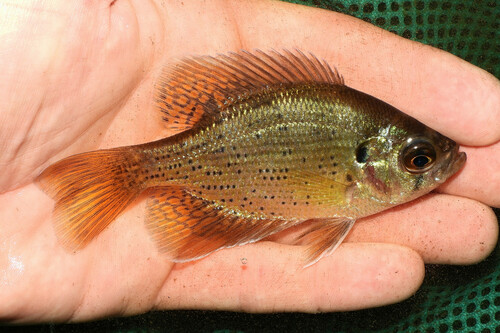
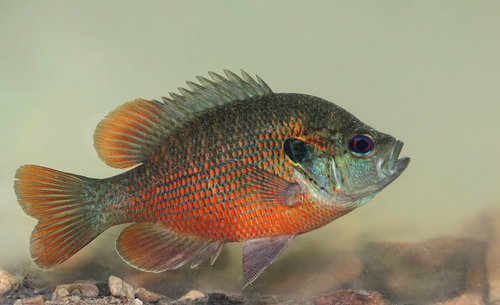
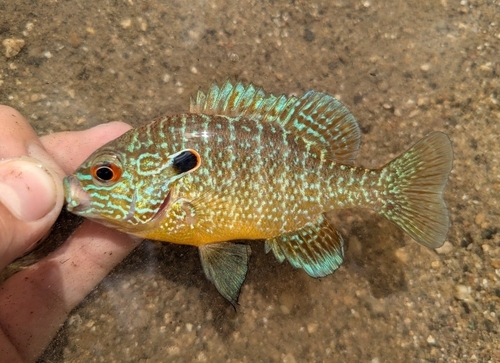
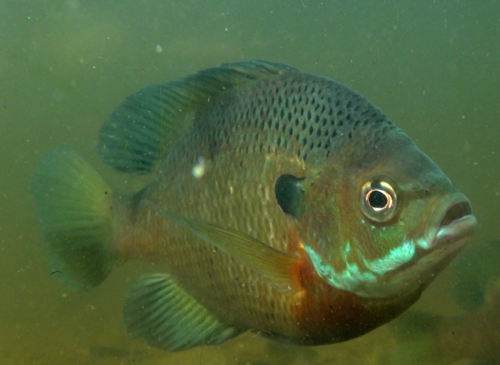
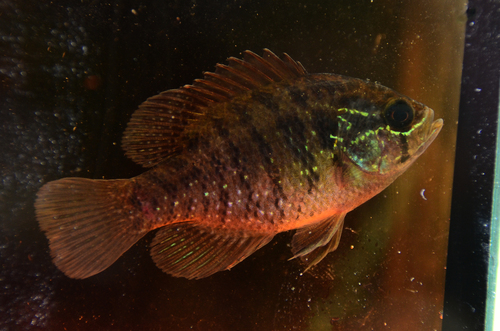
The banded sunfish, Enneacanthus obesus, is similar in appearance to the blackbanded sunfish. It has a strongly compressed, deep body, with dark, iridescent sides marked by dark bands. Nuptial males and females develop blue specks on their bodies. This species has an upturned mouth, and rounded pectoral and tail fins. It reaches an approximate maximum length of 9.5 cm.
Banded sunfish are distributed across Atlantic coastal drainages of North America, ranging from southern Maine south to central Florida. Along the Gulf slope, their range extends west to the Perdido River drainage in Alabama.
They inhabit sluggish, acidic, heavily vegetated waters with sand or mud substrates, including small ponds, creek backwaters, small to large rivers, and boggy brooks.
Spawning for banded sunfish takes place from April through July. They are able to spawn once they reach one year of age. Males construct sand or gravel nests where eggs are laid, but the eggs are buoyant and float away from the nest after being laid.