About Endrosis sarcitrella Linnaeus, 1758
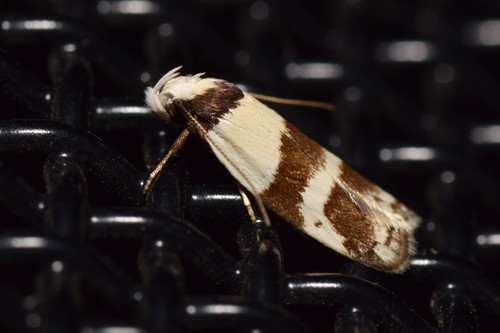
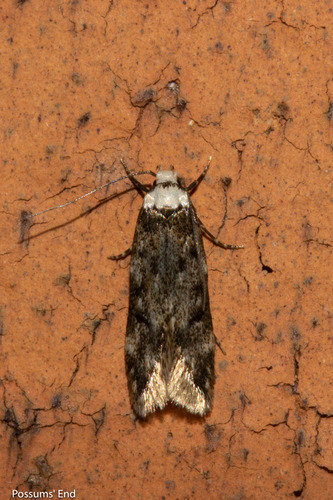
The white-shouldered house moth, scientifically named Endrosis sarcitrella, is a species of gelechioid moth. It is classified in the subfamily Oecophorinae of the concealer moth family Oecophoridae, sharing this placement with the brown house moth Hofmannophila pseudospretella. Although multiple species were originally described and presumed to belong to the same genus as E. sarcitrella, the genus Endrosis is currently recognized as monotypic, meaning it contains only this single species. This is a common moth species that has become nearly widespread across the globe as a result of its synanthropic habits, meaning it associates with human environments. It is regularly found inside buildings, and since it has continuously overlapping broods year-round, it can be encountered at any time of the year. It is attracted to light sources, and is often found in outbuildings that store dried foods like grain. It also commonly lives in bird nests. Its larva is a small, grub-like caterpillar that feeds and develops on dry plant and animal debris, where it spins a small silken shelter for itself. Documented food sources for the larvae include dried fruits, cereals (including bran and flour) and other seeds, potatoes, rotting wood, insect specimens, wool and old textiles, and guano.