About Encephalartos natalensis R.A.Dyer & I.Verd.
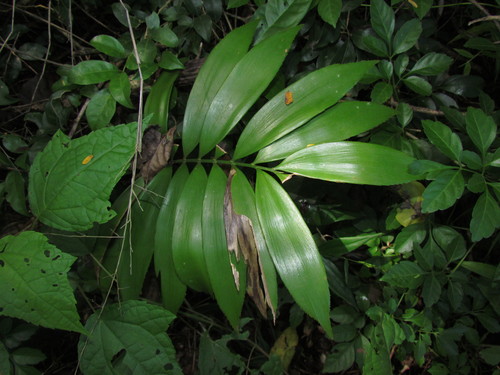
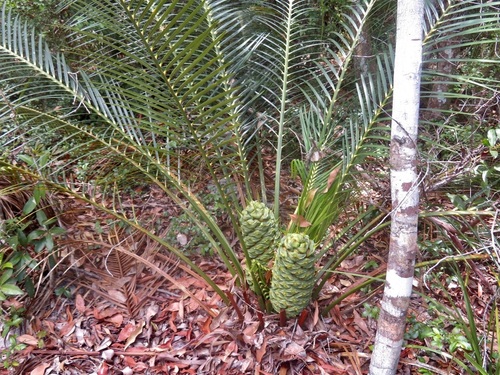
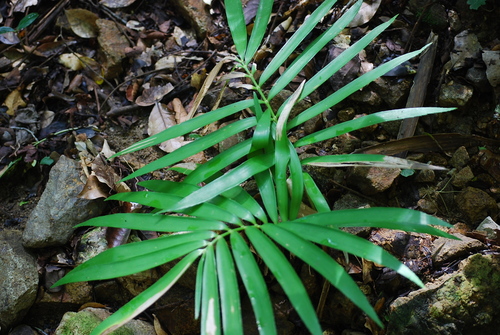
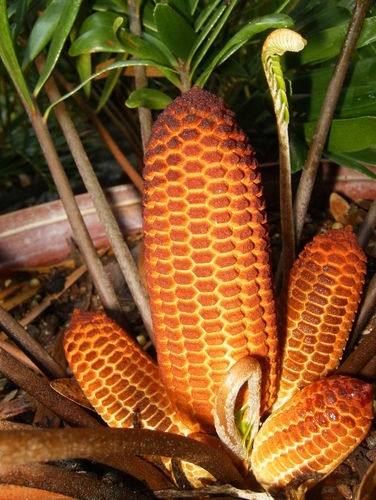
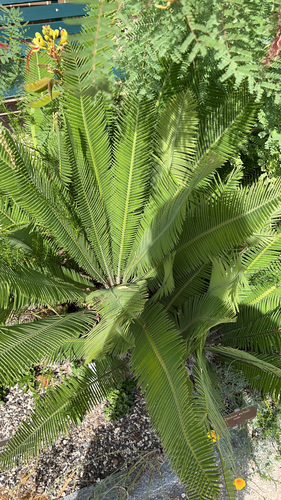
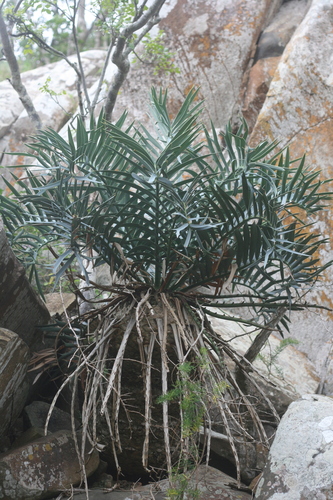
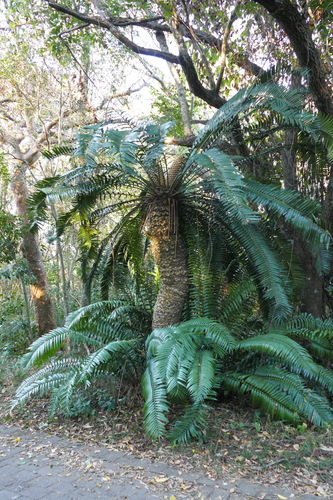
The Natal cycad, Encephalartos natalensis R.A.Dyer & I.Verd., can grow to 6 m (20 ft) or more in length, and often leans. It may grow a single trunk, or branch out from its base. At the top of the trunk sits a rosette of large, evergreen, pinnate leaves that are somewhat twisted near the tip, and can reach 3 m (10 ft) long. Its leaflets are dark green and about 6 cm (2.4 in) wide; leaflet edges may be untoothed, or bear one or more small prickles on either edge. The longest leaflets are found in the center of the leaf, and the leaflets closest to the leaf base may be replaced by spines. This trait distinguishes E. natalensis from the otherwise similar species Encephalartos altensteinii. E. natalensis is dioecious, meaning male and female cones grow on separate individual plants. Male cones are velvety and measure approximately 45 by 11 cm (18 by 4 in), and produce pollen from April to June. Female plants produce two or three slightly woolly, yellowish-green, cylindrical cones that measure 55 by 25 cm (22 by 10 in), with scales covered in small knobs. When ripe, the cones split open to reveal bright red seeds that are around 5 cm (2.0 in) long. This cycad is endemic to South Africa. It grows in the Qumbu and Tabankulu areas of Eastern Cape Province, and across a large part of KwaZulu-Natal, including the catchment areas of the Mkuze River and the Umfolozi River. It occurs at altitudes up to 1,200 m (4,000 ft), but is seldom found close to the coast. It grows on rocky outcrops, south-facing cliffs, or steep scarp slopes in forests. A readily accessible location to view this species is the gorge below Howick Falls, where its palm-like fronds stand out against surrounding broad-leaved trees. Another location is the Valley of a Thousand Hills, where a group of these plants has been declared a national monument. The larvae of the leopard magpie moth feed on the leaves of this cycad and several other cycad species. Monkeys, baboons, bats, and trumpeter hornbills feed on the cycad’s fruits, but discard the poisonous seeds, which results in seed distribution.