About Encephalartos horridus (Jacq.) Lehm.
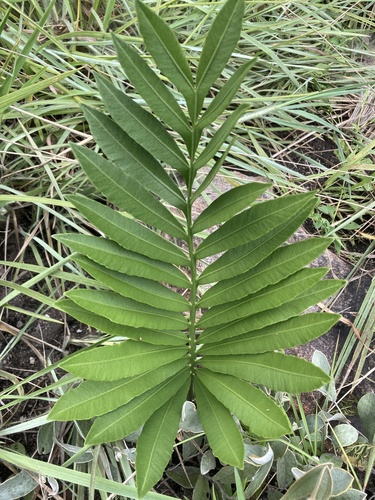
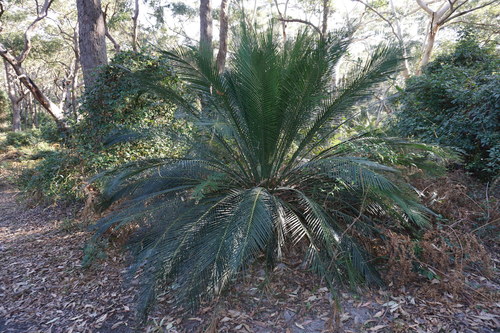
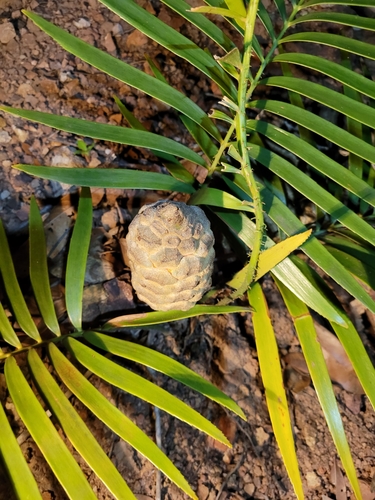
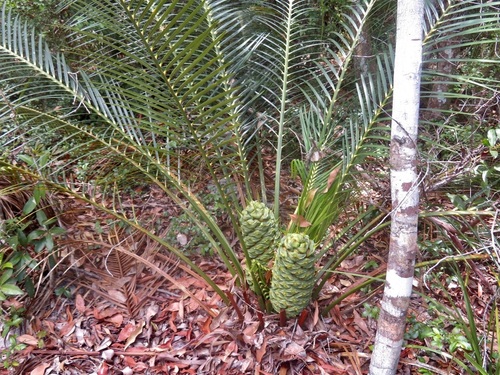
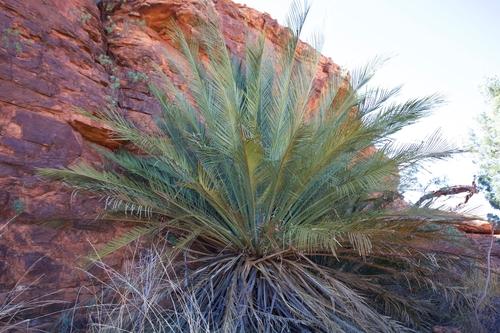
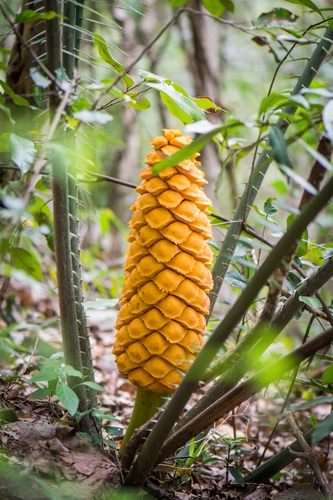
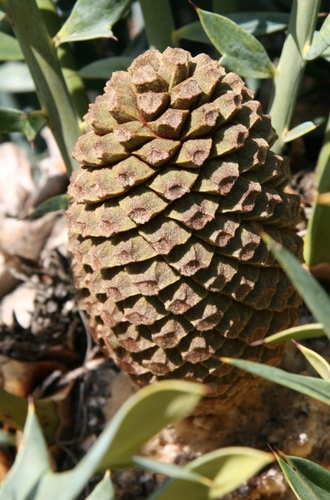
Mature Encephalartos horridus, the Eastern Cape blue cycad, have large stems between 0.5–1 m (20–39 in) long and 20–30 cm (8–12 in) in diameter, with most of the stem growing below ground. Its leaves reach up to 1 m (39 in) long, are often sharply recurved toward the tip, and have a stiff, spiny appearance. Young leaves are silvery-blue, and turn green as the plant ages. Cones are typically brownish-red or blackish-red, grow singly, and are covered in a dense layer of fine hair; the species produces both male and female cones. Female cones are egg-shaped, growing up to 40 cm (15.5 in) long and 20 cm (8 in) in diameter, while male cones are mostly cylindrical, narrow toward the ends, and reach up to 40 cm (16 in) long and 12 cm (4.5 in) in diameter. Its seeds are roughly triangular with three flattened surfaces. Naturally, the Eastern Cape blue cycad occurs only in the Port Elizabeth and Uitenhage districts of Eastern Cape, South Africa. This region has a warm year-round climate, annual average rainfall between 250 to 600 mm (9.8 to 23.6 in), and summer temperatures that reach up to 40 °C (104 °F). The species prefers full sunlight, and grows in a range of habitats including Karoo scrub, sourveld, deep fertile soil, and open rocky ridges. Wild populations show clear intraspecific variation, including a possible dwarf form found near Port Elizabeth. Today, this cycad is commercially distributed and available in nurseries and gardens around the world. In ecological terms, cycads have few natural enemies, but wild Eastern Cape blue cycads may be preyed on by porcupines, baboons, and certain insects. While this species can reproduce via suckering, reproduction most commonly relies on insect pollination. After seed cones are pollinated, seeds are dispersed by animals that eat the fleshy cones. Like all cycads, the Eastern Cape blue cycad grows slowly. It grows well in deep, fertile soil amended with compost. It is best adapted to temperate and subtropical regions, but can tolerate light to moderate frosts. To thrive, it requires full sun, excellent drainage, limited water, and slightly acidic soil. The species regularly produces new leaves and cones. Plants are available from nurseries in many regions, and are also easy to propagate from seed. They can also be propagated from suckers, though this requires some patience and experience.