About Encephalartos altensteinii Lehm.
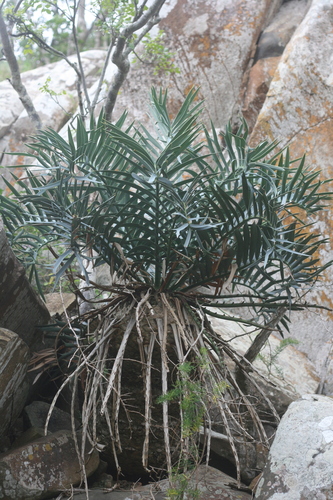
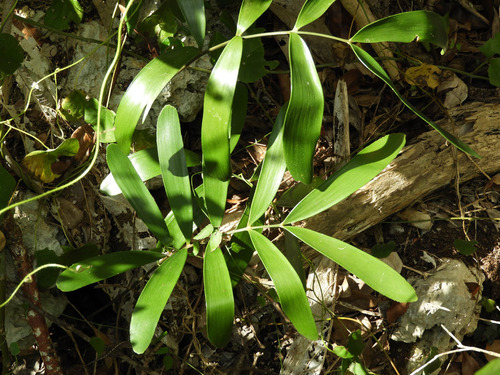
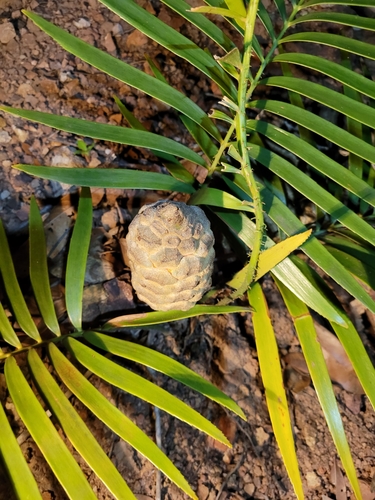
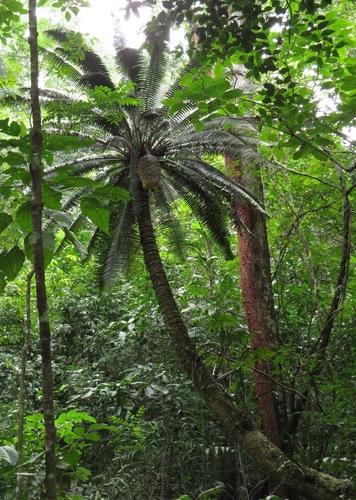
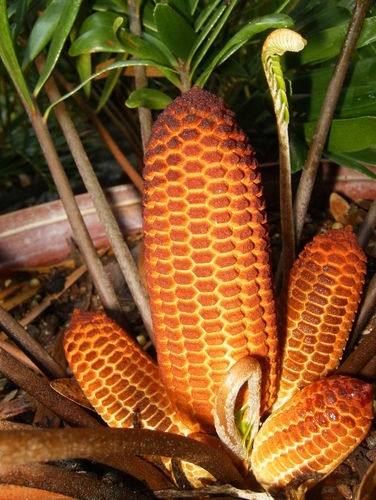
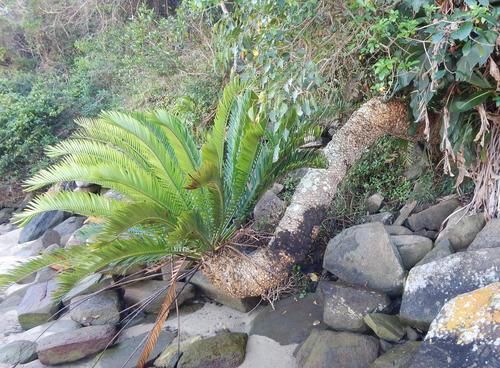
Encephalartos altensteinii Lehm. is a cycad species that can grow up to seven metres (23 ft) tall, and may be either branched or unbranched. Its leaves are straight or curved backwards, and reach up to three metres (9.8 ft) in length. The leaflets are rigid, fairly broad, and have toothed edges on one or both margins. Unlike E. natalensis, this species has no prickles at the base of its leaf. It typically produces two to five greenish-yellow cones that grow up to 50 centimetres (20 in) long; the scales on female cones are covered with protuberances. The cones are poisonous to humans. Its seeds are scarlet and grow up to four centimetres (1.6 in) long. This species is widespread in the Eastern Cape and south-western KwaZulu-Natal provinces of South Africa. It prefers coastal sites, including open scrub, steep rocky slopes, valley evergreen forests, and river banks. It also grows inland at higher altitudes in isolated sites within the Amatola Mountains. An individual of this species planted in the Palm House at Royal Botanic Gardens, Kew, UK is considered the oldest potted plant in the world, having been moved there in 1775. Other individuals have also reached very old ages; the specimen growing in Lednice Greenhouse, Czech Republic is estimated to be between 300 and 600 years old.