About Encelia virginensis A.Nelson
Encelia virginensis A.Nelson is a North American flowering plant species in the Asteraceae family, commonly called Virgin River brittlebush. This shrub is native to the southwestern United States and northwestern Mexico, where it grows most commonly in the Mojave Desert and Sonoran Desert. It has been documented growing in Baja California, southern California, Nevada, Arizona, southwestern Utah, and southwestern New Mexico.
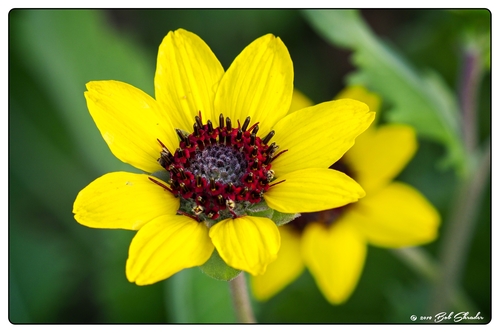
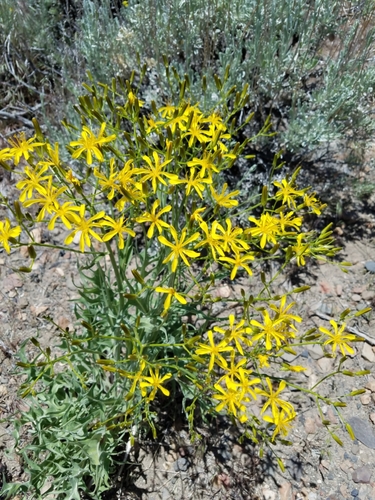
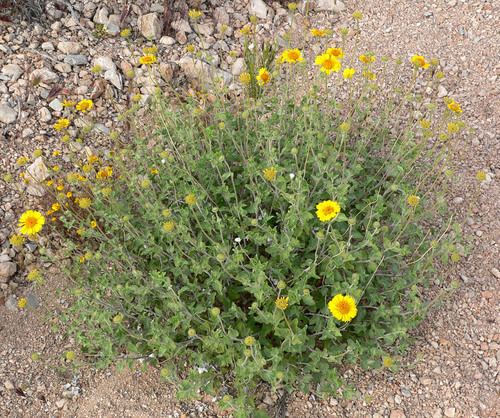
Encelia virginensis is a bushy, sprawling shrub that grows between 100 and 150 cm (40 to 60 inches) tall. It produces many branches: younger branch sections are hairy, while older stems develop thickened bark. Its gray-green foliage is fuzzy or hairy, and is often sparse; the many small hairs covering the leaves give the plant a pale appearance. Solitary daisy-like flower heads grow at the top of many erect, hairy stems. Each flower head holds 11 to 21 generally yellow ray florets, surrounding a center of yellow disc florets. Its fruit is an achene 5 to 8 millimeters long, which usually lacks a pappus.
Two varieties of this species are recognized: Encelia virginensis var. actonii (Elmer) B.L.Turner, found in California, Nevada, and Baja California; and Encelia virginensis var. virginensis, found in southern California, Nevada, Arizona, southwestern Utah, and southwestern New Mexico.