About Enallagma signatum (Hagen, 1861)
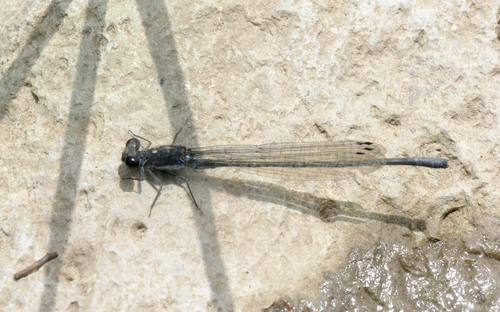
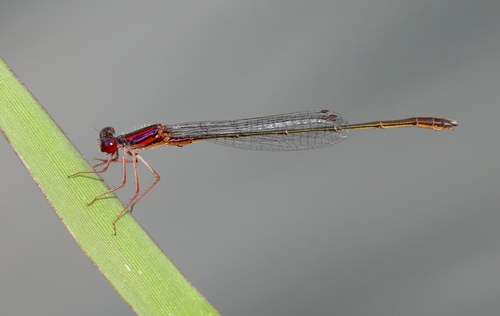
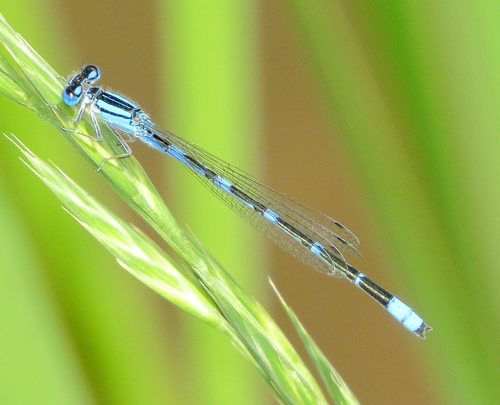
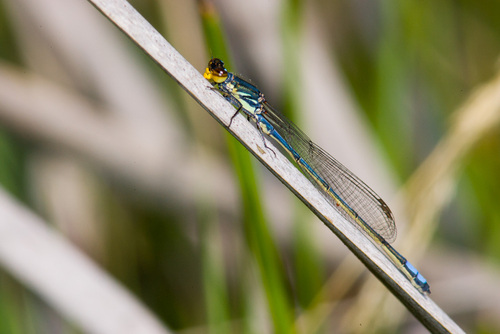
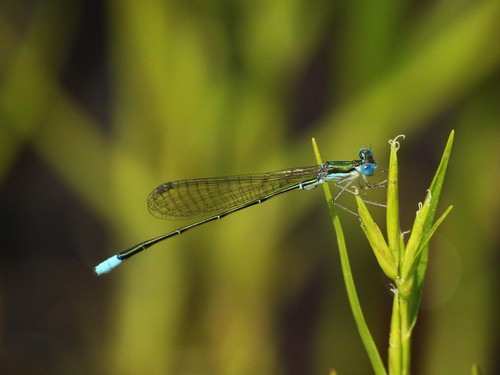
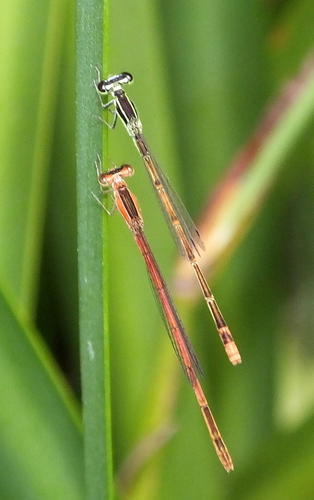
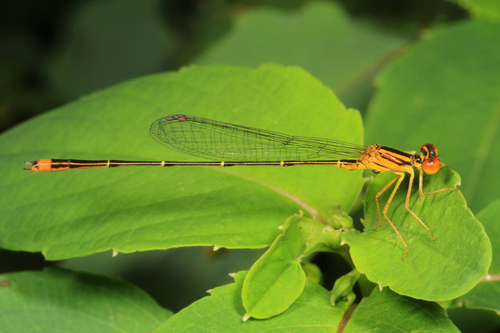
Enallagma signatum, commonly called the orange bluet, is a species of bluet damselfly that can be distinguished from most other bluets by its orange coloration. Males have an orange thorax marked with a thick black stripe along the back and black stripes on the shoulders. Their abdomen is mostly black, with orange rings, a orange underside, and orange coloration near the tip. Males have large orange eyes set on a black head, and small orange postocular spots connected across the back of the head by an orange bar. Females have a thorax with the same pattern as males, but it is dull yellow instead of orange. A female's abdomen is mostly black on the upper side and dull yellow on the underside. Females have large yellow-brown eyes, and small yellow postocular spots connected by a thin yellow bar. There are three different female forms: one that stays blue throughout its life, one that becomes green, and one that becomes orange. This bluet species is most commonly found near still water bodies including ponds and pools, as well as slow-moving streams, moving streams, and rivers. Its known distribution includes Tamaulipas in Mexico; Colorado, Georgia, Massachusetts, New Jersey, Ohio, and Vermont in the United States; and New Brunswick in Canada. For reproduction, female orange bluets will position their bodies to signal that they do not want to mate. Females stay away from water and are not usually encountered except when they are mating or paired in tandem with a male. After mating, mated pairs lay eggs in floating vegetation or debris. The male often accompanies his female partner when she goes underwater. The female stays underwater to lay eggs in the typical way, and can remain ovipositing for up to 20 minutes at a time.