About Enallagma cyathigerum (Charpentier, 1840)
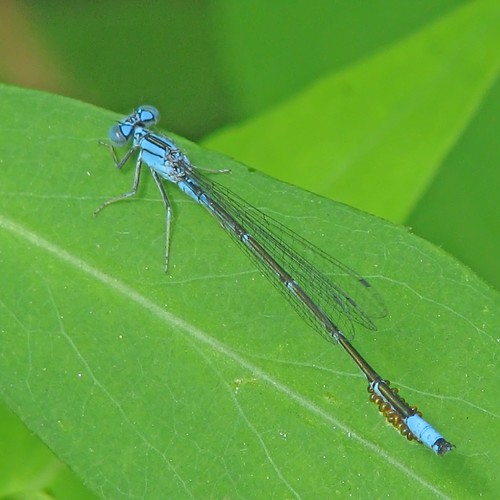
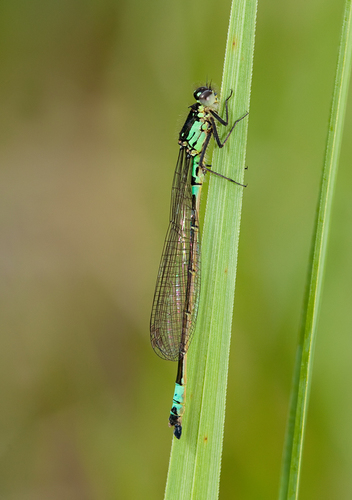
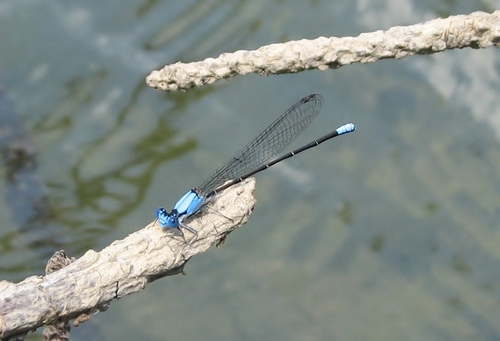
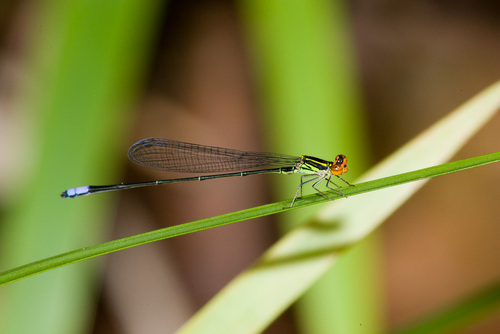
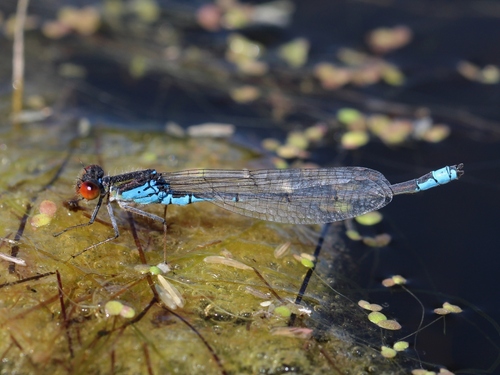
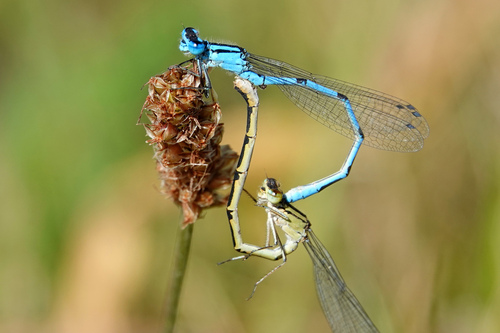
Enallagma cyathigerum, commonly known as the common blue damselfly, can be identified by distinct color patterns across sexes and female morphs. Males of this species are caerulean blue with black markings. Females show much wider color variation, occurring in two different morphs: andromorph and heteromorph. Andromorphic females resemble caerulean blue males, but have more black patterning across their bodies. Heteromorphic females are brown or green-brown in color and do not resemble males at all. The different female morphs are thought to limit the amount of male attention females receive when they are near water for reproduction. The common blue damselfly is easily confused with the azure damselfly (Coenagrion puella). On the back and thorax, the common blue damselfly has more blue than black, while the reverse is true for the azure damselfly. The second segment of the common blue damselfly's thorax bears a distinctive spot, with a line below it that connects to the third segment. A second distinguishing feature is visible on the side of the thorax: the common blue damselfly has only one small black stripe here, while all other blue damselflies have two. Common blue damselflies inhabit a range of freshwater environments, including acidic fens and eutrophic ponds. They are considered one of the more sensitive insect species in aquatic habitats. They act as intermediate predators within local trophic levels: they eat smaller larvae, and are preyed on by fish and larger larvae. Larvae of this species prefer habitats with structurally complex substrate and vegetation. They spend most of their larval stage climbing through vegetation and feeding. While they favor more complex habitats, they can also live in areas with simpler vegetation, and are equally efficient in both habitat types. Complex vegetation also provides the larvae with protection from predators like fish. These larvae can live in dense populations in shallow water without showing signs of intraspecific competition. Larvae require a plant structure sturdy enough to withstand the backward movement that happens when the labium protracts to catch food.