About Emydura macquarii (Gray, 1830)
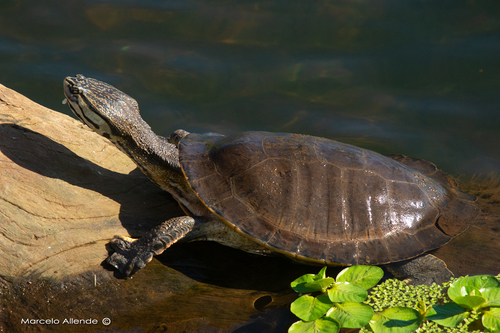
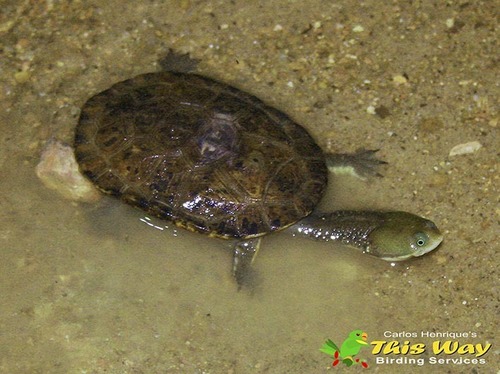
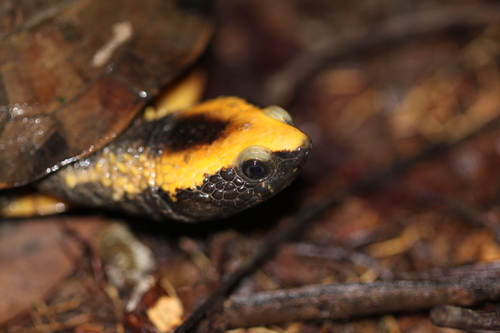
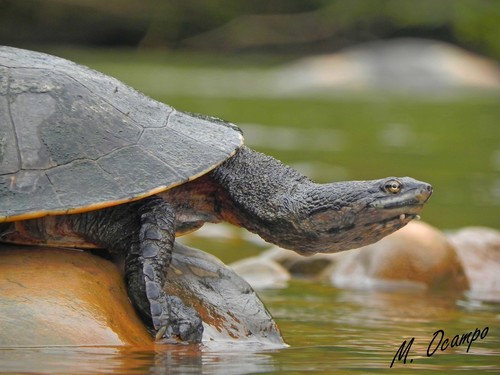
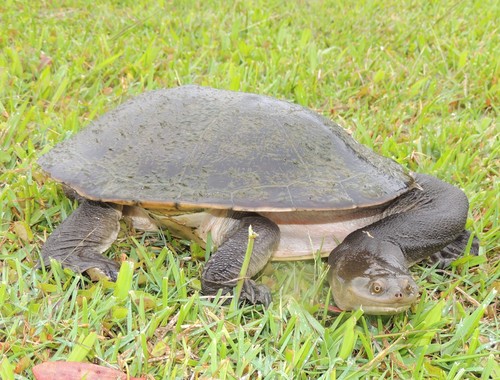
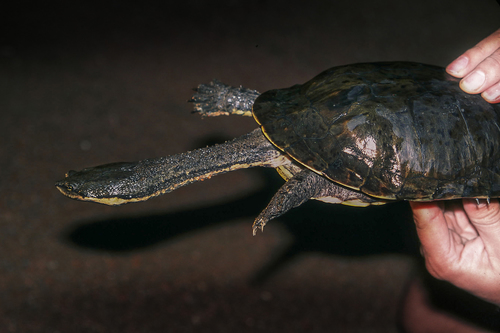
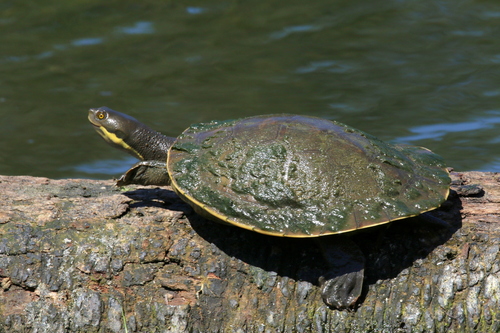
The Macquarie River turtle, scientifically named Emydura macquarii (Gray, 1830), is almost entirely aquatic. Its intergular plate extends to the front edge of its shell, and its plastrons are shaped with cut-away sections. This structure lets the turtle's legs move freely, allowing it to swim powerfully. Emydura macquarii has a broad geographic range across multiple Australian states. It occurs in coastal Queensland rivers, the Cooper Creek ecosystem, Fraser Island, Brisbane, the Macquarie River basin and all of its major tributaries, a number of coastal rivers along the New South Wales coast, northern Victoria, South Australia, the billabongs and channels of Cooper Creek, and along the Murray River. Introduced populations of this species are also present in the Adelaide city area. The Macquarie River turtle nests from October to early January. Females may lay multiple clutches of eggs, in nests they excavate in riverbanks. This species uses the XY sex-determination system, making it one of the few turtle species with a genetic sex-determination mechanism. Its X and Y chromosomes are macrochromosomes. This differs from most other genetically sex-determined turtles, including its close relative Chelodina longicollis, which has sex microchromosomes. It has been hypothesised that this turtle's sex chromosomes formed when an ancestral Y microchromosome translocated onto an autosome. It is often difficult to identify the gender of young Macquarie River turtles, but gender becomes easier to distinguish as the turtle grows.