About Empis tessellata Fabricius, 1794
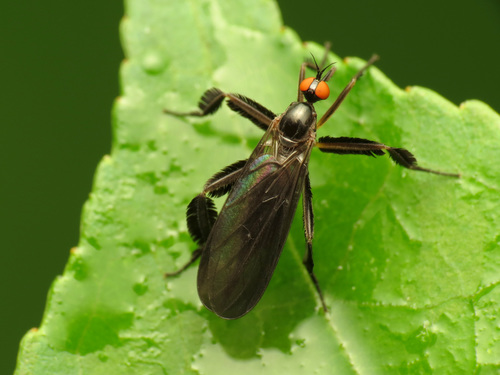
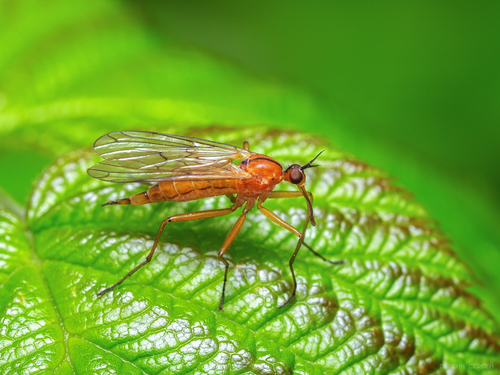
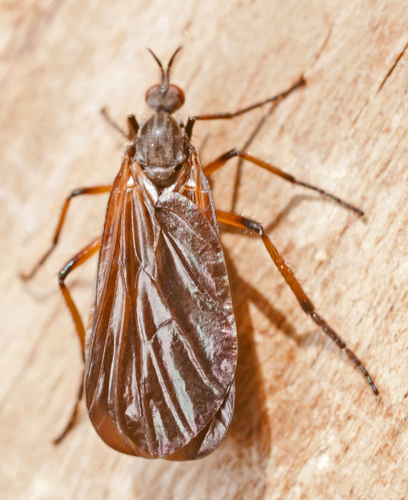
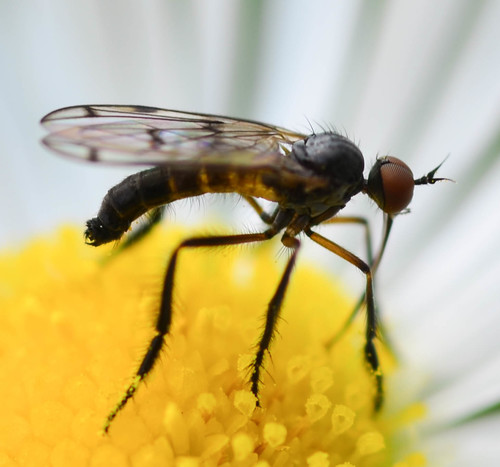
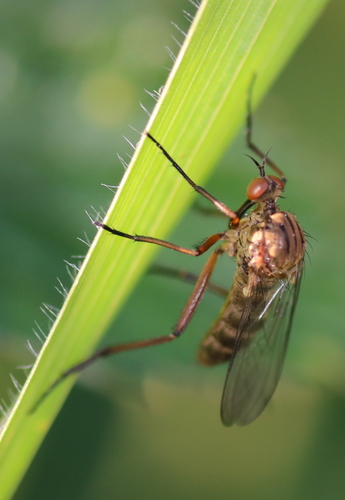
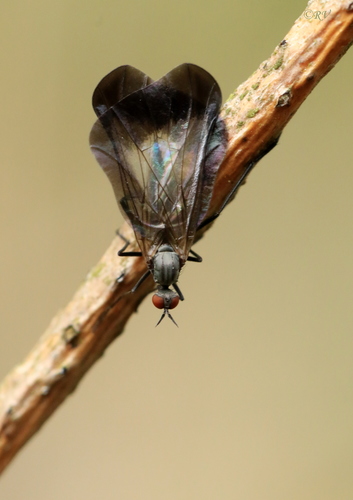
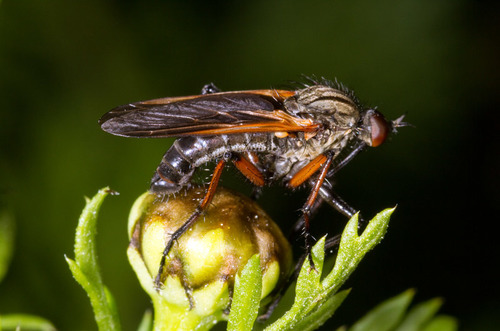
Empis tessellata Fabricius, 1794, a species of large dance fly, reaches a body length of approximately 9–11 millimetres (0.35–0.43 in) and a wingspan of 9.3–11 millimetres (0.37–0.43 in). Individuals have a body covered in prominent strong black bristles. Their long legs vary in color, and are most commonly red-yellow with black thighs. Their brown-tinged wings have dark brown veins and a rusty-yellow costal margin. The head is small, nearly spherical, with black antennae, large brown eyes, and a long pointed proboscis. The thorax has a gray-black base color, marked with three black longitudinal stripes. The abdomen is elongated, arched, and marbled bronze-gray. The third, and final, antennal segment bears a two-segmented seta. The sexes of this species can be distinguished by the size and arrangement of their eyes: in males, the eyes are narrowly contiguous, while in females, they are widely separated. Empis tessellata is the largest Empis species found in Britain, though other species of similar size occur in mainland Europe. This species is distributed across most of Europe, ranging from the Mediterranean to Scandinavia, and extends east through the Middle East and Central Asia to Japan. These dance flies inhabit moist meadows, forest edges, clearings, and lightly wooded areas, where they can be found on a variety of plants.