About Empis borealis Linnaeus, 1758
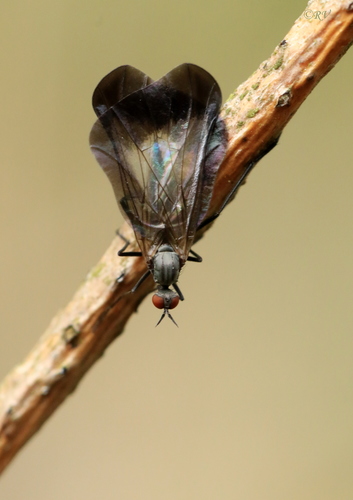
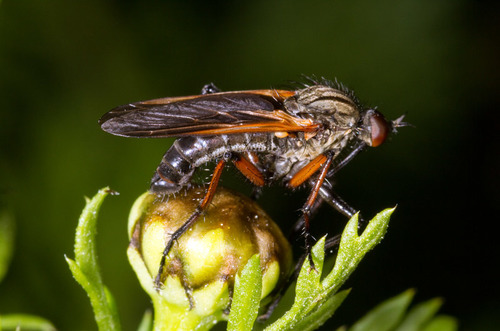
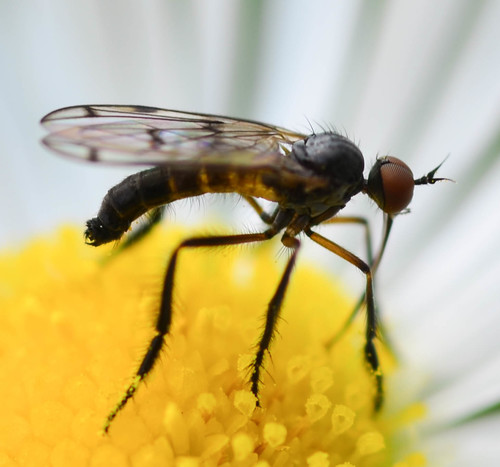
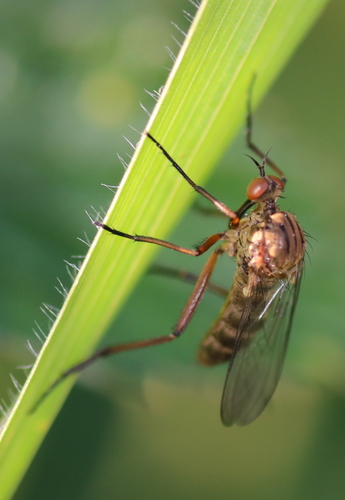
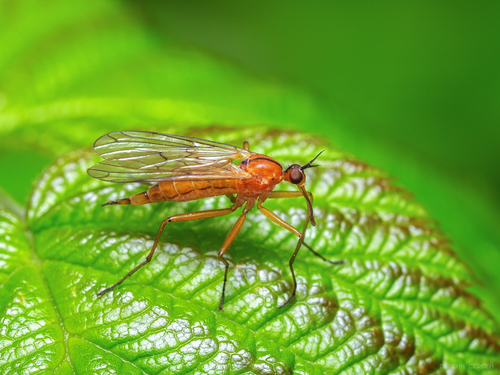
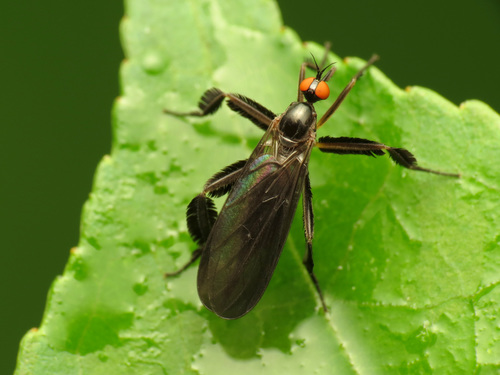
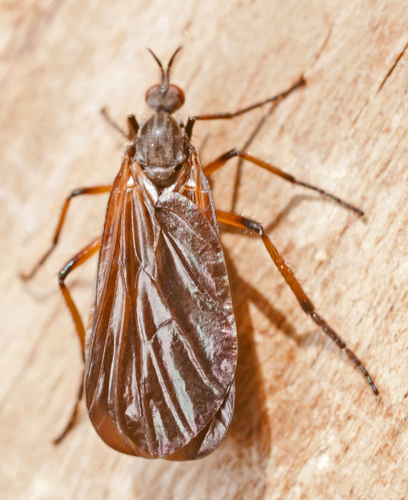
Empis borealis Linnaeus, 1758 is a species of empidid, commonly known as dance flies or balloon flies. Adult E. borealis are small- to medium-sized flies, reaching around 6 to 8 mm in length, and have dark brown wings. The species displays sexual dimorphism in several traits. First, wing size differs between males and females: females have broad wings, approximately 60% larger than the wings of males. Males and females also differ in the shape of the abdomen tip. Females have a pointed abdomen tip, while males have a larger tip that includes a hypopygium, the abdominal segment that supports the copulatory structure. This species can be easily identified in the field because it is the only empidid species present during May. The common name balloon fly refers to the male practice of bringing nuptial gifts to females in a woven silk abdominal “balloon” before mating. With their prey trapped inside these balloons, males approach a swarm of females to mate. E. borealis is reported to be the most common empidid species in the colder parts of Scandinavia, and its full distribution ranges east to west from western Siberia to Great Britain, and north to south from Scandinavia to the Alps. Adult E. borealis eat both nectar and smaller insects. Males tend to prey on soft-bodied insects. In one study, female flies only consumed prey during mating.