About Emoia impar (Werner, 1898)
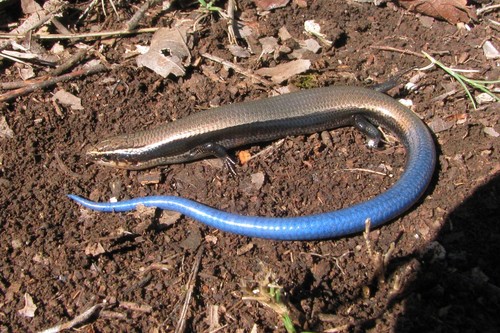
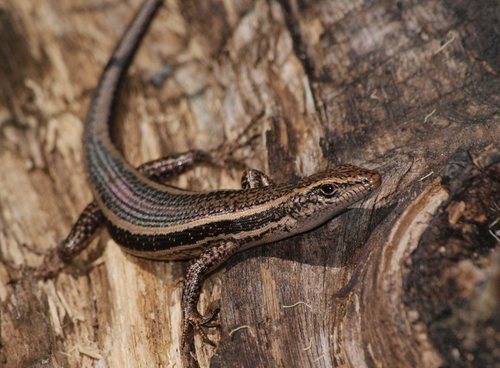
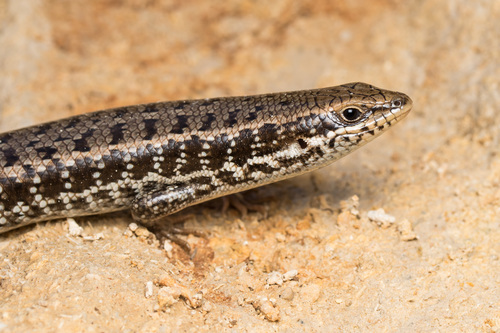
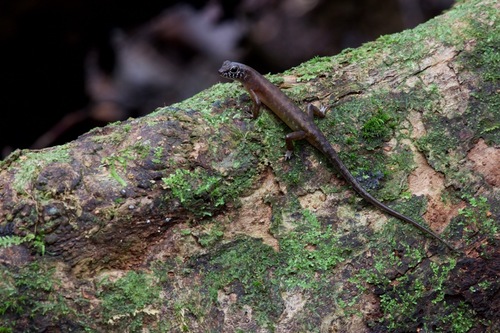
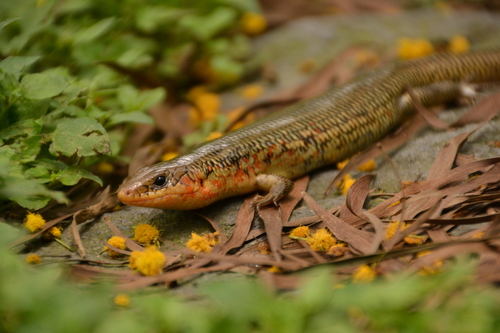
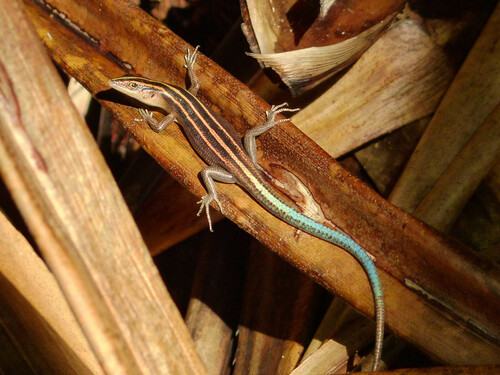
Emoia impar, commonly called the dark-bellied copper-striped skink or the azure-tailed skink, is a species of skink with a widespread distribution across the Pacific, particularly in Polynesia and Micronesia. Though it remains common across most of its native range, it faces threats from habitat loss, invasive species, and sea level rise driven by global warming. This species is a naturalized population in the Hawaiian Islands, and it was most likely introduced to the islands by Polynesian people. It has been almost completely eliminated from Hawaii, possibly due to the invasive big-headed ant. It had disappeared from most Hawaiian islands by the early 20th century, and only survived on the Na Pali Coast of Kauaʻi until the 1960s. Reported sightings of this species on Kauaʻi through the 1990s were actually misidentifications of an introduced population of Emoia cyanura, which was introduced in the 1970s and survived for up to two decades. While some published research states that E. impar has been completely eliminated from Hawaii, the species still maintains a stable, persistent population on the offshore islet of Mōkapu near Molokai. It was also observed in the Kalapana area of Hawaii Island, the big island of Hawaii, in September 2021. Some sources have classified E. impar as a native species to Hawaii, citing the discovery of a single fossil bone. However, analysis of the sediments where the bone was found shows that the bone is of relatively recent origin, not from an ancient native population. E. impar has an extremely dense, thriving population on Flint Island, where the local damp palm jungle provides ideal habitat for the species.