About Eminia lepida Hartlaub, 1881
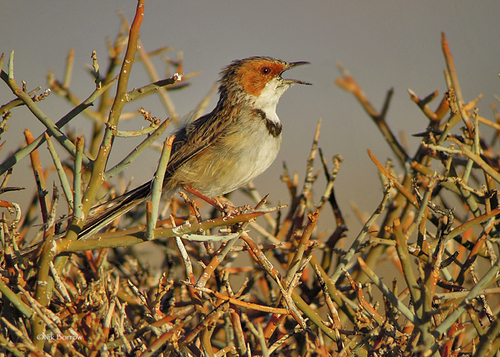
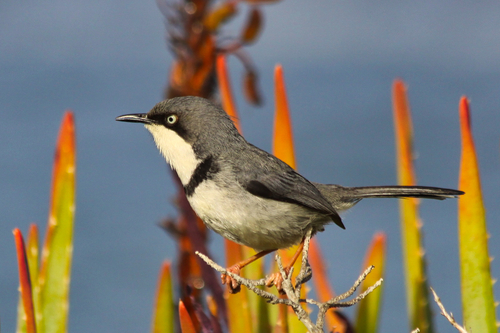
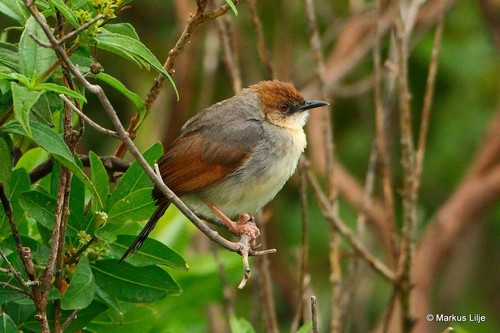
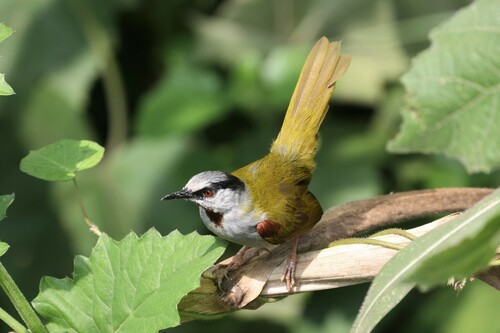
The grey-capped warbler (scientific name: Eminia lepida Hartlaub, 1881) is roughly 15 cm long, and weighs 16–24 grams. Adults have a typically chunky build and thin tail, with a distinctive grey cap, a black band around the head, a chestnut throat, and long, lax rump feathers. The bird's cheek, neck, and underparts are grey, with an olive-green tinge on the flanks and under tail-coverts. It has a chestnut vent patch and chestnut upperparts. The tail, median upper wing-coverts, and greater upper wing-coverts are olive-green, while the lesser coverts and underwing-coverts are chestnut. Flight feathers are dark brown, edged with olive-green. Adults have reddish-brown irises, a black bill and mouth, and pinkish-brown legs. Males and females have identical plumage. Juveniles are duller than adults, with a smaller, paler throat patch and brown eyes. Recently fledged grey-capped warblers have a prominent yellow gape and a shorter tail. The natural habitat of this species is subtropical or moist tropical shrubland. It occurs in dense undergrowth, scrub, and creepers, most often in damp areas along forest edges, seeps, or riparian strips, and also around well-planted gardens. The species is restricted to areas with annual rainfall over 500 mm. In Kenya, it is generally found at altitudes ranging from 800 m to 2,500 m. It is classified as a sedentary bird.