About Emerita talpoida (Say, 1817)
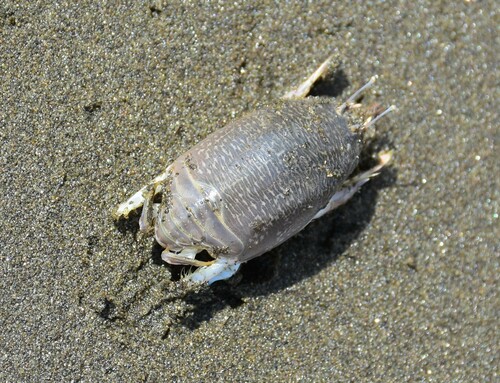
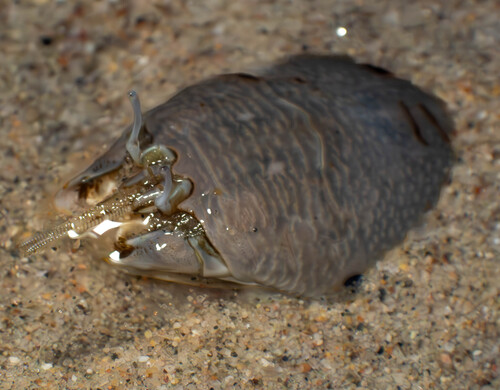
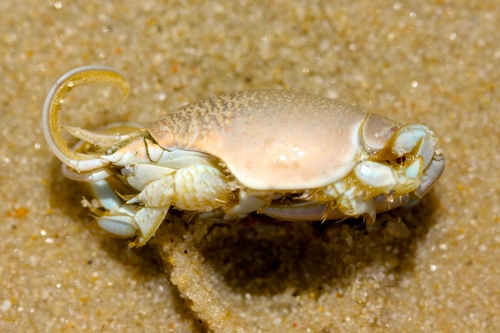
Emerita talpoida, commonly called the Atlantic mole crab or Atlantic sand crab, is a species of mole crab belonging to the family Hippidae. This species is found along the shoreline of the western Atlantic Ocean and Mexico. The Atlantic mole crab lives in the swash zone of sandy beaches, ranging from Cape Cod south to the Gulf Coast of Mexico. It is one of seven Emerita species native to the New World. Like all species in the Emerita genus, the Atlantic mole crab is a fossorial filter feeder. It needs moving water to feed, and obtains food by burrowing backwards into sand. It uses its exposed feathery antennae to filter algae, detritus, and plankton. The Atlantic mole crab is an important food source for Atlantic ghost crabs, blue crabs, and certain fish species that live in the swash zone. Shorebirds, most notably sanderlings, have also been observed foraging for these sand crabs. Its burrowing feeding strategy and camouflaged carapace both help the Atlantic mole crab evade predators. Because this species spends most of its life in the swash zone, it can act as a bioindicator for the impacts of large-scale engineering works.