About Embiotoca lateralis Agassiz, 1854
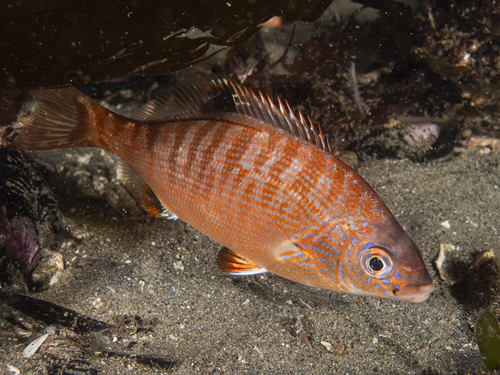
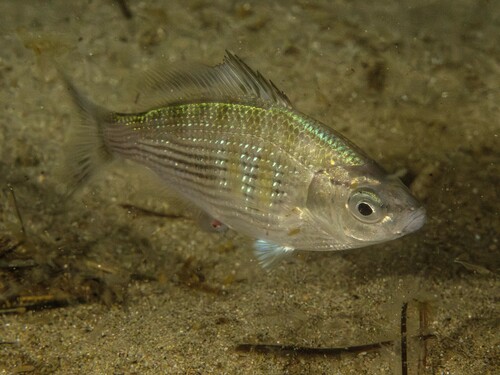
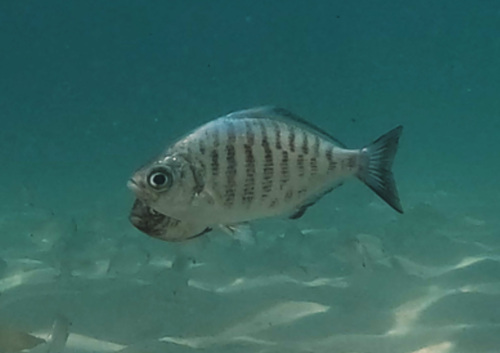
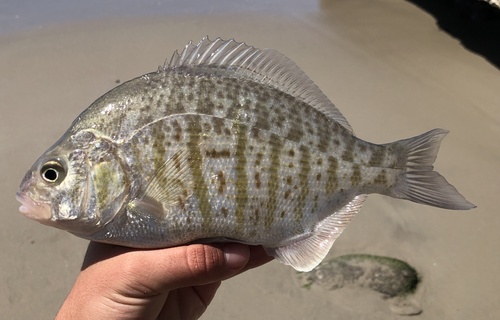
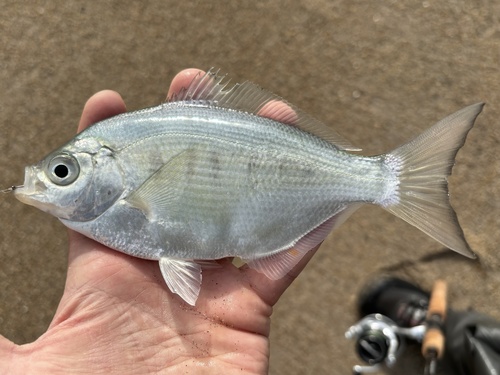
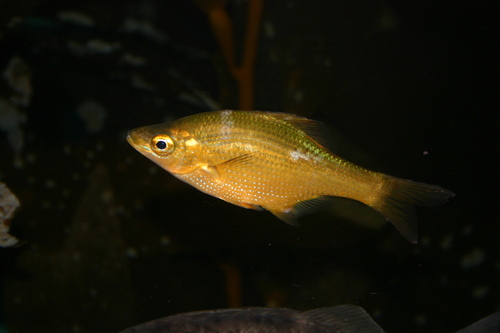
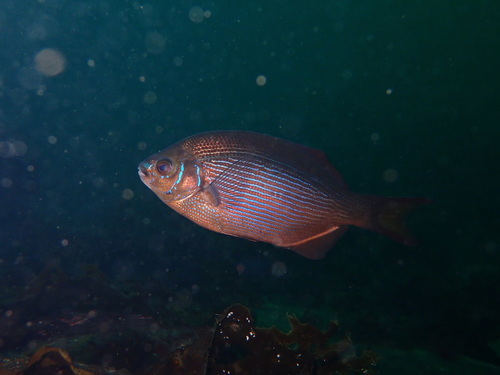
Embiotoca lateralis, commonly called the striped surfperch, has bright blue stripes running lengthwise along its body, which can appear bronze, brown-orange, pink, or darker black. It has blue spots on its head and operculum. Its fins are most often orange to yellow-black, and black bands may be present on the anal and soft dorsal fins. This species has a deep body and a laterally compressed frontal profile, and it has small teeth in its mouth. Adult individuals reach a maximum length of 41.5 centimetres (16.3 in) and a maximum weight of 1 kilogram (2.2 lb). Like other surfperch, the striped surfperch is viviparous, giving birth to live young. Individuals reach maturity at around 2 years of age, when they are usually between 22–25 cm (8.7–9.8 in) long. The striped surfperch is distributed from Punta Baja in Central Baja California to Wrangell in Southeastern Alaska. It most commonly occurs near rocky reefs, eelgrass beds, kelp forests, and underwater structures, including man-made piers. Though it is most often found in shallow waters and intertidal zones, it can live at depths up to 95 metres (312 ft). This species is sympatric with its only congener, the black surfperch (Embiotoca jacksoni). The two species have a large overlap in their diet, which consists of small benthic crustaceans and bryozoans. Due to interspecific competition where both species occur, Embiotoca lateralis is more frequently found in shallow algae-covered reefs, while Embiotoca jacksoni is more often located in deeper, comparatively food-poor waters.