About Emberiza spodocephala Pallas, 1776
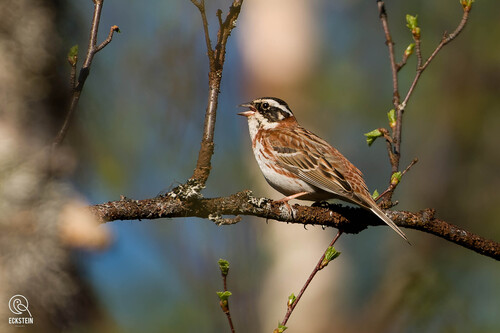
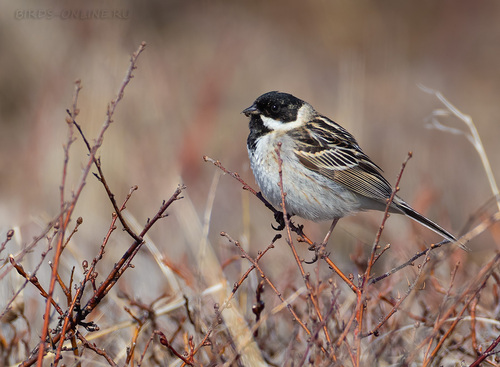
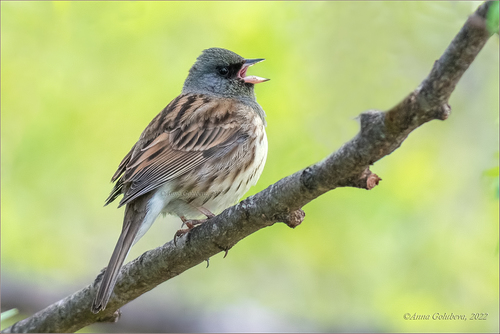
The black-faced bunting, with the scientific name Emberiza spodocephala Pallas, 1776, is a passerine bird in the bunting family Emberizidae. Most modern modern authors now separate this group from the finch family Fringillidae. The genus name Emberiza originates from the Old German word Embritz, meaning a bunting. The specific epithet spodocephala comes from Ancient Greek words spodos, meaning 'ashes', and kephalos, meaning 'headed'. This species breeds across southern Siberia extending to northern China. It is a migratory bird, wintering in north-east India, southern China, and northern south-east Asia. It is an extremely rare vagrant to western Europe. Black-faced buntings breed in dense undergrowth alongside streams and rivers in the taiga zone. They build nests on the ground or in trees, and lay four or five eggs per clutch. Their natural diet is made up of seeds, and they feed insects to their young. During winter, they live near water in agricultural areas or other open, bushy habitats. The species' general appearance and terrestrial feeding habits resemble a dunnock that has the typical bill of a bunting. It is similar in size to a reed bunting, measuring around 16 cm in total length. Breeding males have a dark grey head, with a mix of yellow-green and black colouring between the bill and eye. Their upperparts are brown and heavily marked with black streaks, which do not extend to the rump. The rump is brown, and the tail is also dark brown. Their underparts are yellowish white with fine dark brown streaks on the flanks. Their stout bill is pink in colour. Females and young birds have a less distinct head pattern, with olive-grey cheeks and a faint creamy white supercilium. Their underparts are creamy yellow and heavily streaked with dark brown. The call of the black-faced bunting sounds like tzii or tzee. It has a distinct 'metallic' quality, is very short, and is not classified as a full song.