About Emberiza rustica Pallas, 1776
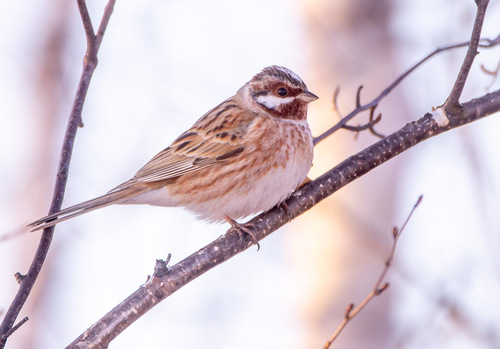
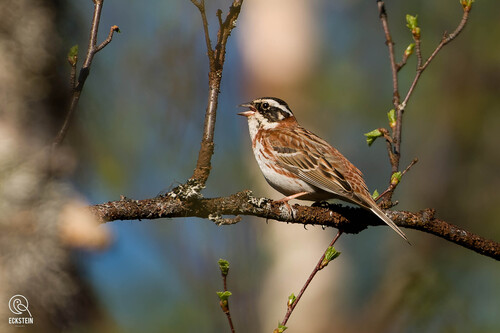
The rustic bunting (Emberiza rustica) is a passerine bird in the bunting family Emberizidae, a group most modern authors now separate from the finch family Fringillidae. The genus name Emberiza comes from the Old German word Embritz, meaning a bunting. The specific epithet rustica is Latin for "rustic, simple". This species was first formally described in 1776 by Prussian naturalist and explorer Peter Simon Pallas, who gave Dauria as its type locality. It is classified in the genus Emberiza (the typical buntings) within the family Emberizidae, and within the genus Emberiza, the rustic bunting is the sister species to the little bunting (E. pusilla). There are two recognized subspecies of rustic bunting. Emberiza rustica rustica breeds in the taiga across most of Eurasia, from Scandinavia to Siberia. Emberiza rustica latifascia breeds in far eastern Siberia, from Yakutsk to Kamchatka. Overall, the species breeds across the northern Palearctic. It is a migratory species, wintering in southeast Asia, Japan, Korea, and eastern China. It is a rare wanderer to western Europe. Rustic buntings breed in wet coniferous woodland. Females lay four to six eggs in a nest built in a bush or on the ground. Their natural diet consists of seeds; when feeding their young, they also eat insects. This bird is similar in size to the reed bunting. It has white underparts with reddish flanks, pink legs, and a pink lower mandible. In summer, breeding males have a black head with a white throat and supercilium, and a reddish breast band. Females have a heavily streaked brown back, a brown face, and a whitish supercilium. Females resemble female reed buntings, but can be distinguished by their reddish flank streaks, chestnut nape, and pink rather than grey lower mandible. The rustic bunting's call is a zit, similar to the call of the song thrush (Turdus philomelos), and its song is a melancholic delee-deloo-delee.