About Emberiza melanocephala Scopoli, 1769
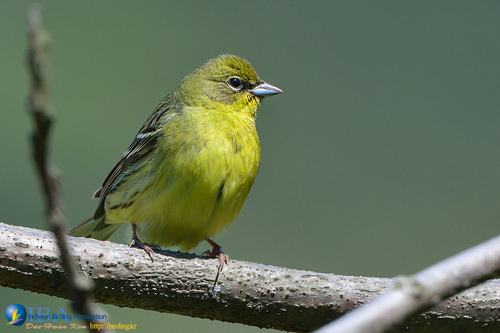
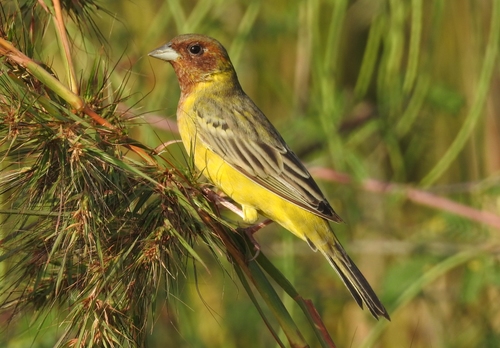
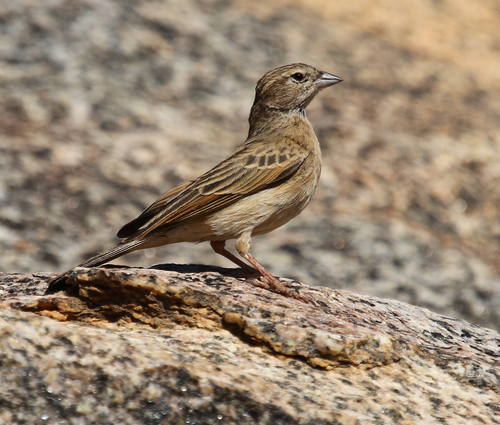
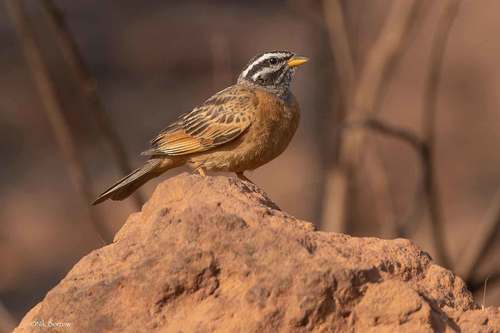
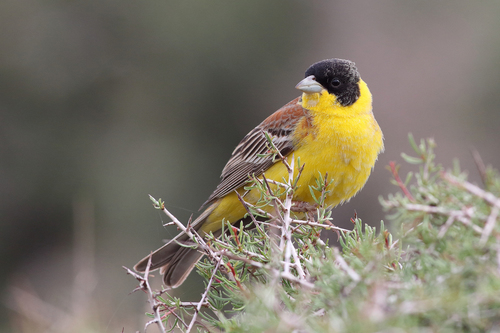
Black-headed bunting (Emberiza melanocephala Scopoli, 1769) measures 15 cm (5.9 in) in length, larger than a reed bunting, and has a long tail. Breeding males have bright yellow underparts, chestnut upperparts, and a black hood. Females are a muted, paler version of males, with paler underparts, a grey-brown back, and a greyish head. Juveniles resemble females, but have a yellow vent. Both adult females and juveniles can be hard to distinguish from the matching plumages of the closely related red-headed bunting; however, black-headed buntings typically have darker cheeks than throat. First-year males have a grey crown, and their backs hold patches of chestnut and grey. First-year females can also be difficult to separate from female red-headed buntings, though they have more streaking on the crown than on the lower back, and their vent is yellow. Black-headed bunting and red-headed bunting are sister species that form a clade together with crested bunting. This species breeds in open scrubby areas, including agricultural land, with its main breeding range stretching from southeastern Europe to central Asia. During migration, males form single-species flocks and arrive at winter grounds well before females. The longest recorded migration from a ringed individual is approximately 7,000 km, and one ringed bird was recorded flying 1,000 km in seven days. In winter, the species migrates to Asia, where large flocks gather in agricultural fields and grasslands. Within India, its winter range is concentrated in western and northern India, extending south to northern Karnataka. Black-headed buntings form large communal winter roosts in thorny acacia trees, often joining other bird species such as the yellow-throated sparrow. Vagrants have been recorded wintering as far east as Japan, China, Hong Kong, Thailand, Laos, South Korea, and Malaysia, while summer vagrants have been found as far north in Europe as Norway. Black-headed buntings forage in flocks on grasslands, feeding mostly on seeds. When feeding chicks, they primarily eat insects. They breed in summer, building a cup-shaped nest from dry grass lined with hair, placed in a low bush or on the ground. The clutch contains four to six eggs. Eggs hatch after around 13 days, and chicks fledge approximately 10 days after hatching. In Bulgaria, collapse of drying stems of the cotton thistle (Onopordum acanthium) that the birds use for nesting has caused high chick and adult mortality; this effect is considered an example of an ecological trap. In northern Iran, black-headed bunting’s range overlaps with red-headed bunting, and natural hybrids are common, despite molecular data showing considerable genetic divergence between the two species. Unlike many other Emberiza buntings, but similar to the red-headed bunting, the black-headed bunting has two moults per year. It completes one moult in its winter quarters before migrating back to the breeding range, and a second moult after breeding finishes. Young birds fledge with soft plumage, then moult into a juvenile plumage before migrating, and gain full adult plumage after moulting while in their winter quarters. In winter, the species' call is a single-note tweet or soft zrit. Its song is a loud series of distinct sections, each made up of high harsh notes that accelerate into a jangling mixture with a few clear slurred notes interspersed, before ending abruptly.