About Emberiza fucata Pallas, 1776
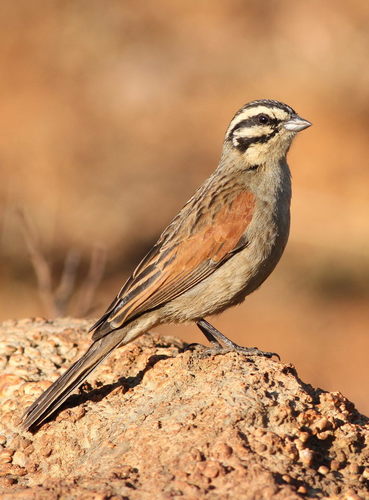
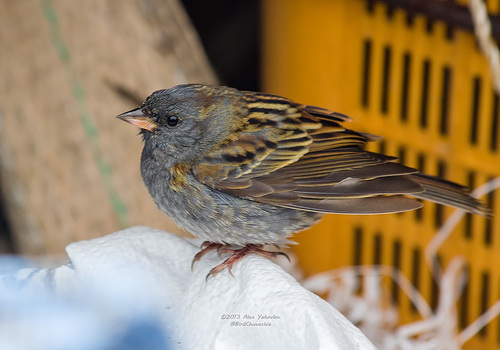
This species, Emberiza fucata Pallas, 1776, measures 15 to 16 cm in overall length. Its plumage is mostly brown with dark streaks. Breeding males have a grey, dark-streaked crown and nape, chestnut ear-coverts, and alternating black and chestnut bands across the breast. Males also have a rufous patch on the shoulders and rufous rump. Females resemble males but are duller, with less distinct head and breast patterning. First-winter individuals have plainer plumage, warm brown ear-coverts, and a clear ring around the eye. This species' voice is similar to that of the rustic bunting, but quieter. Its song is rapid twittering that opens with staccato notes, accelerates, and ends with a distinctive two or three note phrase. Its call is an explosive pzick. The breeding range of Emberiza fucata stretches locally from the Himalayas across China to southeastern Siberia, Korea, and northern Japan. Northern populations migrate south to overwinter in southern Japan, southern China, Taiwan, northeastern India, Bangladesh, and Southeast Asia. The species occurs as a vagrant in Kazakhstan, and the first recorded European sighting was in October 2004 at Fair Isle, Scotland. This species prefers to live in scrub, fields, and grassland. It builds a cup-shaped nest at ground level or low within a bush. Clutches contain three to six eggs, with four being the most common. Eggs are whitish with reddish-brown speckling, and are incubated for 12 days. The breeding season varies by location: it runs from May to August in India, May to July in Honshū, and June to August in Hokkaidō.