About Emberiza cirlus Linnaeus, 1767
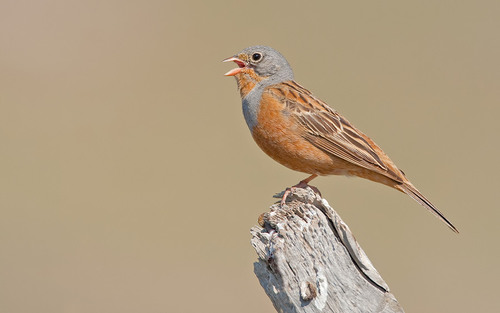
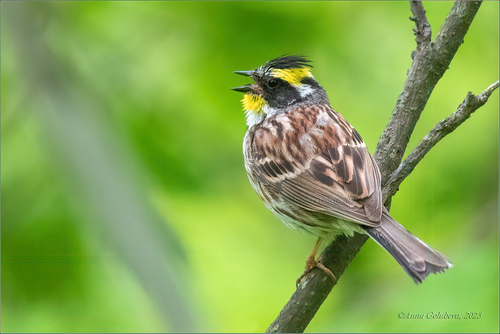
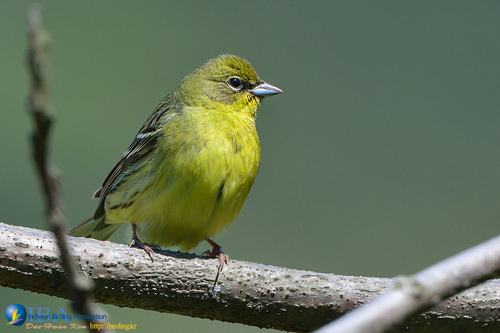
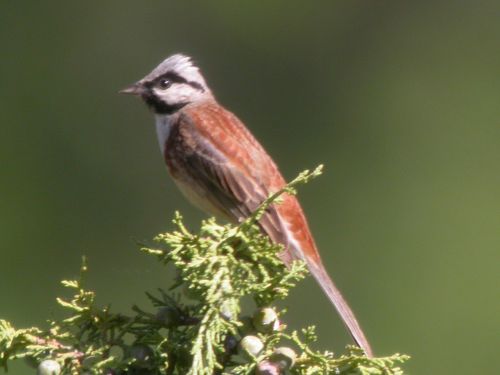
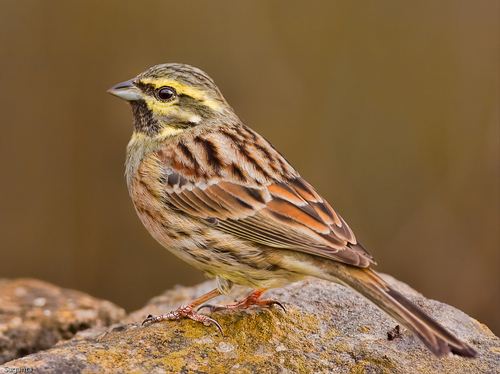
The cirl bunting (Emberiza cirlus Linnaeus, 1767) resembles a small yellowhammer (Emberiza citrinella). It measures roughly 15.5 cm (6.1 in) in length, with a wingspan ranging from 22–25.5 cm (8.7–10.0 in). It has a thick bill adapted for eating seeds. Males have a bright yellow head, marked with a black crown, black eyestripe, and black throat; their underparts are mostly yellow, crossed by a greenish breast band, and their back is brown and heavily streaked. Females look much more similar to yellowhammers, but can be distinguished by a streaked grey-brown rump and chestnut shoulders. The male's song is a monotonous rattling trill, similar to the song of the Arctic warbler or the terminal rattle of the lesser whitethroat.
For this species, ideal farmland habitat is a mix of grass and arable fields, divided by thick hedgerows with patches of dense scrub. Cirl buntings can tolerate some level of urbanisation, and they live in green spaces within towns and cities, including Rome. They are non-migratory and sedentary. In summer, they usually travel no more than 250 metres (820 ft) from their nests to forage; in winter, they travel up to 2 kilometres (1.2 mi) to find stubble.
In summer, cirl buntings feed their chicks on natural invertebrate prey such as grasshoppers and crickets. In winter, they feed on small seeds taken from over-wintered stubbles, fallow land, set-aside, and grain or hay left for over-winter livestock feeding. They typically feed in flocks during winter.