About Emberiza chrysophrys Pallas, 1776
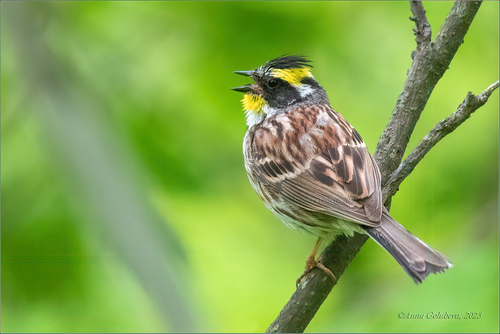
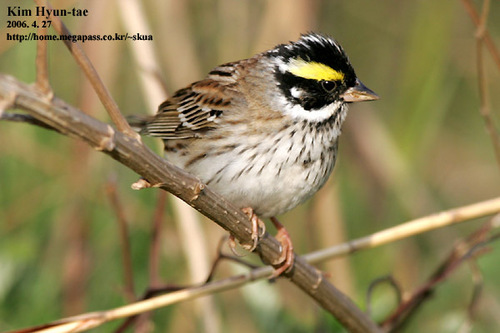
The yellow-browed bunting, with the scientific name Emberiza chrysophrys, is a passerine bird that belongs to the bunting family Emberizidae. Most modern taxonomists now separate this bird group from the finch family Fringillidae. The genus name Emberiza comes from the Old German word Embritz, which means a bunting. Its specific epithet chrysophrys originates from the Ancient Greek word khrusophrus, meaning golden-browed. This species breeds in eastern Siberia, is migratory, and winters in central and southern China. It is a very rare wandering species in western Europe. Yellow-browed buntings breed within the taiga zone, and build their arboreal nests where they lay four eggs. In the wild, adult yellow-browed buntings eat seeds, but they feed insects to their nestlings. This bird is smaller than a reed bunting, and has a relatively large head. Its upper parts are brown with heavy streaking, while its underparts are white with an orange tint on the flanks and fine dark streaks. The species has stout, pink beaks. Breeding males have a black head, with white stripes on the crown and along the moustache, plus a white throat. They also have a bright yellow eyebrow stripe. Females and young yellow-browed buntings have a less distinct head pattern, with brown head colouring instead of black. They can be confused with little buntings, but they always have at least some yellow in the eyebrow, and at least a faint white stripe on the crown.