About Elysia timida (Risso, 1818)
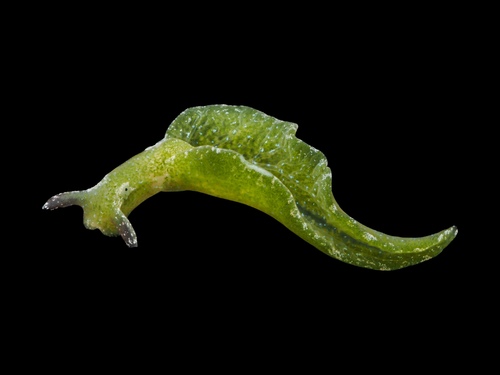
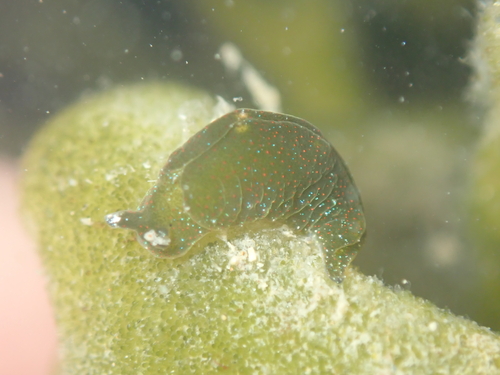
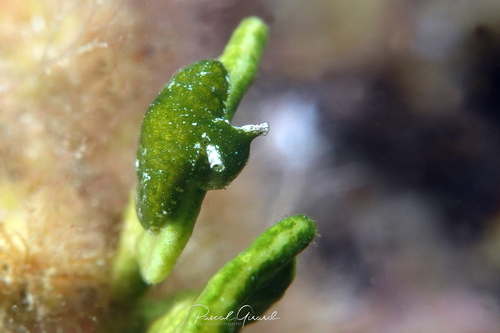
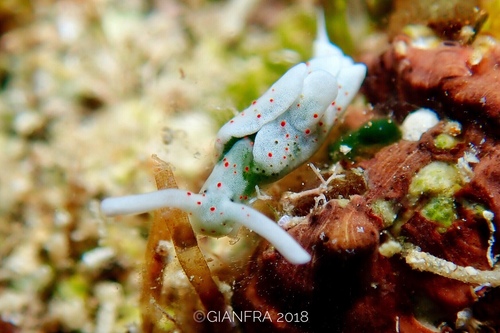
Elysia timida is a small species of sea slug that reaches a length of about 12 millimeters (0.5 inches). On its head, there is a pair of long, smooth rhinophores, and a pair of black eyespots sit at the base of these structures. Its broad foot widens into two lobed parapodia that can fold over the slug's back. The slug is primarily white with widely scattered red or orange spots, while the dorsal surface of its body and the inner surfaces of its parapodia range from mid-green to dark green. If an individual lives in a habitat with Lithophyllum or other pink calcareous algae, its white base colour may take on a faint mauve tint. This marine species was originally thought to be endemic only to the Mediterranean Sea, but it has also been recorded in the Atlantic Ocean off the coasts of the Cape Verde and Canary Islands, and may also occur in the Caribbean Sea. It inhabits seagrass beds and algae-covered rocks, and can be found at depths down to approximately 20 meters (66 feet). Elysia timida is a hermaphroditic species, and mating occurs between two individuals that mate at the same time. When mating, the two slugs position their right sides close together, and each inserts sperm into the other's tissues using its long penis. After this initial stage, the slugs separate, turn, and reposition themselves to deposit sperm directly into each other's genital opening; this second mating phase is sometimes skipped entirely. In spring, this species lays eggs in a white spiral coil that measures around one centimeter across.