About Elysia subornata A.E.Verrill, 1901
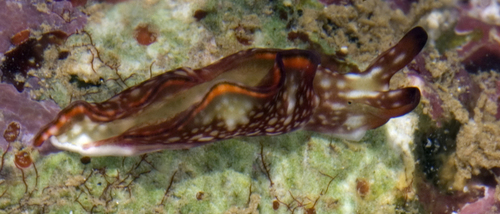
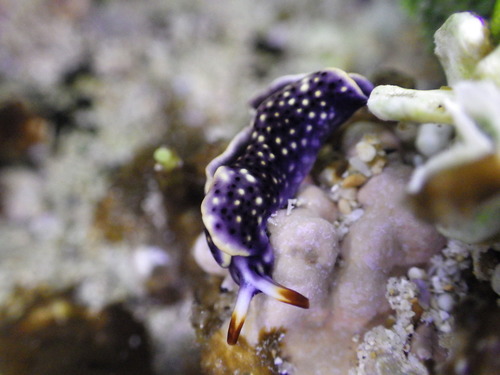
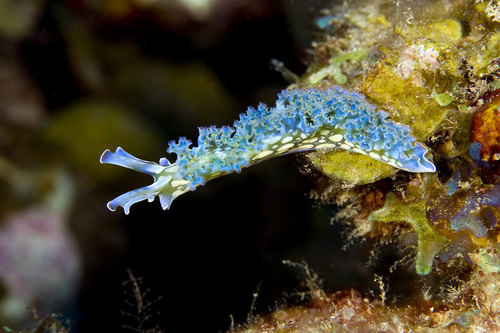
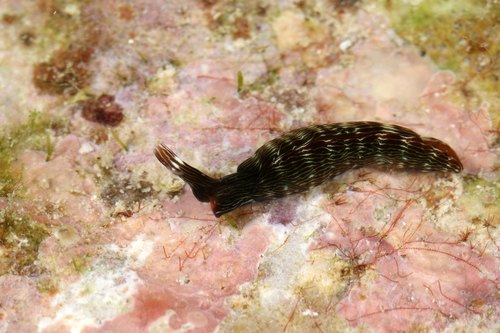
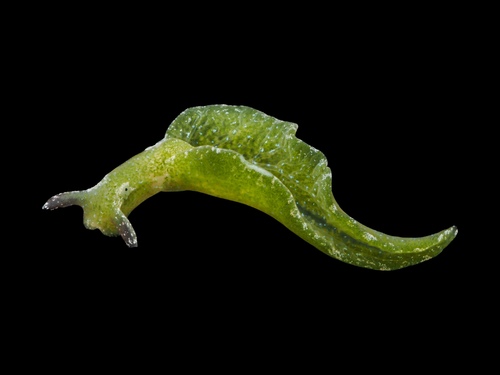
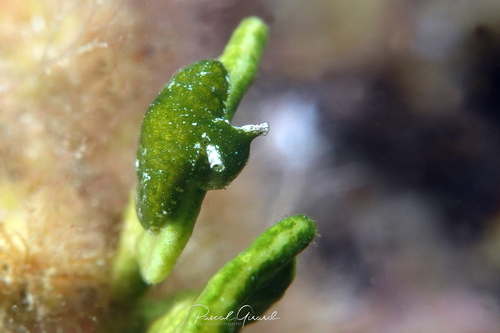
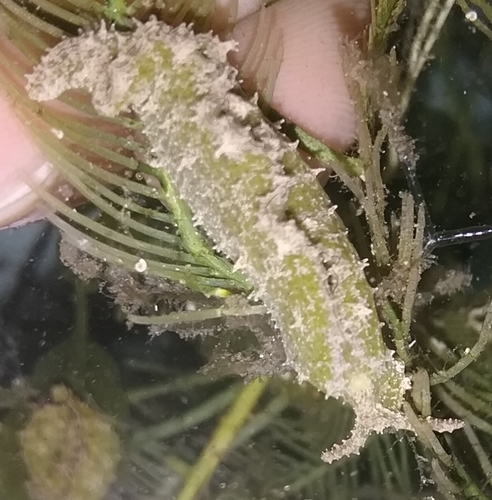
Elysia subornata reaches an adult length of around 5 centimetres (2.0 inches). Its body colour is variable, occurring in shades of green, olive, and beige, and sometimes has a reddish tinge. It has broad, fleshy side protrusions called parapodia, which have thick white margins that are sometimes edged in brown or black. The parapodia are covered in tiny fleshy protuberances called papillae, and the rhinophores—sensory organs located on the head—also have a papillose texture. This species is native to the tropical western Atlantic Ocean, including the Caribbean Sea. Researchers have proposed using Elysia subornata as a biological control agent against an invasive strain of the alga Caulerpa taxifolia in the northwestern Mediterranean Sea. Most native herbivores avoid eating this alga because it has very high toxicity levels. Elysia subornata, by contrast, preferentially feeds on Caulerpa taxifolia, and uses the alga's secondary metabolite caulerpenyne for its own defensive purposes. Elysia subornata cannot survive the cool winter temperatures of Mediterranean waters, so it would need to be reared in large quantities to produce a meaningful control effect. An alternative approach would be to genetically engineer a hybrid strain using DNA from Elysia timida and/or Elysia viridis.