About Elysia maoria Powell, 1937
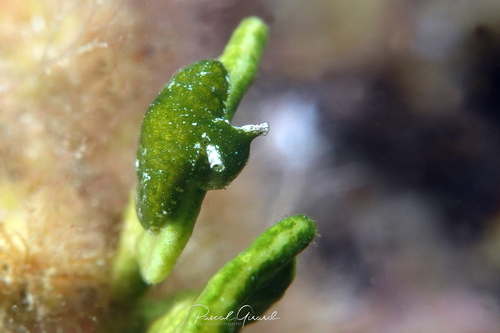
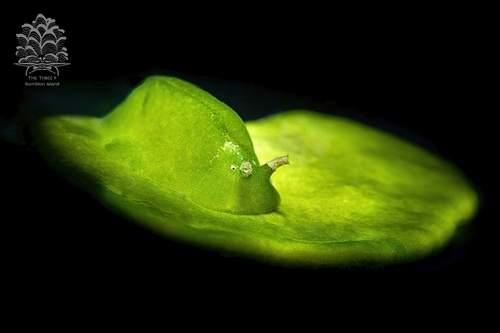
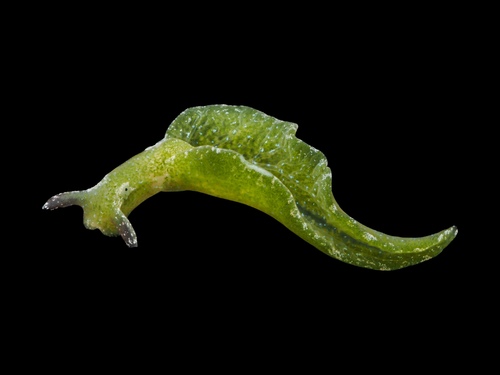
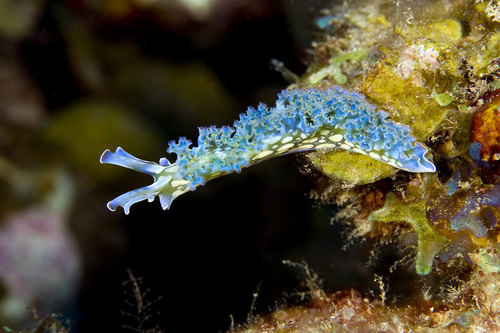
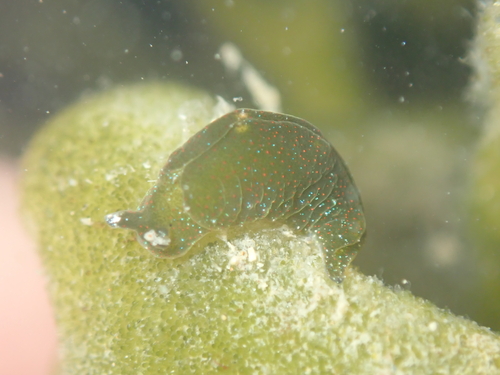
Elysia maoria is a species of sea slug that, like other sea slugs in its group, lacks a shell. It is a member of the Sacoglossa clade, commonly called "sap sucking slugs", which have a single row of teeth on their radula adapted for sucking nutrients from algae. These small creatures have a green, roughly oval body shape, and use muscular appendages called parapodia for movement. Parapodia work like undulating fins, producing wavy movements to propel the animal when swimming. Researchers currently believe that Elysia maoria has a long planktonic life stage after hatching, but overall little is known about this species. This species reaches sexual maturity once it grows longer than 20 mm, and fully grown adults typically reach 25 to 26 mm in total length. Elysia maoria is an herbivore that uses its single-tooth-rowed radula to attach to algae and suck out algal fluids, which are then digested. Some related Elysia species such as E. chlorotica retain captured algal chloroplasts to conduct photosynthesis through a process called kleptoplasty, but it is currently unknown whether E. maoria also carries out kleptoplasty. Elysia maoria is found within the New Zealand exclusive economic zone. It primarily inhabits benthic temperate shoreline habitats around islands, and it creates homes and lays its eggs on the fronds of Codium, a common genus of green algae. The gonad follicles of Elysia maoria are located inside the animal's parapodia. This species reproduces through hypodermic impregnation: the male's penis pierces the female's body wall, releasing sperm into her body cavity beneath her skin, which then travels to reach the female's eggs. After fertilization, the ova move to the outside of the female's body through a glandular oviduct. During this passage, the ova gain an albumen coat and a membrane, then are bound into a ribbon with two additional mucous coats. Larvae develop inside these long, flattened spiral egg ribbons characteristic of sacoglossans, which protect the eggs until larvae are ready to hatch. Hatching occurs approximately two weeks after eggs are laid, and newly hatched larvae have been observed on Codium species. In male Elysia maoria, sperm-producing follicles are positioned below branched prostate glands and above reticulate albumen glands. Unlike males of other Elysia species, the penis of E. maoria does not have a hollow spine, which leads scientists to question how it is able to penetrate the female's body wall. Male Elysia maoria begin sexual activity before females do, meaning they reach the required size for sexual maturity earlier than females. Females have ova-producing follicles and two genital apertures, but lack a vagina.