About Elysia crispata Mörch, 1863
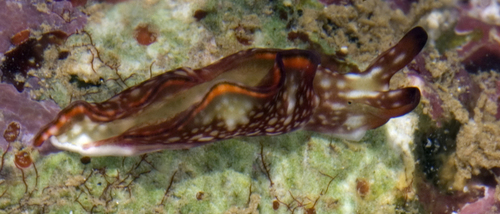
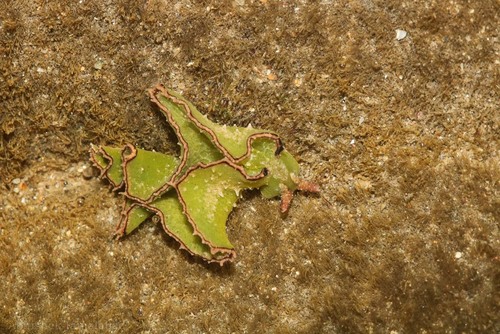
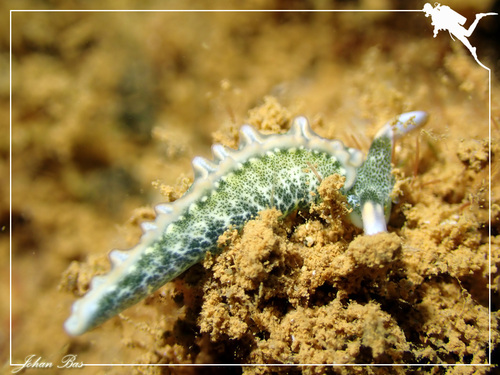
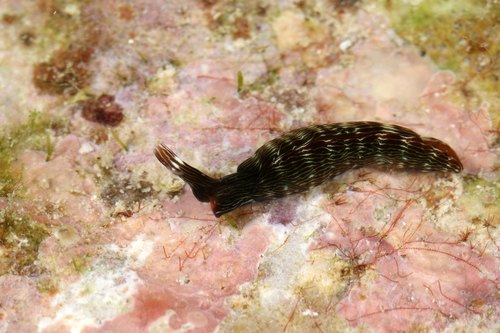
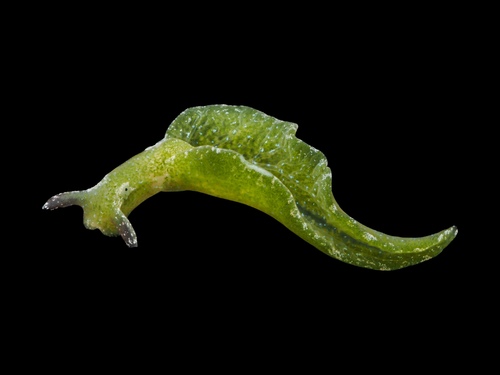
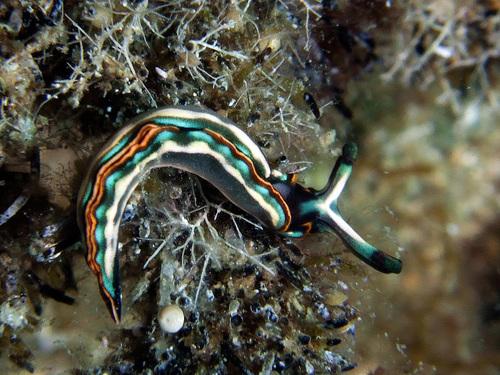
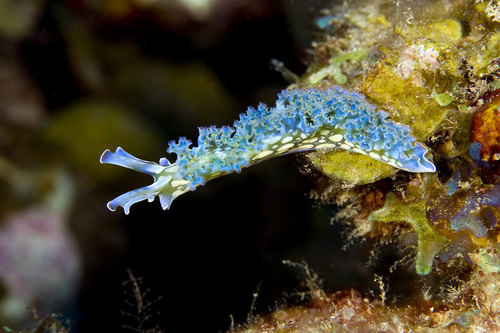
This species is commonly called the lettuce slug. It gets this common name because it is often green, and its parapodia always have very frilly edges. These features make the slug resemble curly lettuce varieties like lollo rosso. This species reaches a maximum length of about 5 cm and maximum width of about 3 cm. It has extremely variable coloration: individuals can also be blue, or very pale with red or yellow lines. This species occurs in tropical regions of the western Atlantic and the Caribbean faunal zone. It is found in shallow, clear water in coastal areas and tropical reef habitats. Very little is known about the mating behaviors of Elysia crispata. Females typically lay their egg mass on flat, upright algae, and embryo development takes approximately 15 days. E. crispata eggs are very small, measuring between 106 and 113 micrometres, and average egg size varies between locations. Newly hatched E. crispata display dispersal dimorphism, which is not the same as poecilogony. Hatchlings can complete metamorphosis either while still inside the egg capsule (intracapsular metamorphosis) or after hatching (post-hatching metamorphosis). This gives E. crispata variable dispersal strategies: some individuals from a clutch stay in the original habitat, while others can swim to a new habitat before undergoing metamorphosis. Some sacoglossan species, such as Elysia tuca, invest extra energy to produce extra-cellular yolk woven into their egg mass. This extra yolk provides more nutrients for larval growth, resulting in larger offspring. Unlike these species, E. crispata does not produce extra-cellular yolk, a trait that influences the size of its eggs.