About Elymnias nesaea Linnaeus, 1758
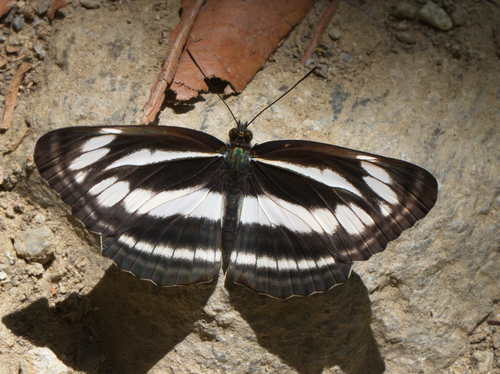
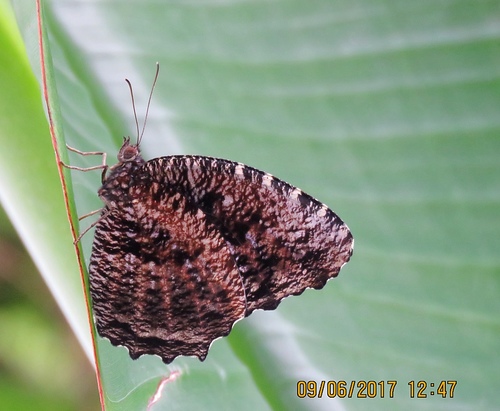
Elymnias nesaea, described by Linnaeus in 1758, has a wingspan of about 65–85 millimetres (2.6–3.3 in). The upperside of its wings is black with long bluish-green streaks. The forewings have four or five spots in the apical area, while the hindwings have subterminal whitish spots in the posterior interspaces. On the underside, both wings have a broad dark brown area in males. In females, the undersides of the wings are white with brown or yellowish shading. Adult Elymnias nesaea mimic Danaus aglea. The larvae feed on various Arecaceae species, mainly Calamus species, Trachycarpus forturei, Cyrtostachys lakka, Cocos nucifera and Ptychosperma macarthurii. This species occurs in India, Bhutan, Thailand, Laos, Burma, Peninsular Malaya, Java, Sumatra and Borneo.