About Elodea nuttallii (Planch.) H.St.John
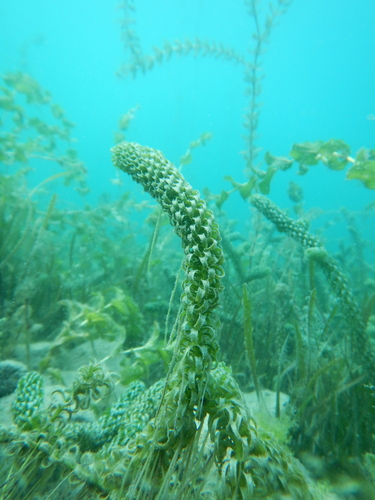
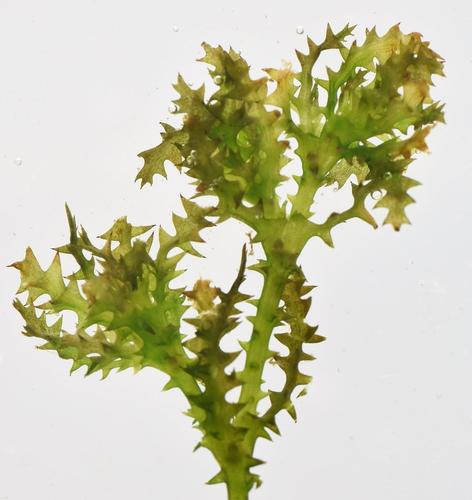
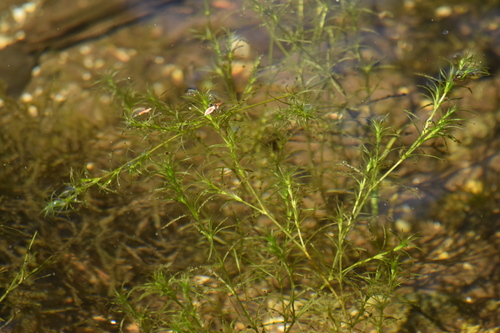
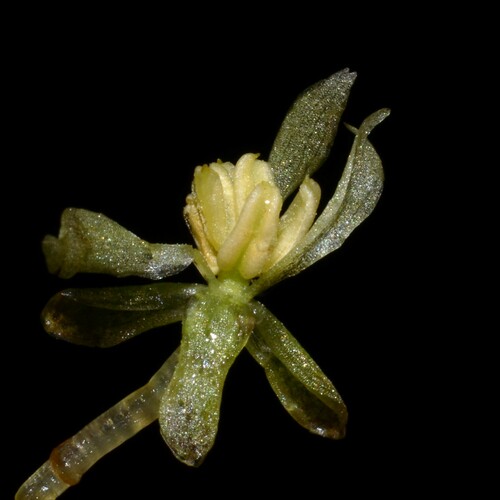
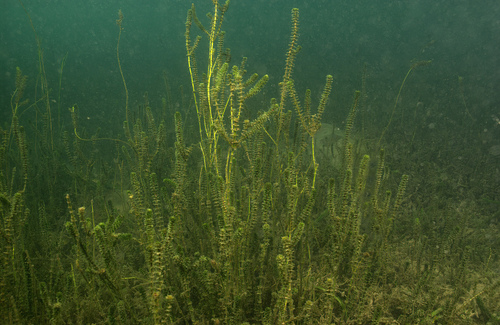
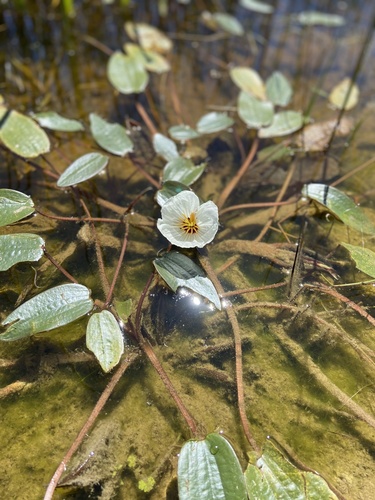
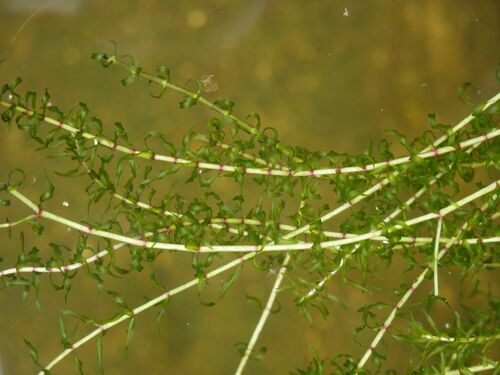
Elodea nuttallii is similar to its close relative Elodea canadensis, differing primarily in that its leaves taper to an acute point. It has a thin, branching stem, with whorls of 3 to 4 flat leaves spaced at intervals along the stem; 5 leaves per whorl occurs only as an exception. Some of its leaves are recurved and twisted, and have minute tooth-like structures along their edges. It produces very small flowers; staminate (male) flowers break away from their stalks and float away from the parent plant. Its flowering season runs from May through October. In Europe, nearly all individuals of this species are female, and male plants are only recorded from a small number of locations. This species is native to temperate North America. It has become naturalized in Europe since 1939, and in Japan since the 1960s. The earliest known European record of Elodea nuttallii likely dates to 1914 in England, though the specimen was originally misidentified as Hydrilla verticillata; correct identification as Elodea nuttallii was not made until 1974. It is thought to have first become established and naturalized in Oxfordshire in 1966, and has since spread to most of England, as well as many areas of lowland Wales and lowland Scotland. The first record of this species in Ireland was from Lough Neagh in 1984, and it has since spread widely across the country. It is classified as an invasive species in Europe. It spread to Belgium in 1939, the Netherlands in 1941, Germany in 1953, Denmark in 1974, Sweden in 1991, and Norway in 2006. It is now present across most of Northern Europe, and in many regions it displaces the already invasive species Elodea canadensis.