About Elliptio crassidens (Lamarck, 1819)
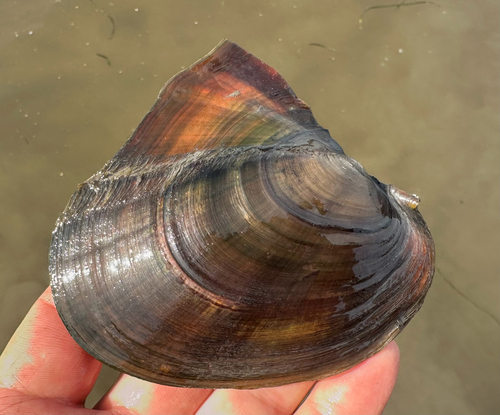
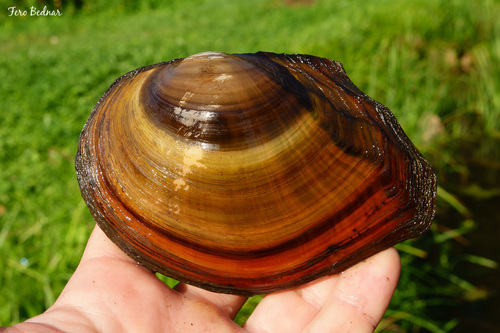
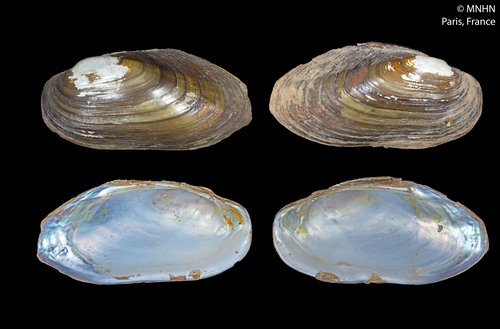
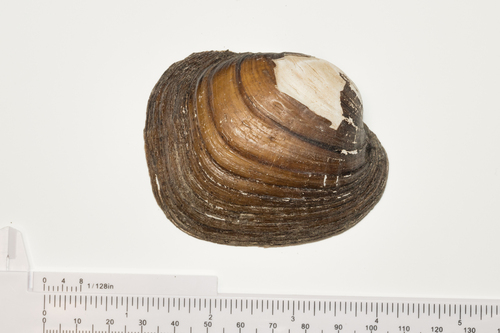
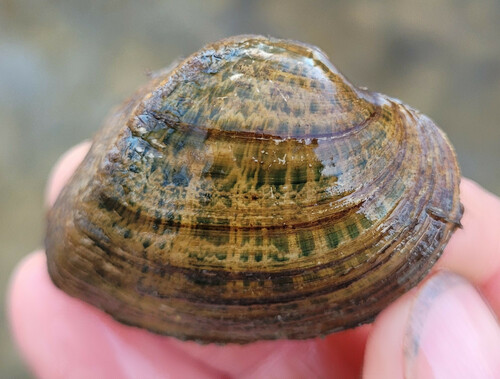
Elliptio crassidens, commonly called the elephant-ear, is a species of freshwater mussel. It is an aquatic bivalve mollusk that belongs to Unionidae, the river-mussel family. Elephant-ear mussels have a thick, triangular shell that can grow up to six inches in length. The outer surface of the shell is brown or black, while the inner surface is typically light purple. This mussel usually lives in mud, sand, or fine gravel in large rivers. It can be found in midwestern, eastern, and some southern states of the United States, as well as the Canadian provinces of Quebec and Ontario. Elephant-ears typically breed once each year. Their breeding seasons are short, lasting either from April through May or from June to July. Both males and females reach sexual maturity between four and six years of age. Larvae remain in their mother's gills for anywhere from a few weeks to a few months. After this period, the offspring attach to the fins or gills of a host fish. They live parasitically on the host fish for several weeks, after which juvenile clams break free and fall to the river bottom. There they burrow and develop into adult mussels. For the rest of their lives, mussels will rarely move more than a few meters from this burrowing site. Elephant-ears are filter feeders that eat primarily bacteria, protozoans, algae, and plankton. Their common predators include otters, raccoons, muskrats, herons, egrets, and a variety of fish. Like other mussels, elephant-ears are thought to be long-lived, with lifespans ranging from 20 up to 100 years. While the species is widespread overall, it is relatively rare in the Midwest, though it is locally abundant in some sections of the Ohio and White rivers in Illinois and Indiana. Elephant-ear mussels are listed as endangered in Minnesota, Missouri, Wisconsin, Ohio and Virginia, and are classified as threatened in Illinois.