About Elliptio complanata (Lightfoot), 1786
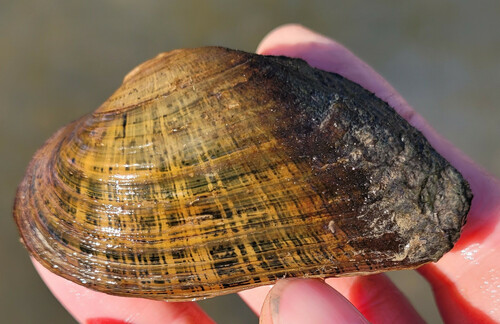
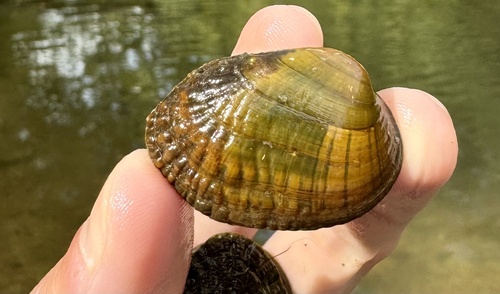
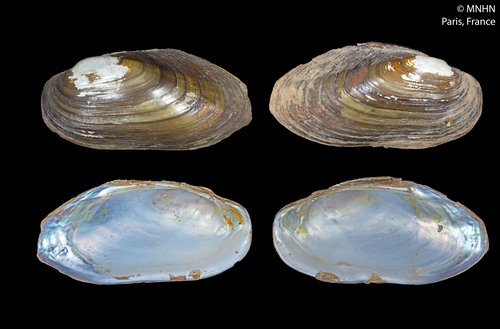
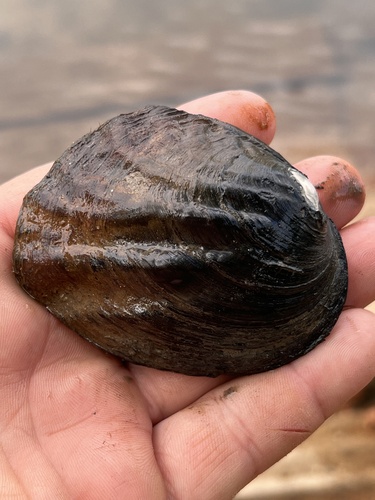
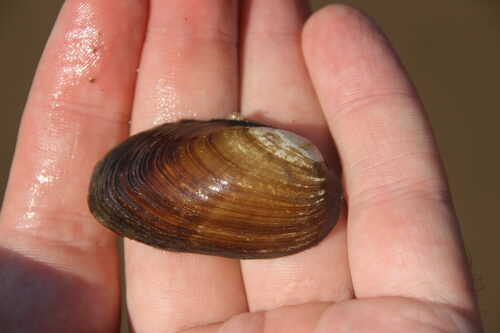
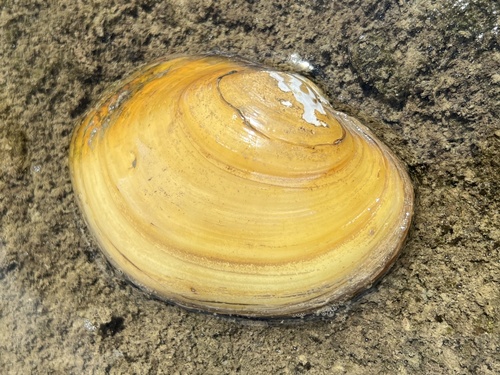
The eastern elliptio, with the scientific name Elliptio complanata (Lightfoot), 1786, is a freshwater mussel belonging to the Unionidae family. It is a bivalve mollusk native to Canada and the United States. In the waterways it inhabits, it is frequently the most abundant mussel species present. It is the most common mussel in the Delaware River, as well as in the US states of New Hampshire and Vermont. This species lives within the substrate at the bottom of lakes, ponds, and rivers. Its size varies among individuals, and it can grow to a maximum length of 13 centimetres (5.1 in). Eastern elliptio reproduces sexually through spawning that occurs between the third week of April and the second week of June. Like most Unionidae mussels, Elliptio complanata starts its life as an egg held in the gills of a female eastern elliptio. It next matures into a glochidium, which then attaches to a host fish species before developing into a juvenile mussel. Elliptio complanata glochidia are known to attach to several host fish species, including the American eel (Anguilla rostrata), brook trout (Salvelinus fontinalis), lake trout (Salvelinus namaycush), mottled sculpin (Cottus bairdii), and slimy sculpin (Cottus cognatus). It reaches the highest successful maturation rate when using the American eel as a host.