About Elkalyce alcetas (Hübner, 1805)
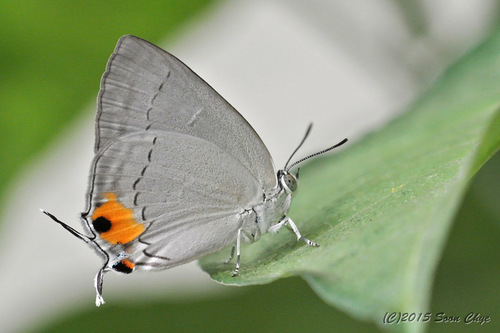
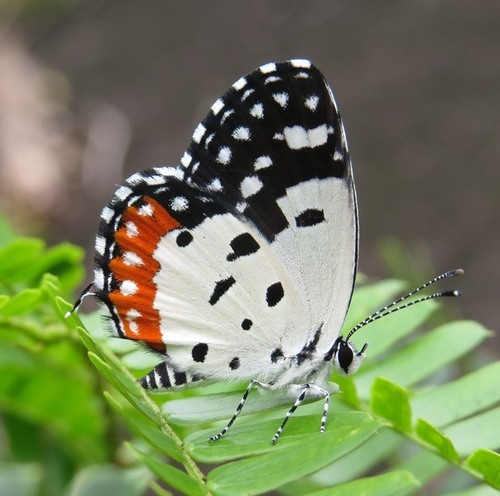
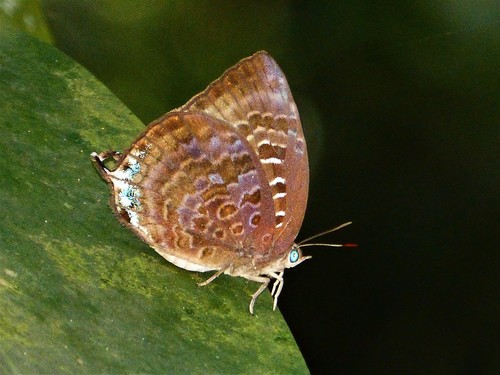
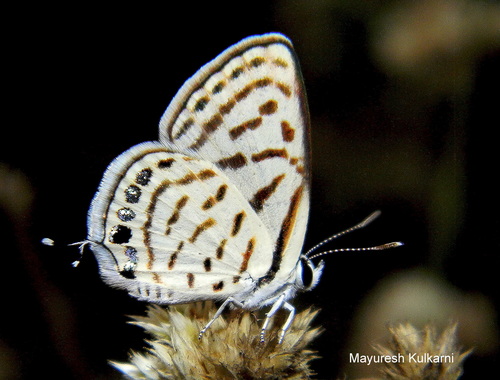
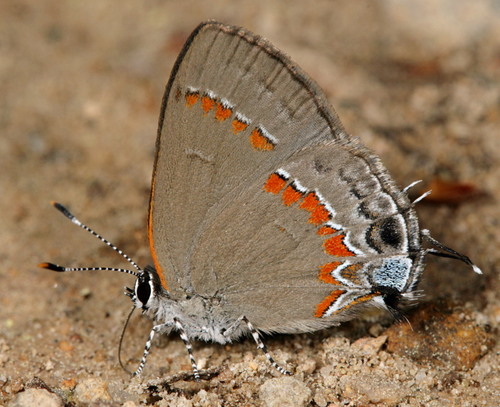
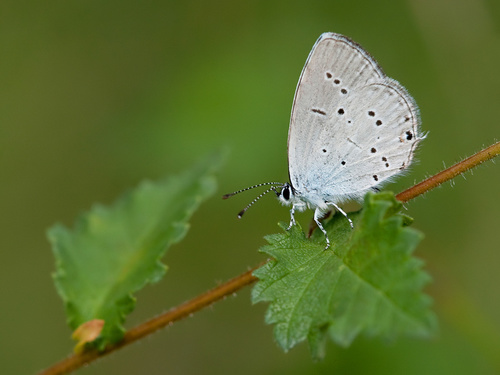
Elkalyce alcetas (Hübner, 1805), previously referred to as Cupido alcetas, has a wingspan of 26–32 millimetres (1.0–1.3 in). These small butterflies exhibit sexual dimorphism: the upperside of the wings is blue-purple in males, and brown in females. The wing edge is black, with a white fringe. The underside of the wings is pale blue-gray, marked with a series of small black spots encircled by lighter clearer blue. On the underside of the hindwings, orange markings are usually absent. Sometimes a single orange-colored anal spot is present, and this spot does not reach the marginal black spot. A thin, very short tail is usually present close to the anal angle of the hindwing. This species is similar to the Short-tailed blue (Cupido argiades, also called Everes argiades), and less similar to the Holly blue (Celastrina argiolus). It can be differentiated from the Eastern Short-tailed Blue (Cupido decolorata) by the lack of a black discoid spot on the upper surface of the forewings, which is present on C. decolorata. For reliable identification, a genital morphological examination is recommended. The short-tailed blue differs from this species by always having two orange spots at the anal angle on the underside of the wings. This species was first described from Austria by Johann Centurius Hoffmannsegg in 1804. It occurs locally in southern and central Europe, Turkey, the Urals, southern Siberia and northern Kazakhstan. It inhabits flowery grassy places, bushy and damp areas, and woodland clearings, at elevations between 50–1,200 metres (160–3,940 ft) above sea level.