About Eleutherodactylus campi (Stejneger, 1915)
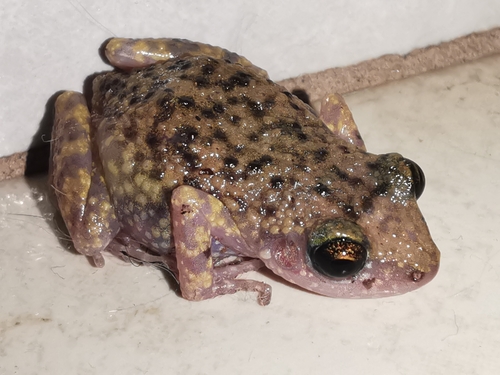
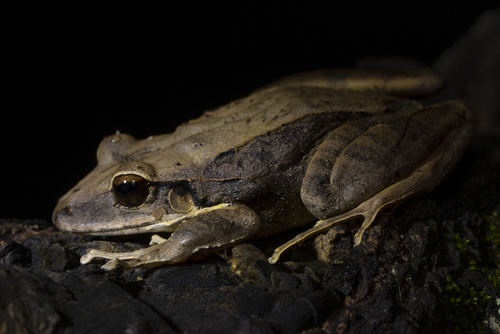
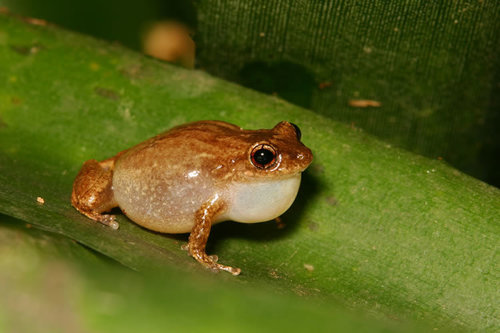
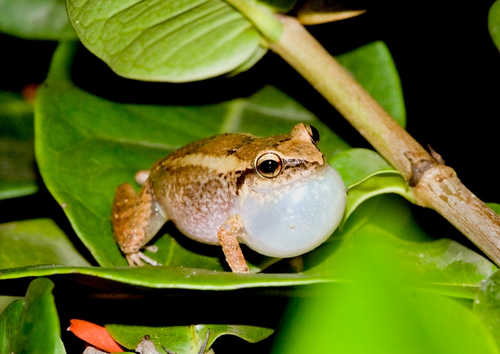
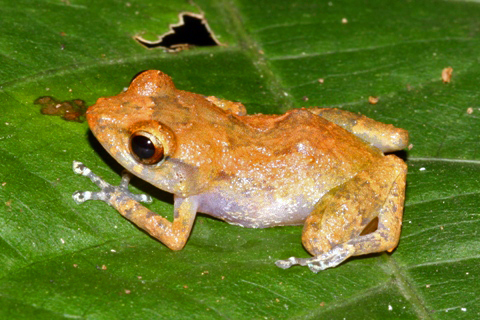
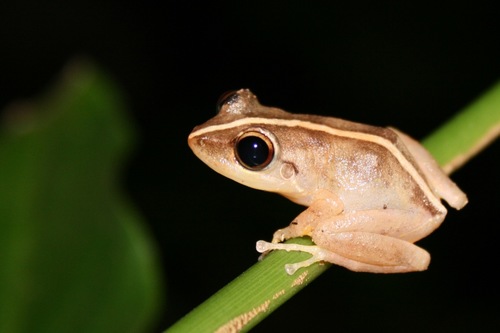
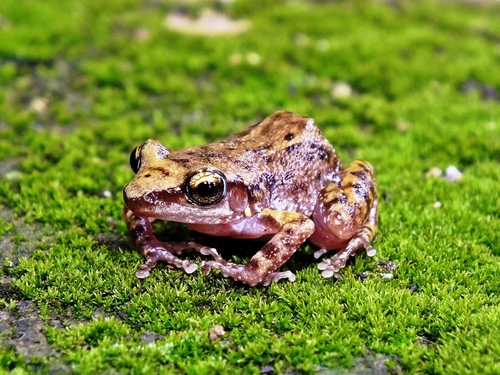
This species is Eleutherodactylus campi, first described by Stejneger in 1915. Adult males measure 16–24 mm (0.6–0.9 in) and adult females measure 16–26 mm (0.6–1.0 in) in snout–vent length. It has a pointed snout, a flat and elongated body, and a visible tympanum. Its finger tips are slightly expanded. The dorsal skin is weakly pustular, while the ventral skin ranges from smooth to areolate. Dorsal coloration is variable, appearing brown, gray, or yellow-green, and marked with dark spots. Ventral skin is translucent, and the hind limbs have dark crossbars. Eleutherodactylus campi occurs on low elevation coastal plains, and at low to moderate elevations in foothills. Individuals live in moist shaded vegetation, palm groves, thickets, ditches, resacas, lawns, and gardens. Many recorded observations of this species come from urban settings. During the day, individuals hide under cover objects, and they have been observed using arboreal perches 0.2–1.5 m (7.9–59.1 in) above the ground. This species is quite common across its range, no major threats to it are known, and it appears to thrive in areas where humans are present. Its known range in Mexico includes Sierra del Abra-Tamchipa and El Cielo Biosphere. Reproduction in this species is terrestrial and direct, with no free-living larval stage. In laboratory conditions, eggs are laid just below the soil surface. Clutch size ranges from 5 to 13 eggs, each 3–3.5 mm (0.12–0.14 in) in diameter. Eggs hatch into fully formed froglets that measure approximately 5–8.5 mm (0.20–0.33 in).