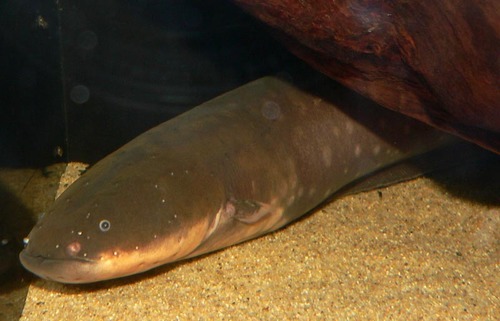
About Electrophorus electricus (Linnaeus, 1766)
Electrophorus electricus (Linnaeus, 1766) is the most well-known species of electric eel. It is a South American electric fish. Before two additional species were discovered in 2019, the genus Electrophorus was classified as monotypic, meaning this species was the only one within the genus. Despite its common name, it is not a true eel, but instead a type of knifefish. It is categorized as a freshwater teleost, and it possesses specialized electrogenic tissue that produces electric discharges.
The distribution of E. electricus is restricted to freshwater habitats of the Guiana Shield. Populations that were previously thought to belong to this species, found in the Amazon basin, Brazilian Shield, and other parts of the Guiana Shield, are now considered to belong to the separate species E. varii and E. voltai.
In terms of feeding ecology, E. electricus primarily feeds on invertebrates. Adult individuals may also consume other animals, including fish and rats. First-born hatchlings of E. electricus feed on the eggs and embryos from later clutches laid in the same nest.
This species is notable for its unusual breeding behavior. During the dry season, a male E. electricus constructs a nest out of his saliva, and a female lays her eggs into this nest. A single nest can produce as many as 3,000 hatchlings. On average, males of this species grow to be around 35 cm (14 in) larger than females.

