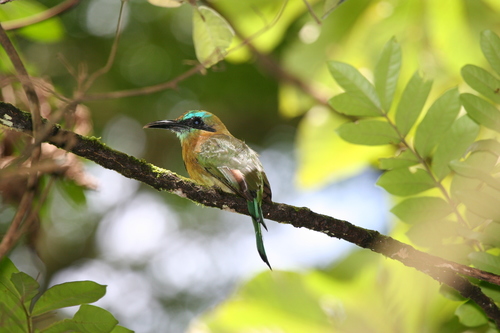
About Electron carinatum (Du Bus de Gisignies, 1847)
The scientific name of the keel-billed motmot is Electron carinatum (Du Bus de Gisignies, 1847).
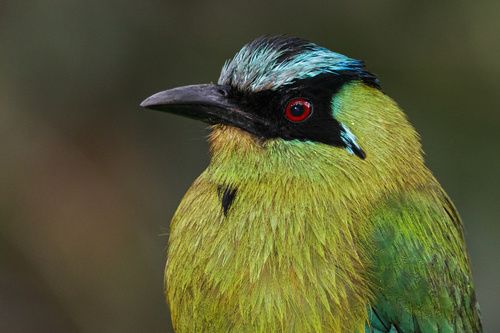
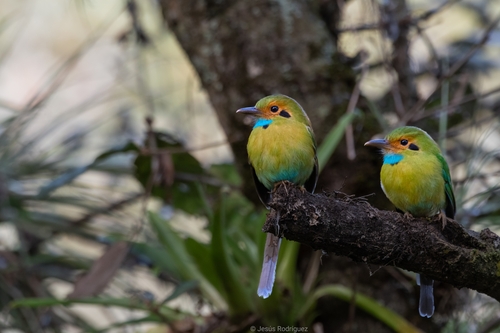
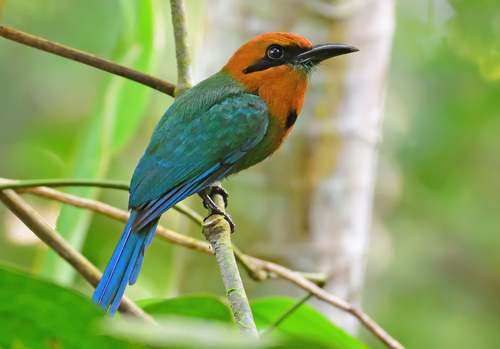
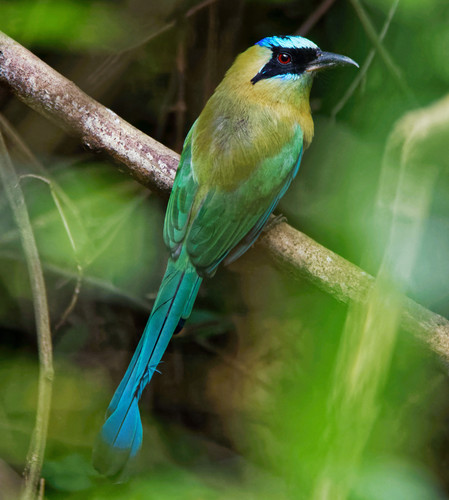
This bird is a smallish member of the motmot family. It measures 30.5 to 38 cm (12 to 15 in) in length; one recorded male weighed 65 g (2.3 oz). The sexes have identical plumage. Adults have a rufous forehead and a black "mask" marked by a turquoise-blue arc above it, set on an otherwise green face. Their upper parts are also green. They have a pale turquoise chin. Most of their underparts are rufous in the northern portion of the species' range, shifting to greenish to greenish cinnamon in the south. A black spot marks their chest. Their tail is green; the central pair of tail feathers are elongated and end in racquet-shaped tips. Their bill is black with a horn-colored tip. It is long, very broad, and flattened side-to-side, with a prominent ridge along the culmen and serrated edges.
The keel-billed motmot has a disjunct distribution along the Caribbean side of Central America. Its range runs intermittently from Veracruz and Oaxaca in southern Mexico, south through Guatemala, Belize, Honduras, and Nicaragua, into northern Costa Rica as far south as southern Alajuela Province. This species lives in humid evergreen forest, and particularly favors steep-sided gullies that contain streams. In elevation, it reaches up to 1,600 m (5,200 ft) in northern Central America, while in Costa Rica it is only found between 300 and 900 m (1,000 and 3,000 ft).