About Elasmucha grisea (Linnaeus, 1758)
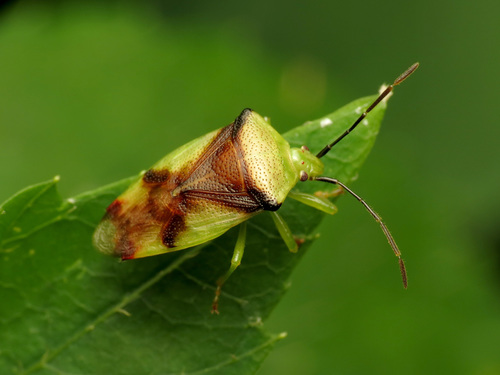
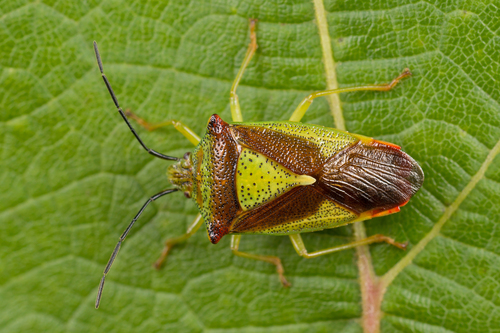
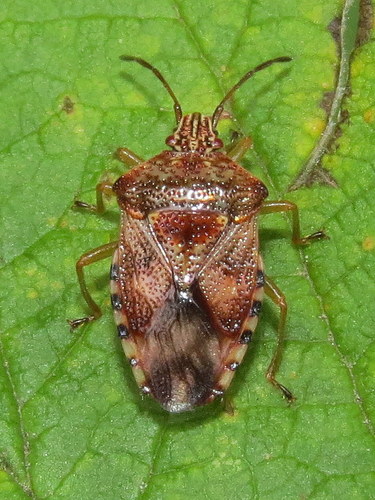
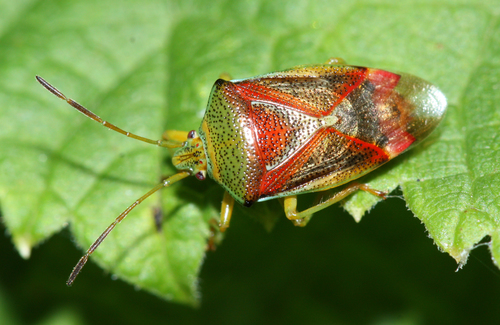
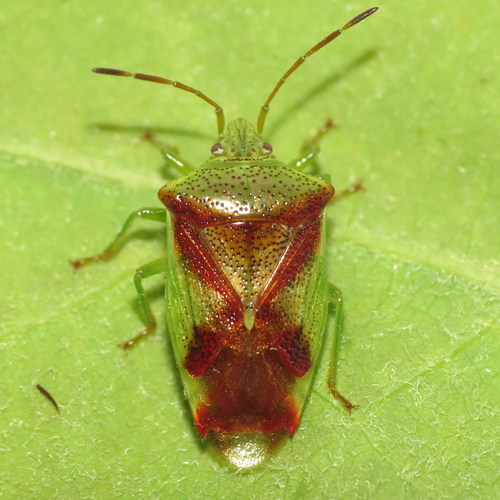
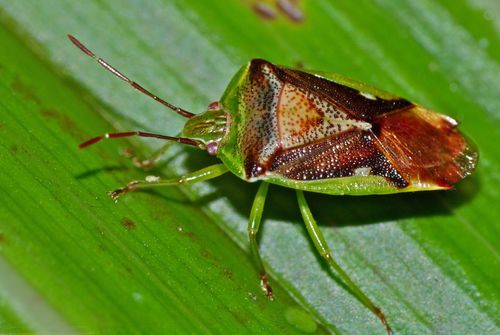
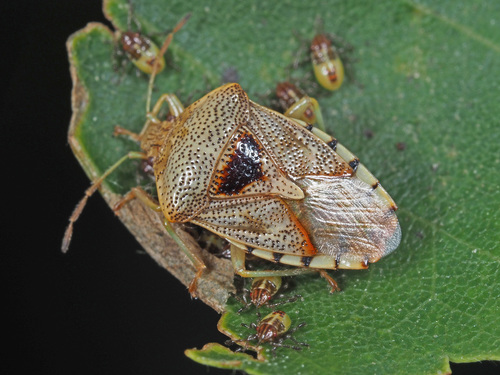
Elasmucha grisea can reach a body length of 6.5–8.8 millimetres, or 0.26–0.35 inches, with males growing smaller than females. These are medium-sized shield bugs that most commonly have a brown-reddish color, though gray (the trait referenced by its Latin species name grisea) and green-brown specimens also exist. Their connexiva are marked black and white. The upper side of the body is covered in several dark spots, and the scutellum usually has a clearly visible black patch. The ventral face of the body is largely marked with black punctures. The lateral corners of the pronotum are simply beveled, while the front corners of the pronotum have a more prominent tooth. Males have blackish antennae, and females have dark brown antennae. Like other parent bugs, this species has metathoracic and abdominal glands that produce and release a foul-smelling secretion. This secretion functions to deter potential predators, and it is sometimes released when the bug is disturbed. Elasmucha grisea is a fairly common and widespread species that occurs across most of Europe. Adults of E. grisea can be found year-round, because this species overwinters in its adult form. Mating takes place in spring, and newly matured adults emerge in August. These shield bugs feed on a variety of woody plants, with a preference for birch (Betula sp.), but they also feed on alder (Alnus sp.), beech (Fagus sp.), holly (Ilex sp.), and spruce (Picea sp.), among other species. Like most shield bugs, E. grisea and other parent bugs feed by sucking plant sap, and they require symbiotic bacteria to digest their food. Nymphs acquire these symbionts early in life: the mother coats her eggs with the bacteria, so nymphs ingest the bacteria when they feed on the egg case. Both adults and nymphs readily feed on developing seeds, and breeding individuals are often found on host plants that produce many young catkins. These bugs tend to avoid trees that carry a high risk of predation.