About Elaeocarpus serratus L.
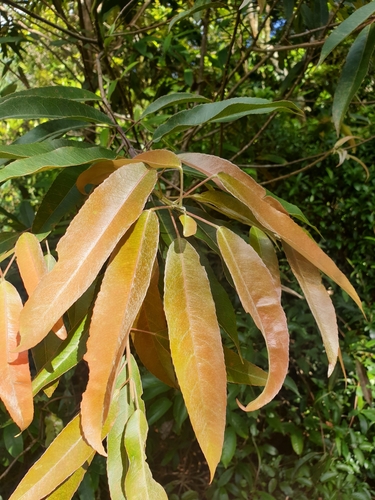
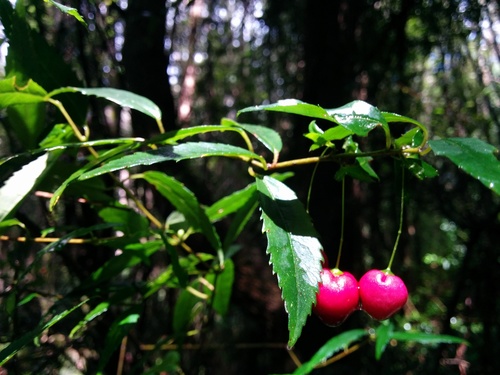
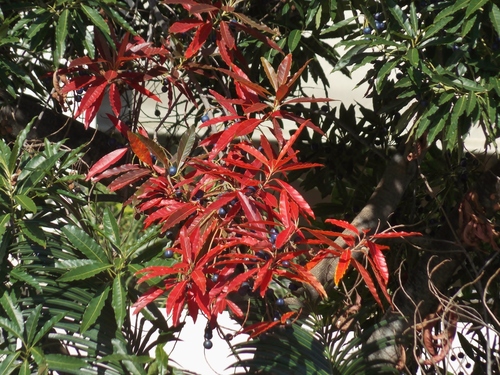
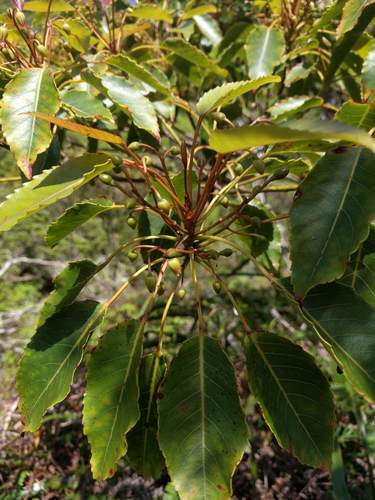
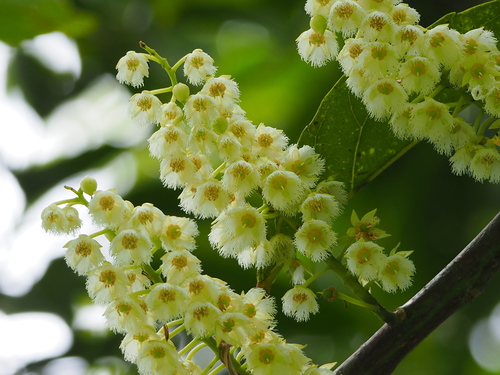
This species, Elaeocarpus serratus L., is a medium to large evergreen tree with a large spreading crown that reaches 15–60 m (49–197 ft) in height. Its flowers have pale-green petioles, 5 white to pale-olive-green calyxes with 4–6 mm long sepals, 5 white corollas with 4–5 mm long petals, slightly black anthers, and 18-30 stamens. Flowers expand to their maximum size in late afternoon, so they are likely adapted to night pollinators, specifically moths. It produces smooth, ovoid green fruits that are approximately 2.5 cm (1.0 in) long. Recommended cultivated varieties are local cultivars that produce either round or oval fruits. Each fruit contains a single brown seed with a hard outer shell. Seeds germinate slowly, and can take up to 2 years to germinate. Its wood is whitish yellow. The species has a disjunct native distribution: it is native to southern and southwest India, Sri Lanka, and the area stretching from Assam (northeast India) to Bangladesh. Regions and countries where it is indigenous include Sri Lanka, India (Tamil Nadu, Karnataka, Kerala, Assam, Arunachal Pradesh), Bangladesh, and Nepal. The weibelii variety is native to Karnataka and Kerala in southwest India. It has been introduced and naturalized to Réunion and Mauritius, and is widely found in villages of West Bengal, India, where it is called 'Jalpai'; people eat the fruit raw, or use it to make chutney, Jalpai ambal, or achar (pickle). This tree is drought tolerant. In Assam, areas with high suitability for the species include continuous patches of tropical and subtropical forest, and landscapes with a mosaic of fragmented groves, settled cultivation areas, and human settlements. It grows less well in degraded open forest, settled cultivation, homestead gardens, and some human settlements. Low suitability areas include grasslands, degraded open forest, and some human settlements. In its native range, it occurs in Sri Lanka's Sinharaja Forest Reserve, and in multiple protected areas of Assam: Nameri National Park, Dibru-Saikhowa National Park, Pakke Tiger Reserve, and Hoollongapar Gibbon Sanctuary. The brown palm civet Paradoxurus jerdoni consumes parts of this plant. The species' population in India is rapidly decreasing, due in part to over-exploitation (particularly for seeds) and in part to habitat destruction. It is classified as vulnerable in Arunachal Pradesh and Assam. Elaeocarpus serratus L. is used as an ornamental plant, and its fruits are eaten. Its fruit is well known in Sri Lanka. Historical records from India note the fruit was believed to ward off evil spirits and omens. In modern folk medicine, different parts of the plant are used to treat a wide range of ailments. People in Mai Municipality, Ilam District, far-eastern Nepal, use this plant in both folk medicine and religious practices: bark juice is drunk to treat jaundice, while seed paste is eaten to treat pneumonia and ulcers. The Karbi people of Karbi Anglong District, Assam, harvest both ripe and unripe fruits from August to October. Ripe fruits are made into pickle, and have a sour taste. Fruits are high in starch and sugar, and low in protein and iron. Due to its constipating effect, it may be used to treat diarrhea.