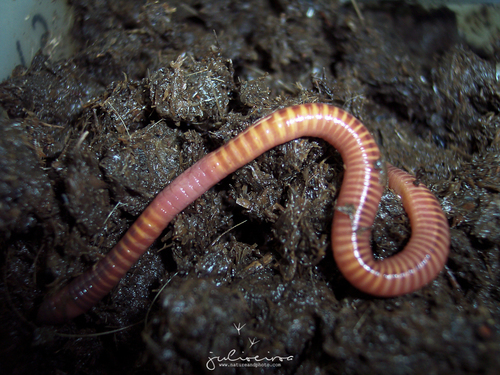
About Eisenia fetida (Savigny, 1826)
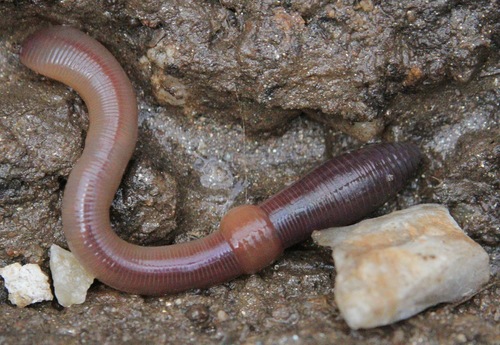
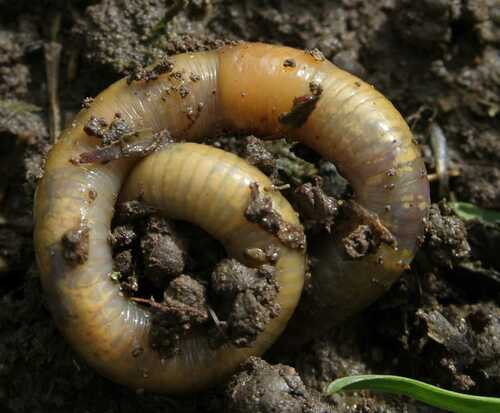
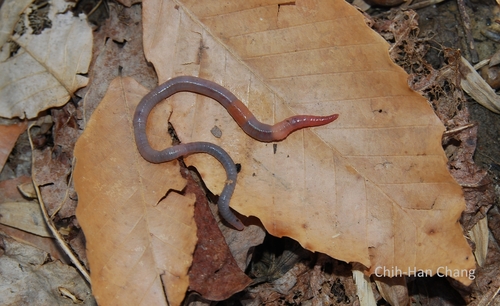
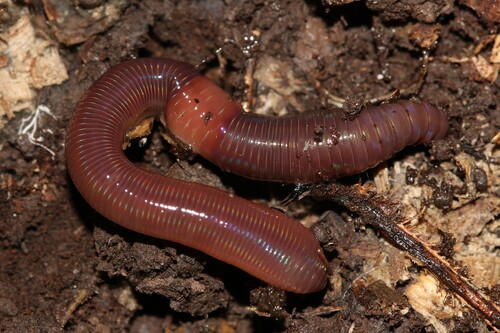
Eisenia fetida (Savigny, 1826) has many common names, including manure worm, redworm, brandling worm, panfish worm, trout worm, tiger worm, and red wiggler worm. It is an earthworm species adapted to live in decaying organic material. These worms thrive in rotting vegetation, compost, and manure. They are epigean, meaning they are rarely found in mineral soil. This trait makes them similar to Lumbricus rubellus. The worm is reddish-brown, has small ring-like markings along its body, and has a yellowish tail. Each body segment has groups of bristles called setae that move in and out to grip nearby surfaces. As the worm stretches and contracts its muscles, these setae let it move forward or backward. E. fetida is native to Europe, but has been introduced both intentionally and unintentionally to every other continent except Antarctica. E. fetida has a unique natural defense system in its coelomic fluid. Cells called coelomocytes secrete a pore-forming toxin protein called lysenin, which can permeabilize and break down invading cells. Lysenin is best at targeting foreign cells whose membranes have large amounts of sphingomyelin. It is also toxic to organisms that do not have sphingomyelin in their cell walls, including Bacillus megaterium, though the mechanism behind this toxicity is not understood. The ideal habitat for Eisenia fetida is organic matter that it can feed on. These worms usually live just below the surface to avoid light. The temperature of the organic material they live in should be between 40°F and 90°F. In summer, they will actively move deeper than 6 inches to find cooler areas, as they do not prefer high heat. The cocoons they produce can tolerate much harsher temperatures than adult worms. Like other earthworm species, E. fetida is hermaphroditic. Uniparental reproduction is possible for this species, though reproduction most commonly occurs between two copulating individuals. The two worms join their clitella, which are large, lighter-colored bands that hold the worms' reproductive organs and are only prominent during reproduction. The two worms exchange sperm, after which both secrete cocoons that each hold several eggs. These cocoons are lemon-shaped, starting pale yellow and turning more brownish as the worms inside mature. The cocoons are clearly visible to the naked eye. At 25°C, E. fetida young hatch from their cocoon in about 3 weeks. E. fetida is used for vermicomposting of both domestic and industrial organic waste. Vermicomposting septic systems that use Eisenia fetida have been used for decades, and allow decentralized on-site processing of blackwater. Tiger worms are also being tested for use in a flushless toilet that is currently being trialled in India, Uganda and Myanmar. In addition, red worms are widely used in fishing, and are one of the most ideal baits for tench, bream, and roach.