About Ehretia rigida (Thunb.) Druce
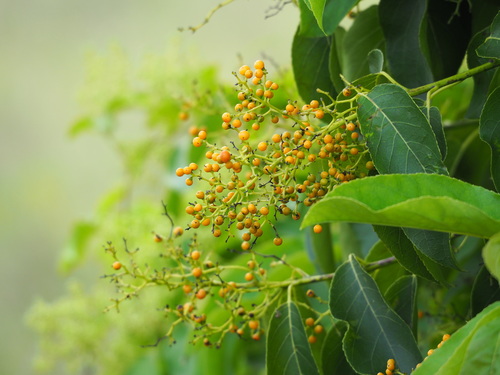
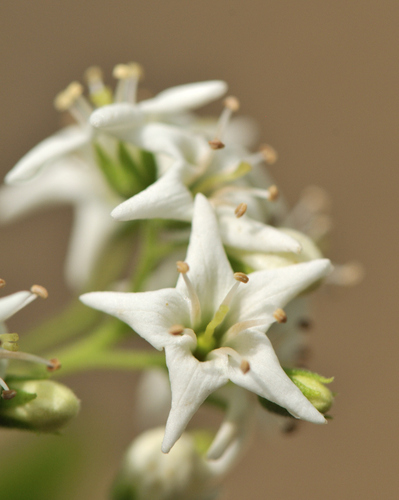
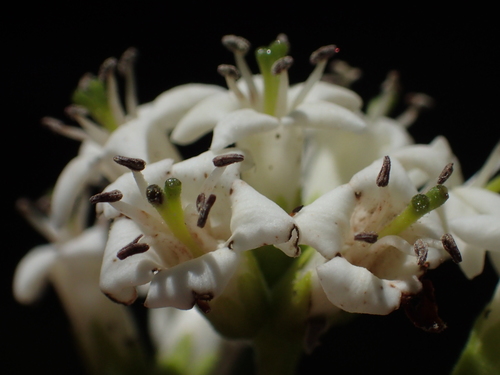
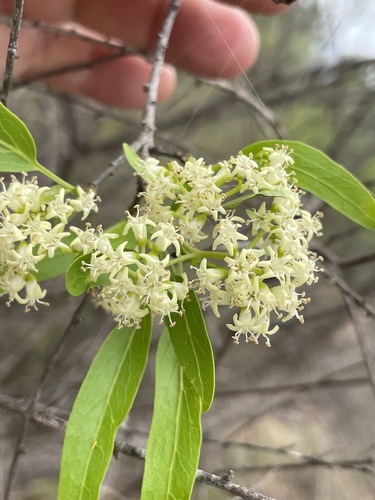
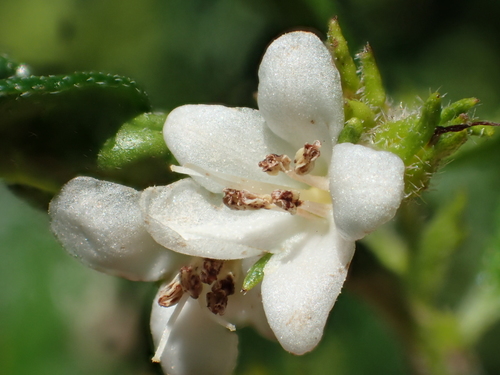
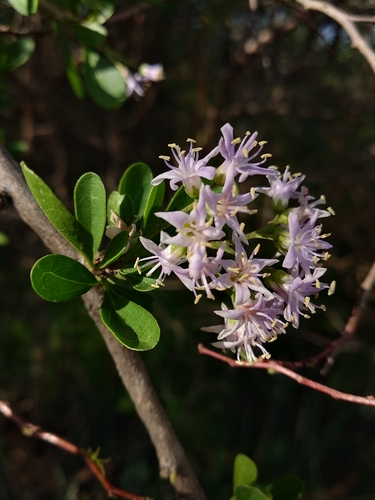
Ehretia rigida, commonly called puzzle bush or deurmekaarbos in Afrikaans (meaning 'confused/tangled bush'), is a small multi-stemmed tree in the family Ehretiaceae that has a tangled growth habit. It grows across a wide range of habitats in the eastern part of South Africa, and also occurs in Namibia, Botswana, Zimbabwe, and Mozambique. This deciduous, hardy species typically reaches around 5 meters in height. Its branches are quite rigid, which is the origin of its specific epithet 'rigida'. Its leaves grow in tufts, have a leathery texture and rough surface, and are lined with tiny pressed barbs along the margins. Almost always, small hair pockets called acarodomatia are present in the vein axils on the underside of leaves, which act as a refuge for mites. The bark is smooth and consistently ash-grey, and becomes rough on older stems. Fragrant flowers that range in colour from lilac to white bloom in early spring, and are followed by small fruits 8 millimetres in diameter. These fruits retain a persistent style, start green when young, and mature through orange and red before turning black. Each fruit contains 4 seeds; the seeds are roughly 3 millimetres long, kidney-shaped, and have a textured sculpted surface on their abaxial side. The genus Ehretia is named to honour Georg Dionysius Ehret, a celebrated 18th-century botanist and botanical illustrator.