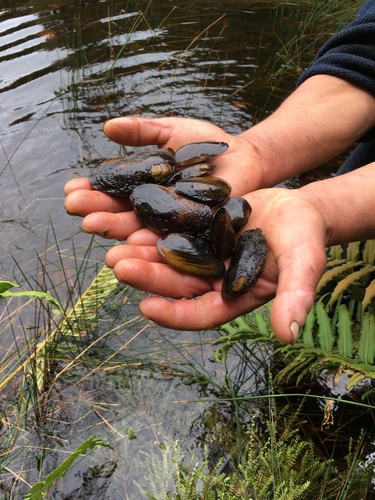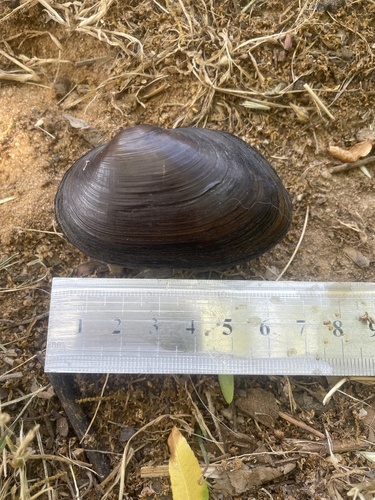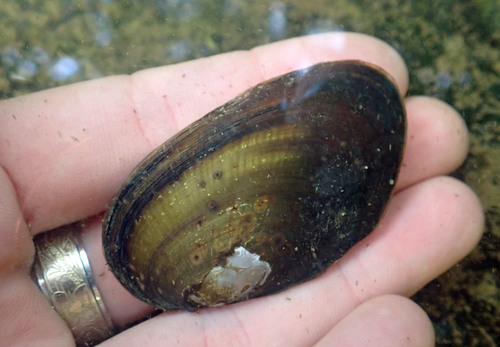
About Echyridella menziesii (Gray, 1843)
Echyridella menziesii (Gray, 1843), commonly called the New Zealand freshwater mussel, is known to Māori by the names kākahi, kāeo, and torewai. This species of freshwater mussel is endemic to New Zealand. It is an aquatic bivalve mollusc that belongs to the family Unionidae, the group of river mussels. This mussel was historically an important food source for Māori. Like many freshwater mussel species around the world, E. menziesii is currently endangered due to river pollution, river eutrophication, and the introduction of non-native fish species. These threats have led to actions being taken through the Treaty of Waitangi claims process. E. menziesii is one of three identified native freshwater mussel species native to New Zealand; the other two are Echyridella aucklandica and Echyridella onekaka. Historically, this species was common in New Zealand's lakes, rivers, and streams. Its reproductive cycle follows the typical pattern of other freshwater mussels: its larvae, called glochidia, need to parasitize a host fish to metamorphose into juvenile mussels. The most common host fish for E. menziesii are kōaro (Galaxias brevipinnis) and Gobiomorphus cotidianus.