About Echinometra viridis A.Agassiz, 1863
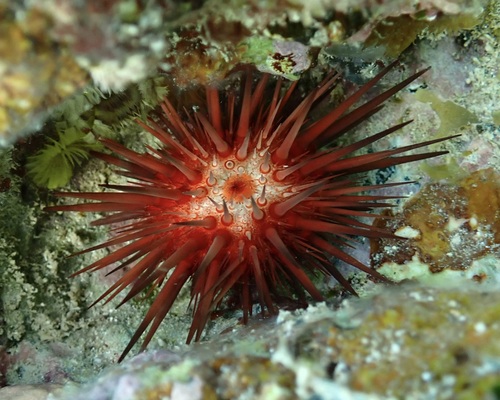
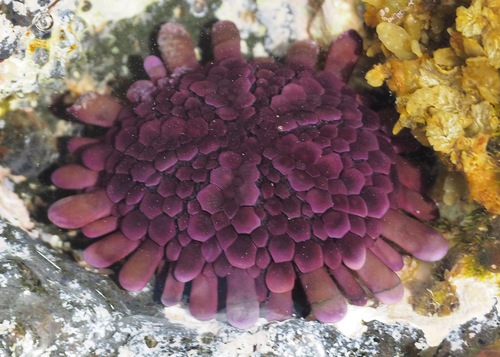
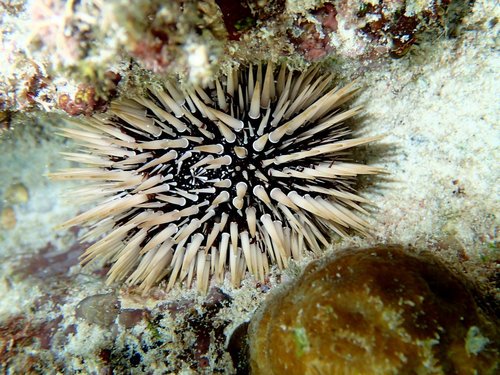
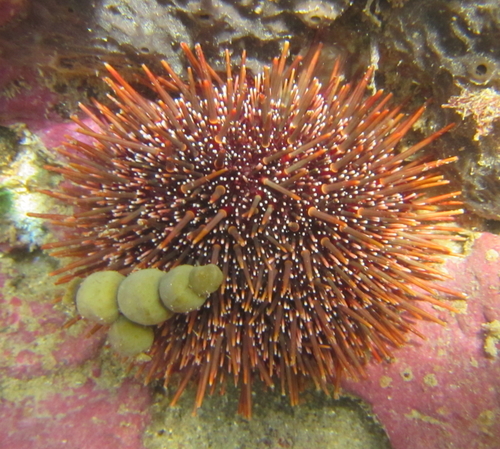
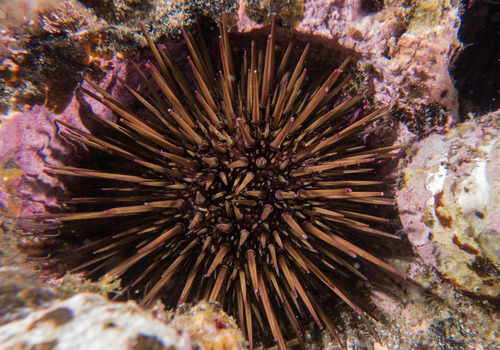
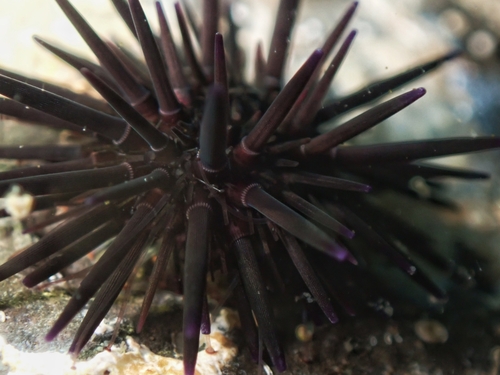
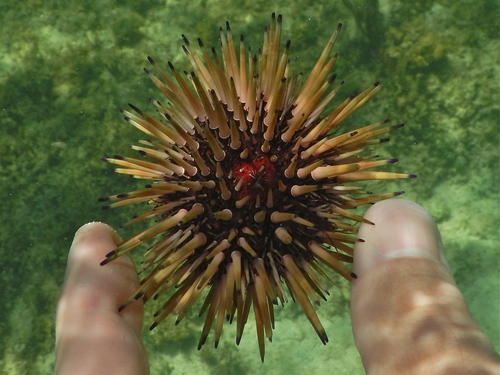
This species, commonly called the reef urchin, has an elliptical reddish brown test (shell) covered with medium-length spines. The spines are greenish, with paler bases and darker, often violet, tips. This urchin reaches 5 centimetres (2.0 in) in diameter, and its longest spines grow up to 3 centimetres (1.2 in). It closely resembles the rock-boring urchin Echinometra lucunter, but can be distinguished by its dark spine tips and longer spines. The reef urchin inhabits reefs in the Caribbean Sea, ranging from southern Florida to Venezuela. It occurs at depths down to approximately 15 metres (49 ft). It is less common than the rock-boring urchin, and appears to be absent from the West Indies east of the Virgin Islands. Ecologically, the reef urchin is an important grazer of fleshy algae in the Caribbean region. Fish predation reduces its overall abundance; major predators include the jolthead porgy (Calamus bajonado), queen triggerfish (Balistes vetula), ocean triggerfish (Canthidermis sufflamen), and hogfish (Lachnolaimus maximus). To avoid predation, the reef urchin does not occupy open reef flats, which leads to overgrowth of fleshy algae in these areas. It cannot fill the algae-controlling role left by the black sea urchin (Diadema antillarum), a species that experiences large fluctuations in population size.