About Echinometra lucunter (Linnaeus, 1758)
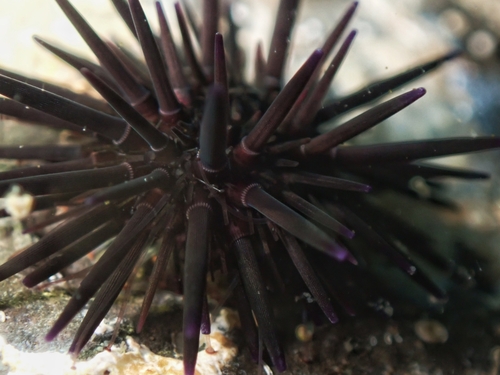
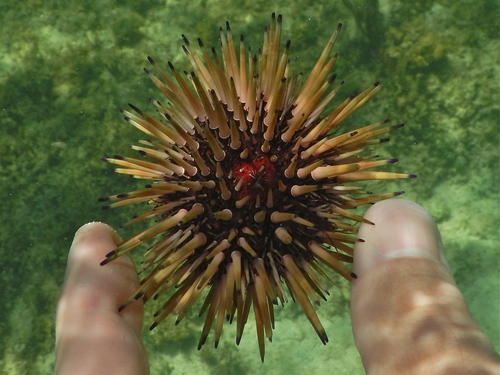
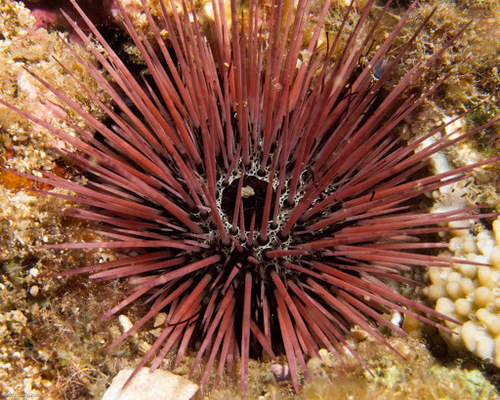
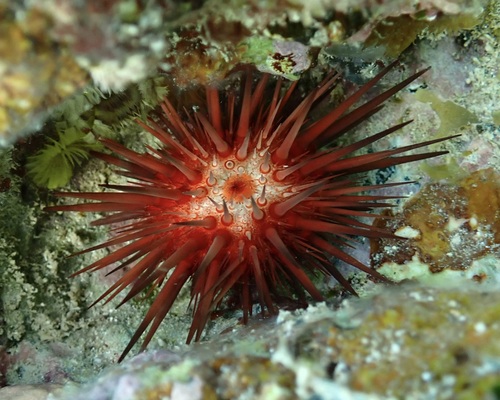
Echinometra lucunter (Linnaeus, 1758) has an elliptical test (shell), rather than a round one. It reaches a maximum diameter of around 8 centimetres (3.1 inches), and grows to a larger size at the extreme northern and southern ends of its range than it does in the central portion of its range. It bears moderately short spines that have wide bases and sharp tips. The colour of its test ranges from black to deep brownish-red, and the aboral (upper) surface is often more ruddy than the oral (lower) surface. Its spines are typically black. Echinometra lucunter is common across the entire Caribbean Sea, and is also found in Florida, Bermuda, and along the South American coast as far south as Brazil. It inhabits shallow rocky areas and coral reefs, most commonly at depths of 2 metres (6 feet 7 inches) or less, but can occasionally be found in deeper water down to around 45 metres (148 feet). It is sometimes found among seagrasses, and often occurs under rock slabs or broken coral, particularly in locations with high water movement. It sometimes occurs in large populations, and causes considerable damage to coral reefs through its boring activities.