About Echinochloa pyramidalis (Lam.) Hitchc. & Chase
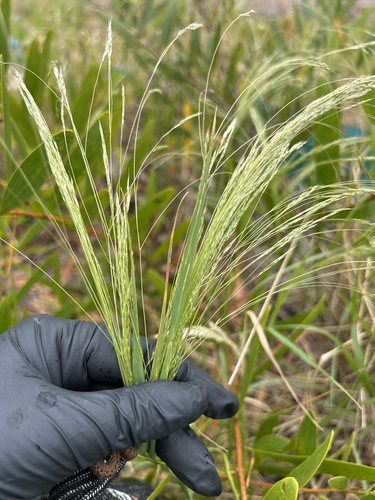
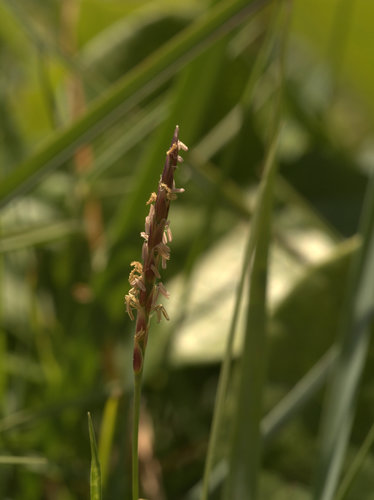
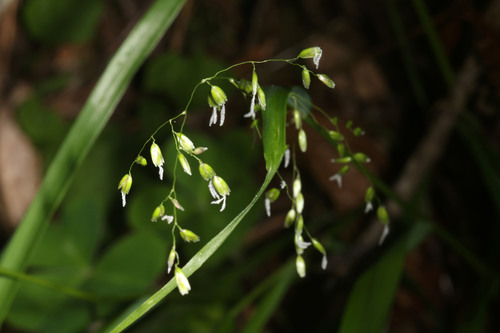
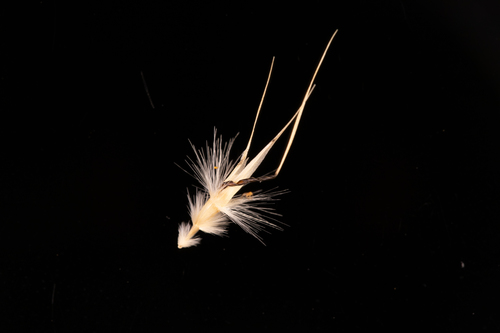
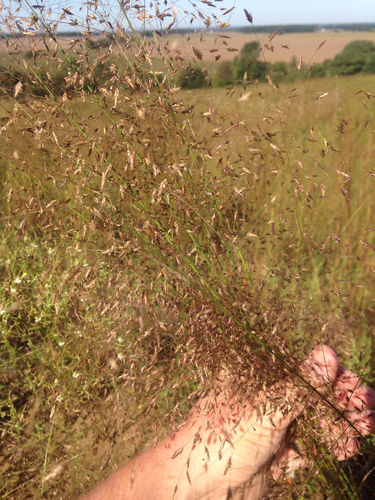
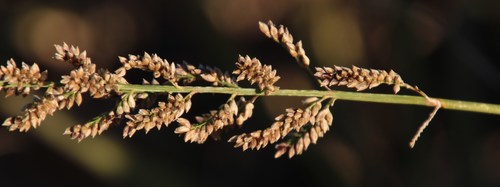
Echinochloa pyramidalis (Lam.) Hitchc. & Chase is a large, perennial, reed-like grass that can reach a height of around 300 cm (10 ft) or grow even taller. Its stems are solid, and roots develop from the lower nodes. The leaves are stiff, blade-shaped, and can grow up to 60 cm (24 in) long. The ligules of lower leaves have a fringe of short hairs along their margin, while upper leaves lack these hairs. Leaf sheaths of this species can be either hairy or glabrous (hairless). Its inflorescence has a central axis between 15 and 30 cm (6 to 12 in) long, with racemes on either side that grow up to 8 cm (3 in) long. These racemes bear short-stalked, purplish, pointed, awnless spikelets that measure 3 to 4 mm (0.12 to 0.16 in) long. This is a strong-growing species with a fasciculated (bundle-arranged) root system, and forms dense, evenly-heighted stands in suitable growing locations.
Echinochloa pyramidalis is native to tropical and subtropical Africa. It occurs across the continent in seasonally inundated grasslands, swamps, and along river and lake edges. It grows well in black clay soil and is moderately tolerant of anoxic conditions. It makes up a large portion of the vegetation in the Sudd, a vast swamp in South Sudan that the White Nile flows through. It has been introduced to other regions around the world as a fodder crop, and has generally not become naturalised outside its native range. It grows at altitudes between 300 and 1,500 m (1,000 to 5,000 ft).
Echinochloa pyramidalis is palatable to livestock and is cultivated for fodder, as it can tolerate heavy grazing. It grows during the wet season, and dies back to its base in the dry season, but will resprout vigorously after wildfires, even in the middle of the dry season. It can be used to make hay, and glabrous varieties are selected for this purpose. Its grain is sometimes consumed by humans. This grass can be planted to prevent erosion on flood-prone river banks and earth dams. It can also be used in a similar manner to reeds for sewage management. In locations where it has become invasive, such as Mexico and Guyana, it reduces biodiversity; its vigorous growth allows it to outcompete and displace native plant species.